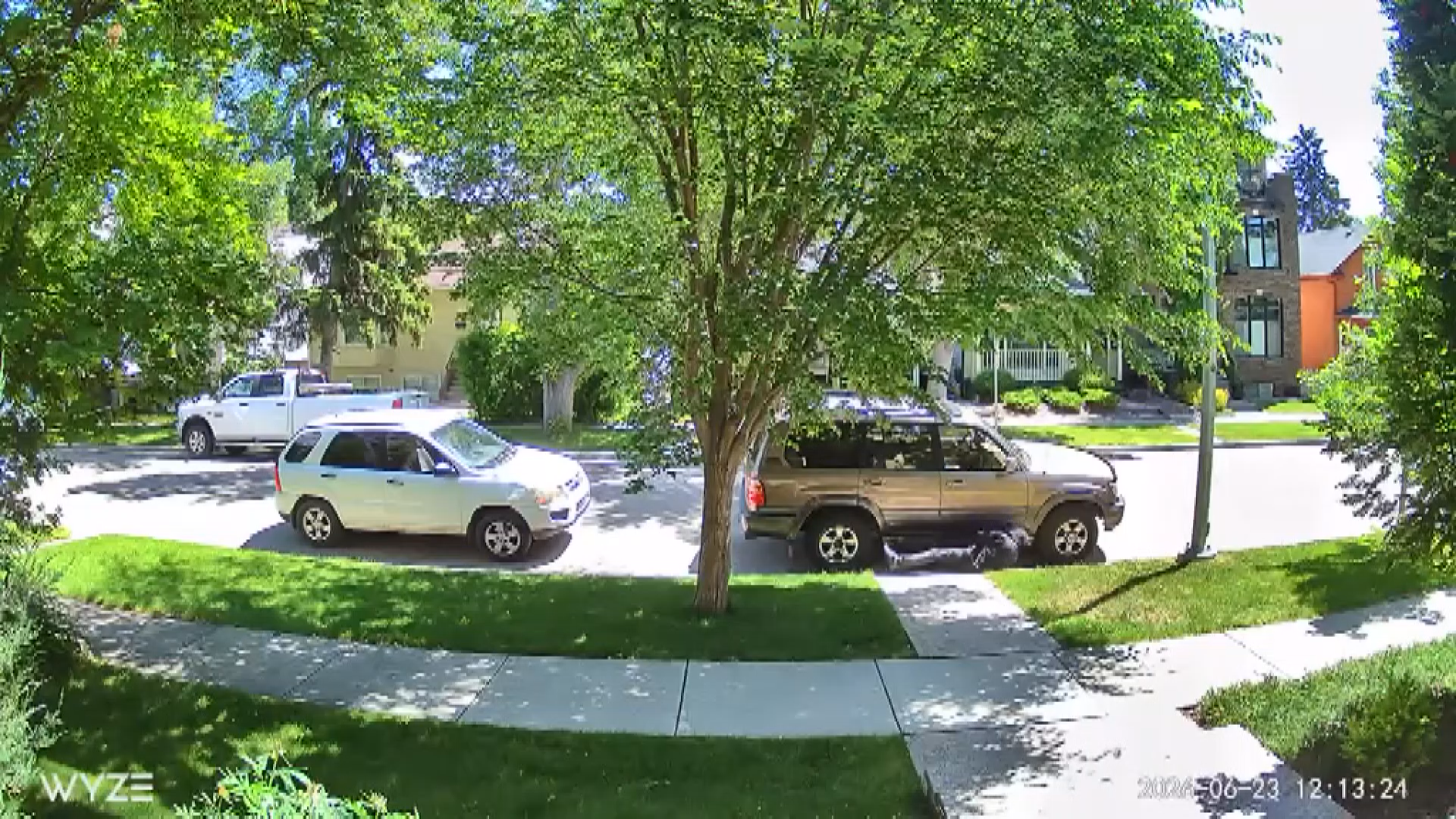
Calgary is facing an aggressive resurgence in catalytic converter thefts. Calgary Police Service statistics reveal that 369 thefts have been reported so far this year, a massive surge compared to the 147 reported incidents in all of 2025. This means thefts have already more than doubled last year's total in just the first six months. While localized anti-theft programs and municipal bylaws initially suppressed the trade, a volatile shift in global commodity markets has overridden local law enforcement efforts. Organized teams are dismantling vehicle exhaust systems in broad daylight across Calgary neighborhoods, driven by soaring black-market prices for rare industrial metals.
The Global Engine Driving Local Street Crime
To understand why a Mitsubishi RVR parked in Sunnyside or a Honda CR-V near McMahon Stadium is suddenly a high-priority target, one must look far beyond Alberta. Catalytic converters contain three precious metals: platinum, palladium, and rhodium. These elements filter toxic engine emissions before they exit the tailpipe.
Among them, rhodium is the hidden catalyst for this crime wave. It is one of the rarest non-radioactive metals on earth, and its commercial valuation has begun to climb sharply after a brief period of price stagnation. Because automotive manufacturers rely heavily on rhodium to meet stringent global emissions standards, demand remains inelastic. When supply chains tighten or mining output slows in major producing nations like South Africa and Russia, the scrap value of an individual vehicle converter jumps instantly.
Street-level thieves do not track global mining reports, but the illicit recycling networks that finance them do. Scrap metal fences adjust their payouts based on these commodity trends, instantly filtering down to the crews operating on Calgary streets. A single converter can yield several hundred dollars at an illicit processing point, creating an incredibly high return on investment for a crime that requires only a cordless reciprocating saw and sixty seconds of physical effort.
The Mirage of Municipal Bylaws
The sudden spike in 2026 exposes a structural failure in municipal regulatory frameworks. In July 2023, the City of Calgary amended its Business Licence Bylaw to squeeze the local market for stolen auto parts. The regulation forced salvage yards, auto wreckers, and scrap collectors to record detailed identification for every unattached converter they purchased. Sellers had to provide two pieces of government identification, personal characteristics like height and weight, and the vehicle identification number (VIN) of the source vehicle. By 2024, these rules expanded to include auto body shops and mechanical repair centers selling used parts.
The policy was designed under the assumption that thieves sell their hauls to local, legitimate businesses. In reality, organized theft rings bypass local scrap yards entirely.
Stolen converters are quickly loaded into shipping crates or unmarked transport trucks and moved out of municipal jurisdiction. Interprovincial and international shipping networks consolidate stolen parts from across Western Canada, routing them to jurisdictions with lax recycling laws or directly to illicit smelting facilities. Once a catalytic converter is crushed and its ceramic honeycomb core is extracted, the precious metals are completely untraceable. The provincial Scrap Metal Dealers and Recyclers Regulation and Calgary's strict municipal bylaws only govern businesses operating within the legal economy, leaving a massive regulatory blind spot for cross-border contraband networks.
Tactical Shifts and High-Value Targets
The mechanics of the crime have evolved from opportunistic nighttime scouting into highly organized, tactical operations. Calgary Police Service crime analysts have identified specific daylight windows where thefts peak, notably between 8:00 a.m. and 9:00 a.m., and again between 2:00 p.m. and 3:00 p.m. These windows align perfectly with commuter patterns, school drop-offs, and periods when residential streets are heavily populated but lack active surveillance.
Thieves operate in teams of two or three. A lookout scans the street while a driver keeps the engine running on a getaway vehicle. The third individual slides underneath the target automobile with a battery-powered angle grinder or reciprocating saw. The physical extraction takes less than four minutes.
Certain vehicles are targeted with mathematical precision. According to data from Calgary's District 3, the most heavily targeted vehicles in the current wave include:
- Mitsubishi RVR (2012–2024 models)
- Honda Element (2004–2010 models)
- Honda CR-V (2003–2004 models)
- Honda Accord (2006 models)
The preference for these specific models is dictated by two engineering factors: ground clearance and chemistry. High-clearance vehicles like the Mitsubishi RVR allow a thief to slide underneath without using a mechanical jack, cutting extraction time in half. Older Honda models are prized because their factory-installed converters contained a significantly higher concentration of precious metals compared to modern, cost-engineered alternatives.
The Financial Fallout for Vehicle Owners
For the average Calgarian, the true cost of this crime wave far exceeds the scrap value of the stolen metal. A thief cuts through oxygen sensors, wiring harnesses, and structural exhaust pipes during the extraction process. The resulting damage frequently leaves the vehicle owner with a repair bill ranging from $2,000 to $5,000.
While comprehensive auto insurance typically covers the replacement cost, many motorists face significant financial friction. Deductibles must be paid out of pocket, and supply chain delays for replacement exhaust components can leave families without a vehicle for up to a month. Furthermore, vehicle owners who opt out of comprehensive coverage to save on monthly premiums are left entirely exposed, forced to cover the full mechanical cost or write off the vehicle altogether.
Physical deterrents like welded steel cages, rebar guards, and commercial protective shields offer some protection, but they are not infallible. A determined thief equipped with commercial-grade cutting blades can penetrate these barriers given an extra two to three minutes of uninterrupted time. Municipal engraving programs, which etch the vehicle’s VIN onto the metal shell to disrupt the resale chain, rely entirely on a buyer actually checking and reporting the marking—a step that illicit mid-tier fences completely ignore.
The current 2026 data proves that localized, business-centric policing cannot contain a crime wave anchored to global commodity inflation. Until law enforcement strategy shifts focus toward the transnational transport networks and illicit smelting hubs that process these metals, Calgary vehicle owners will continue to bear the physical and financial costs of a volatile global market.