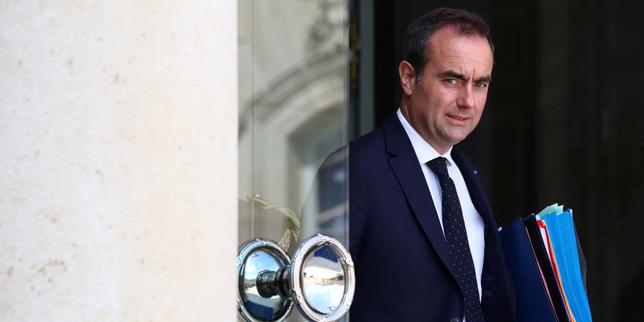
France is tightening the screws on international capital. Behind closed doors at Matignon, Prime Minister Sébastien Lecornu has engineered a sweeping overhaul of economic defense protocols, drastically lowering the foreign investment review threshold from twenty-five percent down to ten percent for sensitive domestic enterprises. This move is not merely a bureaucratic adjustment. It is a desperate recognition that traditional state security boundaries have dissolved into a chaotic arena of global economic espionage and unchecked external pressure.
For decades, Paris operated on the comforting assumption that trade diplomacy and national sovereignty could coexist in a neat, predictable equilibrium. That illusion has evaporated. Foreign actors no longer need battalions or formal declarations of hostility to subvert a European power. They buy their way into critical supply chains, quietly acquire minority stakes in cutting-edge technology startups, and leverage advisory networks to harvest intelligence that bypasses traditional espionage detection mechanisms. Meanwhile, you can read related events here: Inside the International Fugitive Crisis Exposing the Blind Spots of British Bail Law.
The Anatomy of Vulnerability
Commercial diplomacy relies on trust. The thousands of corporate leaders and international experts who act as economic ambassadors—traditionally known as the advisors for foreign trade, or conseillers du commerce extérieur—have long held privileged access to state strategy, commercial intelligence, and ministerial corridors. This access makes them prime targets for foreign intelligence services seeking backchannel insights into French industrial policy.
When an executive operates across multiple jurisdictions, allegiance splits. Financial incentives cloud judgment. A hypothetical scenario involves a corporate director based in Lyon who holds dual citizenship or extensive manufacturing interests across non-European markets; under pressure from foreign regulators, that executive might inadvertently leak proprietary aerospace data or strategic bidding parameters during routine trade consultations. To explore the full picture, check out the excellent report by NPR.
The state can no longer afford ambiguity. By targeting the structures governing international economic representation and tightening the regulatory net around foreign capital, Lecornu’s administration is attempting to plug leaks that have drained French industrial intelligence for years. Yet, reforming the rulebook on paper is vastly different from enforcing compliance on the ground.
Inside the Ministerial Mechanics
The decree signed by the Prime Minister forces a structural confrontation with economic liberalism. For years, European integration championed the free flow of capital as an unmitigated good. Brussels preached openness, while foreign state-backed funds quietly bought up strategic nodes in energy, artificial intelligence, and biotechnology.
The new framework alters this dynamic fundamentally. By lowering the screening threshold to ten percent for non-European investors in publicly traded strategic firms, the government is effectively serving notice to sovereign wealth funds and predatory conglomerates.
- Immediate Notification: The Directorate General of the Treasury now holds expanded jurisdiction to intercept acquisitions before they finalize.
- Accelerated Vetting: The Ministry of Economy operates under strict ten-day windows to determine whether a transaction warrants deep investigative scrutiny.
- Enforced Accountability: Advisory bodies face stringent background checks to ensure their international affiliations do not conflict with national security interests.
Critics argue that these measures will suffocate foreign direct investment and drive international capital toward more welcoming European jurisdictions like Frankfurt or Amsterdam. That is a risk Paris is evidently willing to accept. Protectionism has shed its dirty word status out of sheer necessity. When the baseline survival of domestic defense capabilities, semiconductor research, and energy independence hangs in the balance, market fluidity takes a back seat to raw survival.
The Blind Spots of Bureaucratic Defense
Despite the tough rhetoric coming from the executive branch, structural loopholes remain glaringly wide. Bureaucratic oversight mechanisms are notoriously slow to adapt to modern methods of corporate infiltration. Foreign adversaries rarely purchase shares directly in their own names anymore. They utilize complex chains of shell companies registered in neutral tax havens, hiding behind layers of proxy directors and opaque venture capital funds.
A ten-percent ownership threshold stops blatant takeovers, but it does little to prevent influence peddling through indirect channels. If a foreign intelligence apparatus can co-opt a key lobbyist or fund a nominally independent research institute that feeds policy recommendations to trade advisors, the formal state screening process is bypassed entirely.
Furthermore, enforcement relies heavily on self-reporting and the vigilance of administrative agencies that are chronically understaffed. The Directorate General of the Treasury is a formidable institution, but it competes against sovereign actors with infinite financial resources and cyber capabilities that blur the line between legitimate corporate networking and industrial espionage.
The Broader Geopolitical Fallout
This regulatory pivot signals a permanent shift in how European states view globalization. The post-Cold War consensus of frictionless international commerce is dead. In its place stands a fragmented global marketplace characterized by economic nationalism, technological decoupling, and defensive state intervention.
France is positioning itself at the vanguard of this ideological turnaround, pushing for a hardened European fortress economy that can withstand systemic shocks. Whether Brussels will follow Paris down this restrictive path remains uncertain, as export-heavy economies within the European Union still fear retaliatory trade barriers from major global powers.
The tightening of economic defenses exposes a harsh truth about modern statecraft. Sovereignty is no longer maintained through diplomacy alone. It is won or lost in the boardroom, through the quiet enforcement of rules that dictate who gets to own a piece of tomorrow.