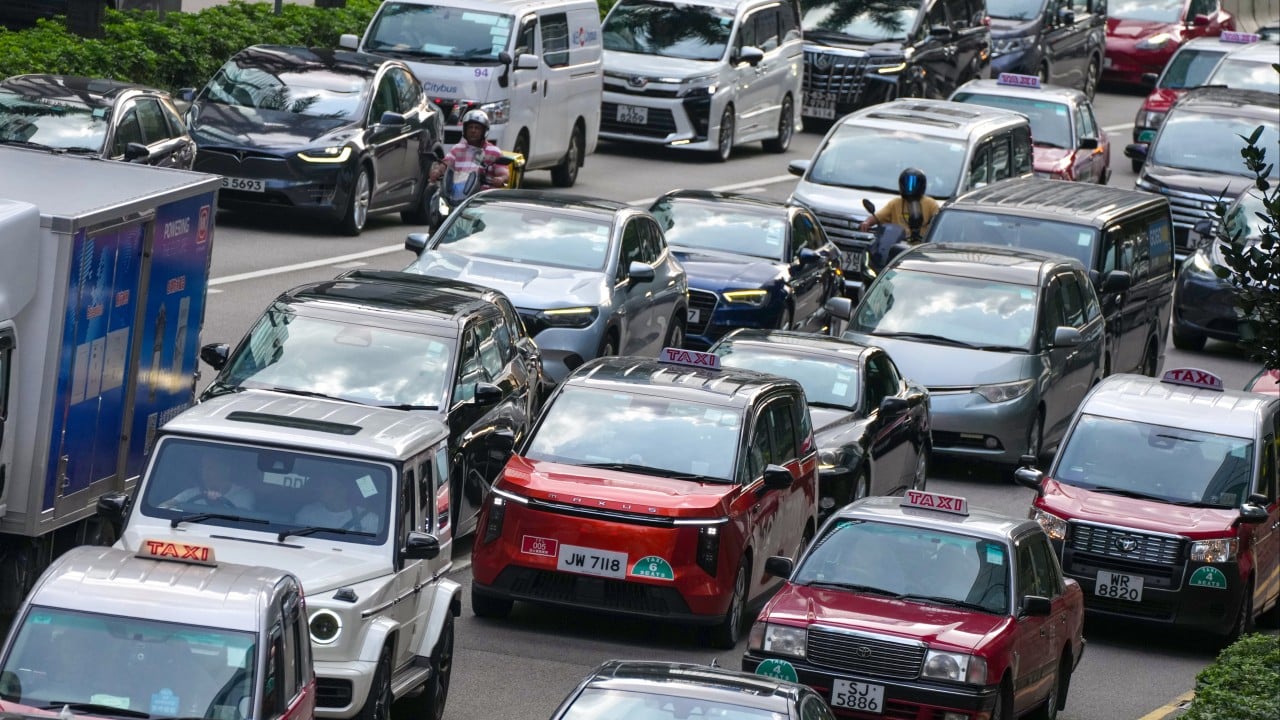
Hong Kong is about to crush the informal gig economy under the weight of a 10,000-permit ceiling. The Transport Advisory Committee recently signaled its backing for this tight cap as the opening move for a newly legal ride-hailing framework, ostensibly aiming to balance road capacity with consumer convenience.
By clamping down on a network that currently relies on more than 30,000 active drivers to move 190,000 passengers daily, the government is setting the stage for an immediate and punishing deficit in urban transport. Within the first 100 words of this reality check, the math is clear: slashing the driver pool by two-thirds will instantly double passenger wait times and trigger fare surges of up to 70 percent during peak hours.
This is not a forward-looking modernization project. It is a calculated bureaucratic compromise meant to pacify a notoriously aggressive local taxi cartel while pretending to embrace digital innovation.
The Math Behind the Impending Commuter Crisis
For over a decade, platforms like Uber, Didi Chuxing, and Amap have operated in a gray market. The passing of the Road Traffic Amendment Ride-hailing Service Ordinance laid the groundwork for legitimacy, but the subsidiary legislation slated for the Legislative Council before the summer break reveals the structural flaws of the upcoming regime.
The core issue lies in a fundamental misunderstanding of how digital logistics function.
Government officials look at 114,000 daily ride-hailing trips and assume a neat, linear distribution. They see 10,000 permits as a reasonable median between the taxi lobby's protectionist demand of 3,600 and Uber’s push for 30,000.
But ride-hailing demand does not move in a straight line. Data from the platforms shows that demand swings by up to 66 percent between off-peak hours and rush periods.
When a tropical rainstorm hits Central or a massive trade show lets out at the Convention Centre in Wan Chai, demand spikes exponentially. Taxis vanish. Under a rigid 10,000-permit limit, four out of every ten ride requests during these critical windows will simply fail.
Proposed Ride-Hailing Permit Allocations vs. Existing Fleet Size
=================================================================
Taxi Industry Proposal:   [3,600]
Government Soft Target:   [10,000] <-- Current Target
Expected Public Demand:   [15,000]
Active Driver Pool today: [30,000+]
=================================================================
A standard trip from Disneyland to Wan Chai that currently costs around HK$250 is projected to breach HK$430 under the new quota rules. This is not wild speculation from platform executives; it is basic supply and demand. If the government chokes the supply of vehicles while demand remains constant or grows, price is the only variable left to absorb the shock.
The Part-Time Driver Blindspot
The legislative architecture completely ignores the labor mechanics of the gig economy. Bureaucrats are treating ride-hailing vehicles as if they are traditional taxis that run two twelve-hour shifts a day, seven days a week.
Observable reality tells a completely different story.
Around 80 percent of ride-hailing drivers in Hong Kong are part-timers. They log on for fewer than 20 hours a week, often driving for just three or four hours during peak commuting windows or late at night when public transit winds down. They use ride-hailing to cushion their incomes against inflation and a high cost of living.
"Because the vast majority of app-based drivers operate part-time, you need roughly 4.5 ride-hailing vehicles to match the actual road capacity of a single traditional taxi running 18 hours a day."
To maintain the current 22 percent market share that ride-hailing holds in the city's transport ecosystem, the government would need to issue at least 18,000 permits. Dropping that number to 10,000 means thousands of part-time drivers will be forced off the road entirely, cutting off vital supplementary income for local families.
To compound the issue, the government plans to enforce an owner-driver model. Under this rule, a permitted ride-hailing vehicle can only be driven by its registered owner. The stated goal is to prevent speculators from buying up permits and renting out vehicles, avoiding a replication of the predatory taxi license system.
The collateral damage, however, is severe. Many current drivers share a single family vehicle with a spouse or parent. By banning shared utilization within households, the government ensures that a limited asset—the permit—will sit idle for most of the day, artificially starving the market of active cars.
The Taxi Premium Cartel Wins Again
To understand why Hong Kong is pursuing a policy that actively harms the traveling public, one has to look at the financial geometry of the city's traditional transport sector.
Unlike most global cities where taxi licenses are annual administrative fees, Hong Kong taxi licenses are permanent, freely tradable commodities. There is a hard cap of 18,163 taxi licenses in the city, a number that has remained virtually unchanged for decades.
Because of this artificial scarcity, taxi licenses became speculative investment vehicles. At their peak, a single premium urban taxi license traded for over HK$7 million. Even with recent market corrections, they represent billions of dollars in private equity held by a tight-knit group of fleet owners and institutional investors.
If the government permits an unlimited, highly efficient fleet of app-based drivers to operate legally, the value of those taxi licenses would crater. The taxi lobby has spent years leveraging its political capital to protect this asset class, staging strikes and demanding aggressive enforcement against unlicensed drivers.
The 10,000-permit cap is a direct concession to these license holders. By keeping ride-hailing intentionally crippled, expensive, and scarce, the government ensures that the traditional taxi cartel faces no real existential threat to its bottom line, even if it means locals and tourists continue to endure sub-standard service, rejected short-haul rides, and filthy vehicles.
Heavy Penalties and a Digital Panopticon
When the framework officially launches toward the end of 2026, it will arrive with some of the harshest penalties seen globally for transport violations. The era of casual enforcement is over.
- Unlicensed Platforms: Any entity operating a ride-hailing platform without a license will face corporate fines of up to HK$1 million and executives could look at a maximum jail term of one year.
- Non-compliant Dispatches: A licensed platform that mistakenly dispatches a driver without a valid vehicle permit will be hit with a HK$10,000 fine per violation on a first conviction, escalating to HK$25,000 for repeat offenses.
- Unpermitted Drivers: Individual drivers caught operating outside the system will face HK$10,000 fines, six months of jail time, and a mandatory three-year suspension of their personal driving license. Their vehicles will be impounded for up to a year.
To police this, the Transport Department is setting up a direct electronic data link with licensed platforms. Tech companies will be forced to hand over continuous operational metrics: booking numbers, cancellation rates, passenger wait times, precise fares, and customer complaints.
Worse, officials are floating the mandatory use of facial recognition technology inside apps to verify that the person behind the wheel matches the registered owner of the permit.
While the Transport Department suggests that this data pipeline will allow the Commissioner for Transport to review and adjust the permit quota quarterly, the damage will already be done. Building a system that starts with an engineered deficit and relying on a slow, bureaucratic review loop to fix it guarantees months of supply friction.
The government's insistence on minimum service requirements—where a permit holder must complete a specific number of trips per month to qualify for renewal—further alienates the part-time workforce. It turns a flexible gig into a rigid, monitored obligation.
Corporate travel managers, logistics coordinators, and daily commuters need to adjust to a harsher reality. When the subsidiary text is gazetted later this year, the open market for flexible transit will close. Companies relying on predictable employee transport budgets during major international conventions will have no choice but to revert to expensive, fixed-contract corporate limousine services or accept that their teams will spend peak hours stranded on a curb, watching empty taxis drive past.