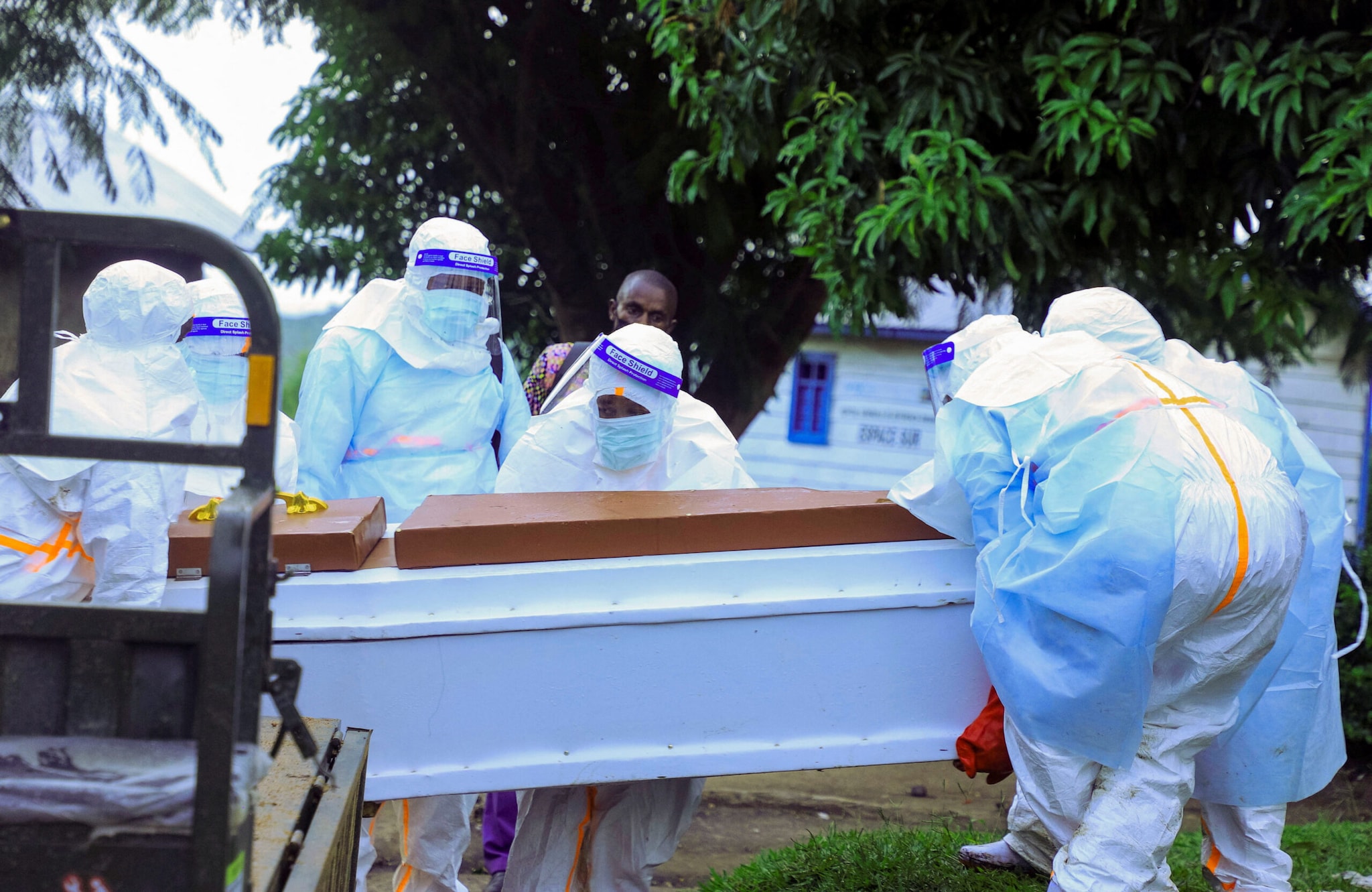
The World Health Organization just declared the fast-moving Ebola outbreak in the Democratic Republic of the Congo and Uganda a public health emergency of international concern, admitting that the epidemic is officially outpacing containment efforts. While headlines focus on the rising death toll—which has climbed to 220 suspected deaths—the real crisis is not just the virus itself. The response is failing because the international community is attempting to fight a highly specific, vaccine-resistant strain using an outdated medical playbook in an active war zone.
World Health Organization Director-General Tedros Adhanom Ghebreyesus confirmed that a significant delay in initial detection has left medical teams playing catch-up against a pathogen that has already crossed international borders. The epidemic is expanding across the DRC’s eastern provinces of Ituri and North Kivu, with confirmed cases surfacing as far away as Kampala, Uganda.
But public health bureaucracy continues to treat this as a standard logistical bottleneck. It is not. By analyzing the structural failures on the ground, the biological reality of the virus, and the geopolitical vacuum left by shifting Western priorities, we can see exactly why the current strategy is built to fail.
The Blind Spot of the Bundibugyo Strain
The global health apparatus has grown comfortable with Ebola. Over the last decade, breakthrough developments provided a sense of security. The Merck-manufactured Ervebo vaccine, for instance, became a reliable weapon against the Zaire strain of the virus, effectively halting outbreaks in West Africa and previous flare-ups in the DRC.
This outbreak is different. This is the Bundibugyo strain, a rare variant first identified in Uganda in 2007.
The distinction is not academic; it is a matter of life and death. The Zaire vaccine offers exactly zero protection against the Bundibugyo species. There are currently no approved vaccines, no authorized antiviral therapies, and no monoclonal antibody treatments available for this strain.
Health workers are stripped of their modern arsenal. They are forced to rely on basic supportive care—hydration, symptom management, and rigorous isolation. This scientific deficit changes the psychology of the response. When an outbreak has a vaccine, community mobilization relies on a promise of protection. Without it, isolation units look less like centers of healing and more like places where people go to die.
War Zones and Broken Trust
Logistics cannot be separated from geography. The epicenter of this epidemic sits in Ituri and North Kivu, regions plagued by decades of armed conflict, militia violence, and deep-seated institutional distrust.
EBOLA BUNDIBUGYO OUTBREAK PROFILE (MAY 2026)
---------------------------------------------------------
Suspected Deaths:           220+
Total Suspected Cases:       900+ across 11 health zones
Approved Vaccines Available: None
Approved Therapeutics:       None
Regional Risk Assessment:    Very High (DRC)
Epidemiologists require mobility to trace contacts. They need to find every single person who interacted with an infected individual, monitor them for 21 days, and isolate them immediately if symptoms appear.
In eastern DRC, doing so requires navigating a patchwork of territories controlled by various rebel factions. Security escorts are mandatory, turning medical teams into militarized convoys. This militarization triggers historical trauma. Local populations, accustomed to seeing uniform-wearing outsiders as threats rather than saviors, frequently hide symptomatic relatives from health officials.
Compounding the violence is a profound crisis of misinformation. Humanitarian agencies report that up to one in three individuals in certain sectors of Ituri believe the virus is a political fabrication or a Western conspiracy. Decades of state neglect mean that when well-funded foreign entities suddenly arrive in biohazard suits, the local reaction is skepticism, not gratitude. The delay in detecting this outbreak stems directly from this friction. People died in their villages for weeks before formal surveillance systems registered the anomaly.
The Border Control Illusion
The virus has already exposed the futility of national borders in East Africa. Uganda has confirmed multiple cases, including healthcare workers who treated patients arriving from across the Congolese border.
Public health officials frequently talk about tightening border security during a pandemic. This is an illusion. The frontier between the DRC and Uganda is porous, characterized by thousands of unofficial dirt paths, local markets, and family networks that span both sides of the political line.
REGIONAL TRANSMISSION RISK PATHWAYS
[ DRC Epicenter (Ituri / North Kivu) ]
       │
       ├───► Porous Land Borders ───► Uganda (Confirmed Cases in Kampala)
       │
       └───► Regional Transit Routes ──► High-Risk Neighbors (Kenya, Angola, South Sudan)
A Congolese national seeking superior medical care in Uganda can walk across the border without ever seeing a customs checkpoint. By the time they present at a clinic in Kampala, they have already exposed transport drivers, family members, and triage nurses. The WHO has classified ten neighboring nations, including Kenya and Angola, as high-risk zones for importation.
Screening at official airports does nothing to stop a biological threat moving along informal trade routes. The current strategy relies heavily on static thermal cameras and health declaration forms at major ports of entry, which fail to catch individuals in the incubation phase who show no symptoms but will become infectious within days.
The Hollowed Out Surveillance Infrastructure
The timing of this outbreak could not be worse for international coordination. The global health architecture has suffered structural damage over the past several years, driven by political shifts and domestic budget cuts in Western nations.
Specifically, funding reductions to organizations like the U.S. Centers for Disease Control and Prevention (CDC) have diminished the number of field epidemiologists deployed globally. Expert personnel who previously spent careers embedded in Central Africa, building relationships and early-warning networks, have been recalled or defunded.
Furthermore, political decisions—such as previous U.S. movements to distance itself from the WHO—have fragmented data-sharing networks. When a novel strain emerges, the world needs a singular, unified command structure. Instead, the current response is a patchwork of the WHO, the Africa Centres for Disease Control and Prevention, and individual state ministries competing for resources and authority. The international community spent billions preparing for airborne respiratory pandemics post-COVID, inadvertently leaving the infrastructure for hemorrhagic fever surveillance underfunded and understaffed.
Radical Transparency is the Only Cure
To stop the Bundibugyo outbreak from becoming a continental catastrophe, the response must abandon its top-down, bureaucratic approach. Funding must shift away from high-level international summits and toward immediate, tangible realities on the ground.
- De-escalate the Military Footprint: Medical teams must stop arriving with heavy armed escorts that terrify the communities they are trying to save. Negotiations must occur directly with local elders, traditional healers, and civil society leaders to secure safe passage for health workers.
- Repurpose Existing Clinical Trials: While no vaccine is approved, experimental candidates exist in laboratory pipelines. Regulatory bodies must expedite compassionate-use protocols to deploy these candidate vaccines directly into the ring-vaccination zones of North Kivu, offering both data to science and hope to the population.
- Decentralize Diagnostics: Waiting days for samples to travel from remote villages to national laboratories in Kinshasa or Entebbe kills patients. Mobile gene-sequencing labs must be deployed to provincial border towns immediately.
The global health community is playing catch-up because it forgot that viruses do not wait for bureaucratic consensus. If the WHO and its wealthy donors continue to treat this as a standard logistical exercise, the 220 deaths reported today will be viewed as a minor prelude to a much larger, uncontrollable tragedy. The virus is moving faster than the paperwork.


