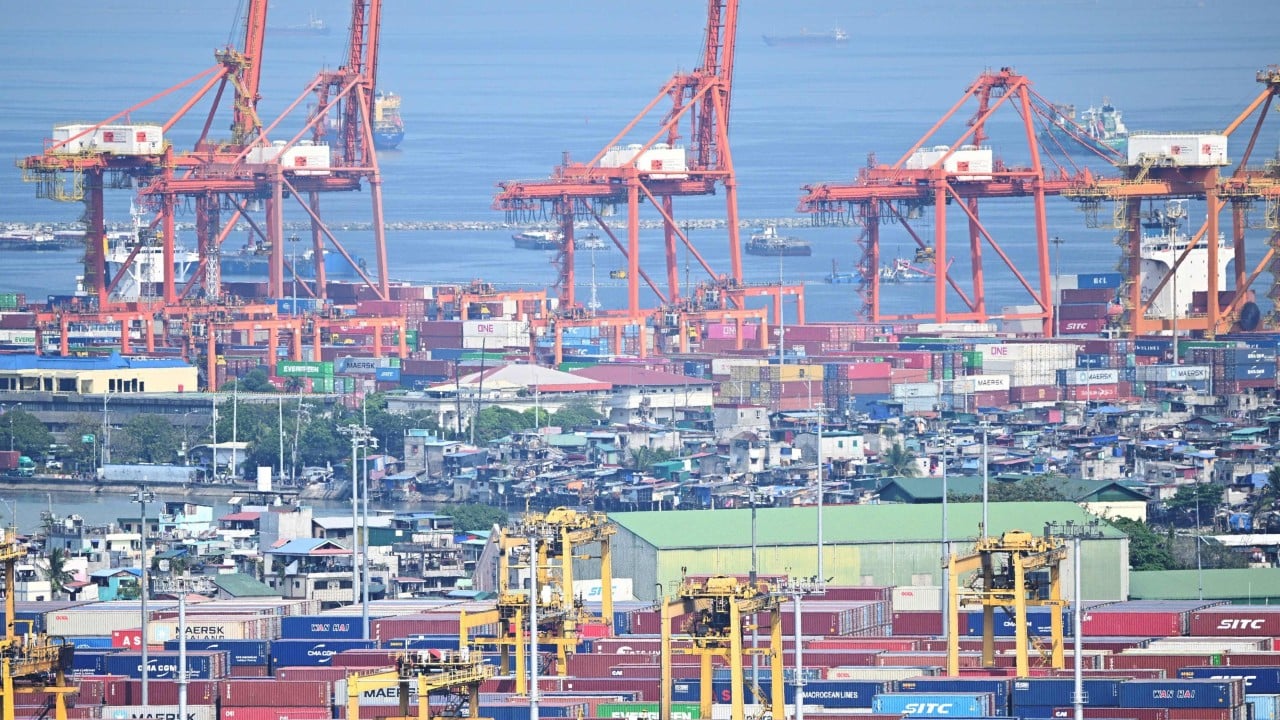
The Philippines cannot convert its sweeping legislative reforms into actual economic dominance because its foundational infrastructure remains broken. While Manila has spent the last few years tearing down decades-old protectionist walls, foreign direct investment inflows dropped by 26.5 percent year-on-year in the first four months of 2026, including a staggering 58.8 percent plunge in April alone. Multinational corporations are ignoring the legislative red carpet because the country still suffers from the most expensive electricity rates in the region, archaic logistical networks, and an unpredictable regulatory climate that statutory revisions cannot fix overnight.
The Paper Reforms Versus the Factory Floor
For decades, economists blamed the 1987 Philippine Constitution for the country’s economic isolation. The restrictive charter capped foreign ownership of public utilities, retail entities, and key infrastructure assets at 40 percent.
Policymakers answered the call with aggressive liberalization. Lawmakers systematically dismantled these barriers by amending the Public Service Act, lowering capital requirements via the Retail Trade Liberalization Act, and authorizing 100 percent foreign equity in renewable energy initiatives. The newer CREATE MORE Act extended tax holiday packages to up to 40 years for massive corporate entities.
Yet, the balance sheets of multinational corporations tell a different story. While the Board of Investments reports billions in approved pledges, actual cash injections tell a story of severe hesitation. In the opening months of 2026, net foreign inflows hovered at a mere 1.97 billion dollars. Meanwhile, neighboring Vietnam consistently draws in more than 4 percent of its gross domestic product in actual realized investments annually.
The disconnect stems from a fundamental misunderstanding of what drives corporate expansion. A tax break means nothing if the factory floor cannot secure uninterrupted power. Global manufacturing operations do not choose destinations based on statutory preambles. They choose them based on unit economics.
The Cost of Power and the Infrastructure Chokehold
The most glaring vulnerability in the Philippine strategy is the utility bill. Industrial operators in Luzon face electricity tariffs that outpace almost every other major country in the Association of Southeast Asian Nations.
Vietnam and Indonesia rely heavily on state-subsidized coal networks to keep industrial electricity costs artificially depressed. The Philippines operates a fully unbundled, privatized energy market. While privatization was intended to spark competitive pricing, it instead yielded a fragmented network vulnerable to supply deficits and high transmission charges.
A manufacturing plant operating in the Cavite or Laguna economic zones pays nearly double the per-kilowatt-hour rate of a competitor operating in Binh Duong or West Java. For high-volume semiconductor assembly plants or automotive component manufacturers, electricity is not a marginal line item. It is a defining component of the cost of goods sold.
Physical distribution channels present an equally daunting challenge. The archipelagic nature of the Philippines demands an extraordinarily efficient maritime and domestic transport network. It does not have one.
Inter-island shipping rates within the country are frequently higher than the cost of shipping a container from Manila to East Asian hubs. The port facilities suffer from persistent congestion, and the road networks connecting major agricultural and industrial centers to international gateways remain saturated. The Luzon Economic Corridor project seeks to link subic, Clark, Manila, and Batangas through rail and infrastructure projects, but these initiatives are years away from completion. Investors looking for immediate supply chain integrity are choosing the contiguous highways of mainland Southeast Asia instead.
The Myth of the Demographic Dividend
Government officials frequently market the median age of the population, which sits at roughly 25.7 years, as a major asset. The narrative suggests that an abundant supply of English-speaking, young workers will naturally absorb the manufacturing shifts fleeing geopolitical friction points elsewhere in Asia.
This projection overlooks a widening skills mismatch. The domestic educational system produces roughly 800,000 graduates each year, but the training these students receive is increasingly misaligned with the requirements of advanced industrial operations. The country’s historic economic strength has been the Business Process Outsourcing sector. This segment excelled because it required linguistic fluency and basic administrative capability.
Advanced manufacturing requires technical competencies. Precision engineering, automated assembly maintenance, and complex chemical processing demand specialized vocational training that public institutions have failed to scale.
Vietnam built dedicated industrial tech institutes in partnership with global corporations. The Philippines left industrial training largely to an underfunded technical education authority. Consequently, foreign firms arriving to establish advanced operations face a talent pool that is highly articulate but structurally unprepared for heavy industry. This dynamic creates an artificial wage pressure, driving up the cost of scarce technical talent and eroding the initial labor cost advantage.
Regulatory Volatility at the Local Level
While the executive branch travels internationally to promise a predictable business environment, the operational reality on the ground is dictated by fragmented local government units. The decentralization mandated by the decades-old Local Government Code grants cities and provinces immense autonomy over taxation, zoning, and operational permits.
This duality creates an administrative minefield for foreign executives. A multinational corporation can secure top-level approval from national authorities in Manila, only to find its project delayed for months by a municipal council demanding unique local clearances or altering real property assessments.
The national government tried to counter this by creating streamlined clearance pathways for priority projects. These fast-track measures look efficient on paper but frequently falter when local bureaucrats invoke their autonomous mandates. The resulting friction lengthens the timeline from capital deployment to commercial production. In corporate finance, time is an absolute cost. A multi-month delay caused by bureaucratic disputes at the provincial level can destroy the net present value calculations of an entire project.
The Regional Comparison In Real Numbers
To understand why the legislative changes have failed to move the needle, one must look closely at how capital distributes itself across the geography of the region. Indonesia attracted 21 billion dollars and Vietnam pulled in 20 billion dollars in foreign direct investment inflows during recent tracking periods, whereas the Philippines struggled to remain a fraction of those totals.
Direct Foreign Capital Comparison By Destination
| Destination | Percent Inflow Shift | Primary Sector Anchor |
|---|---|---|
| Indonesia | +25% | Mineral Processing and EV Battery |
| Vietnam | +20% | High-Tech Component Manufacturing |
| Philippines | -26.5% | Portfolio Reinvestment and Services |
The table illustrates a structural divergence. Capital flowing into Indonesia is anchored by massive, multi-billion-dollar nickel processing facilities and electric vehicle battery supply plants. Vietnam has successfully positioned itself as the primary alternative for global electronics assembly.
The Philippines receives a substantial portion of its capital in the form of debt instruments and the retained earnings of already established entities, rather than new, transformative greenfield investments. When global market sentiment shifts or international interest rates rise, these debt arrangements are highly sensitive, which explains the sudden drop seen in the early part of 2026.
The Inherent Limit of Tax Incentives
The primary policy tool used by Manila to counter these structural disadvantages has been the continuous manipulation of the corporate tax framework. The strategy assumes that if you make the tax environment lucrative enough, corporations will look past the structural deficiencies.
This logic is fundamentally flawed. A corporate tax incentive reduces the tax liability on profits. If an enterprise cannot operate profitably due to erratic power grids, delayed component shipments, and inflated domestic logistics costs, the promise of a zero-tax rate on non-existent profits is meaningless.
Governments that win the investment race recognize that fiscal giveaways are secondary considerations. Global enterprises value predictable operational environments, physical connectivity, and utility price stability far more than extended tax holidays. By prioritizing fiscal packages over structural overhauls, the state is attempting to build an economic expansion on a unstable foundation.
The Financial Realities of the Capital Exodus
The recent contraction in capital inflows coincides with domestic monetary strain. As the Philippine peso faces downward pressure against major global currencies, the cost of importing foreign equipment and raw materials rises.
This currency weakness exacerbates the industrial challenge. Because the domestic manufacturing ecosystem lacks depth, factories must import the vast majority of their intermediate inputs. A weaker domestic currency increases production costs, which cannot be easily offset given the fixed nature of global supply contracts.
Simultaneously, the domestic banking sector remains conservative, preferring to extend credit to established property conglomerates and domestic retail monopolies rather than funding speculative industrial infrastructure. Foreign firms hoping to leverage local capital markets find a system that is risk-averse and structurally unsuited for large-scale industrial project financing.
The current economic trajectory demands a rejection of the idea that passing laws is equivalent to achieving structural change. The legislative phase of economic revitalization is over. The operational phase has arrived, and it is failing. Until the state addresses the physical reality of its energy grid, the fragmentation of its local bureaucracy, and the degradation of its technical educational systems, the country will remain an economic spectator in an environment where its neighbors are actively building the future.