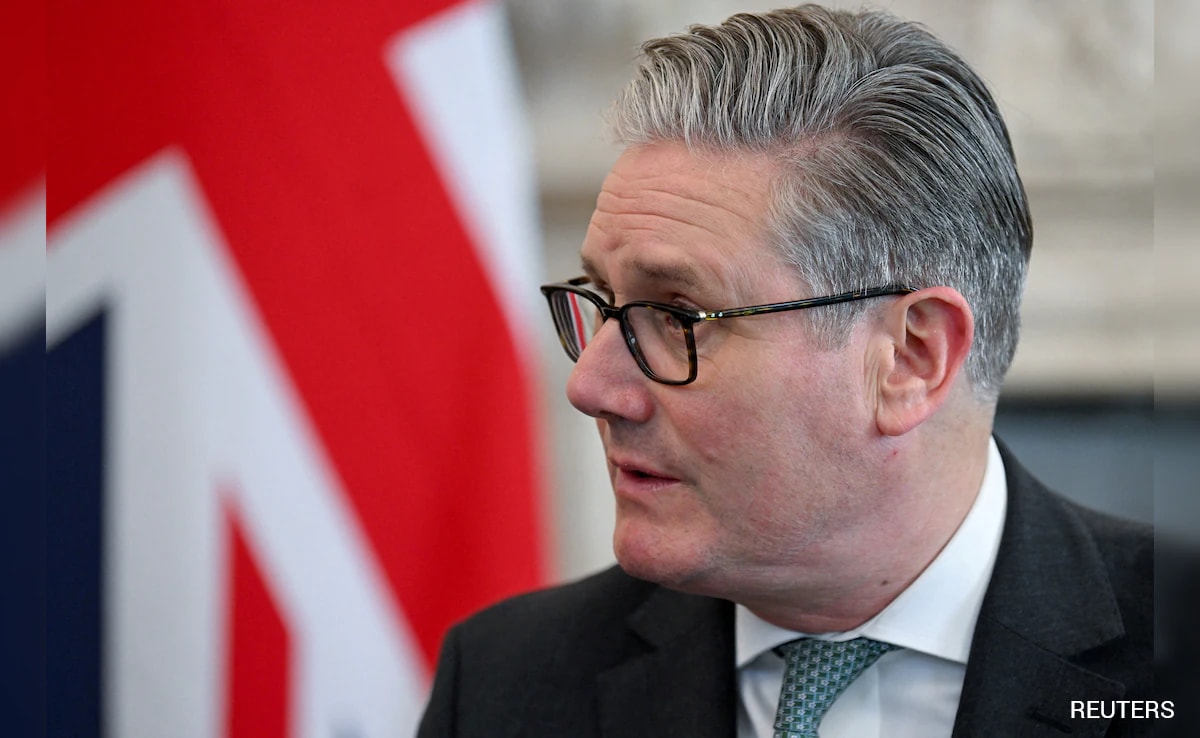
Keir Starmer is effectively ending the century-old doctrine of the "Special Relationship" as the fallout from the US-led war in Iran forces London into a radical realignment with the European Union. By refusing to join Donald Trump’s February 28 strikes on Tehran and denying the US military unrestricted access to British bases, Starmer has signaled that the UK’s strategic center of gravity has shifted from the Atlantic to the English Channel. This is not a temporary diplomatic spat; it is a calculated survival move as the UK faces an energy crisis and a hostile Washington that views British caution as a betrayal.
The prime minister’s pivot rests on the realization that the United States is no longer a predictable guarantor of British security or economic stability. With the Trump administration threatening to exit NATO—calling it a "paper tiger"—and leveling personal insults at Downing Street officials, the Starmer government is preparing an "EU Reset" bill for May 13. This legislation will introduce "dynamic alignment," allowing the UK to mirror EU regulations without the friction of the post-Brexit years. For a prime minister who once promised to keep his distance from Brussels, the reality of a Middle Eastern war and an isolationist America has made the "Global Britain" era an unaffordable luxury.
The Intelligence Schism and the Base Blockade
The breaking point occurred behind closed doors long before the first missiles hit Tehran. British intelligence assessments diverged sharply from the Pentagon’s view on "regime change from the skies," a phrase Starmer has used to publicly criticize the US-Israeli strategy. When the US requested the use of RAF Akrotiri in Cyprus and Diego Garcia for offensive sorties, Starmer restricted their use to "specific and limited defensive purposes."
This decision left the US military scrambling to reroute operations, and the retaliation from Washington was swift. President Trump has publicly questioned why the US should protect a nation that "stabs its allies in the back" during a hot war. Inside the Cabinet Office, the consensus is that the UK cannot risk being dragged into a regional conflagration that lacks a clear exit strategy, especially one that has already triggered a spike in the cost of living and threatened the UK's own bases in Bahrain and Qatar.
The Economic Necessity of Brussels
While the military rift is the most visible sign of the decay in UK-US relations, the economic pressure is what truly drives the EU pivot. The Iran war has disrupted oil flows, hitting the UK harder than many of its European neighbors. Starmer has admitted that "the damage of Brexit" left the UK economy too fragile to withstand the volatility of the current US administration.
By moving toward "dynamic alignment," Starmer is attempting to solve two problems at once:
- Supply Chain Resilience: Reducing border friction with the EU to stabilize food and energy prices.
- Security of Scale: Re-entering the European security fold to compensate for the potential loss of US defense cooperation.
The upcoming "EU Reset" bill is the most significant piece of foreign policy legislation since the 2016 referendum. It will grant MPs the power to adopt EU rules in key sectors without a full parliamentary vote, a move that bypasses the traditional gridlock of Brexit politics but risks a massive domestic backlash from the right.
The SAFE Fund Gamble
The path to Europe is not without its own roadblocks. Last November, Britain’s attempt to join the €150 billion Security Action for Europe (SAFE) defense fund collapsed. Brussels demanded a €2 billion entry fee—roughly 10 percent of the UK’s annual defense budget—and insisted that the UK also help fund a separate €90 billion loan facility for Ukraine.
Starmer is now betting that the urgency of the Iran conflict will force the EU to lower its entry requirements. He is pitching a "European NATO," a security framework where the UK provides the continent’s most capable naval and intelligence assets in exchange for deep economic integration. It is a trade-off that effectively treats the European Union as the UK’s primary sovereign partner, relegating the US to a secondary, albeit necessary, trade associate.
Public Opinion and the Farage Factor
Starmer is operating with a razor-thin mandate for this shift. While 59 percent of the British public opposes the war in Iran, the prospect of returning to the EU’s regulatory orbit remains toxic to a vocal segment of the electorate. Nigel Farage and the Reform UK party have already labeled the "EU Reset" bill a "betrayal of the 2016 vote."
However, the prime minister’s gamble is that the public cares more about the price of petrol and the stability of the National Health Service than the nuances of regulatory alignment. If the war in Iran continues to drain US resources and attention, the UK has little choice but to lean into the only other power bloc capable of providing a buffer against global instability.
The New Strategic Reality
The UK is no longer trying to be the "bridge" between the US and Europe. That bridge has been burned by a combination of American volatility and British economic necessity. Instead, London is positioning itself as the indispensable northern pillar of a new European security architecture.
This isn't about a nostalgic return to the EU. It is a cold-blooded assessment of power. With the US becoming an unreliable ally and the Middle East in flames, Starmer is choosing the stability of the 27-nation bloc over the chaos of a "Special Relationship" that has become a one-way street. The upcoming King’s Speech on May 13 will not just be a legislative agenda; it will be the formal obituary for Britain’s Atlanticist era.
Prepare for a summer of intense legislative maneuvering as the UK government attempts to decouple from Washington’s military orbit while simultaneously welding itself to Europe’s regulatory engine.