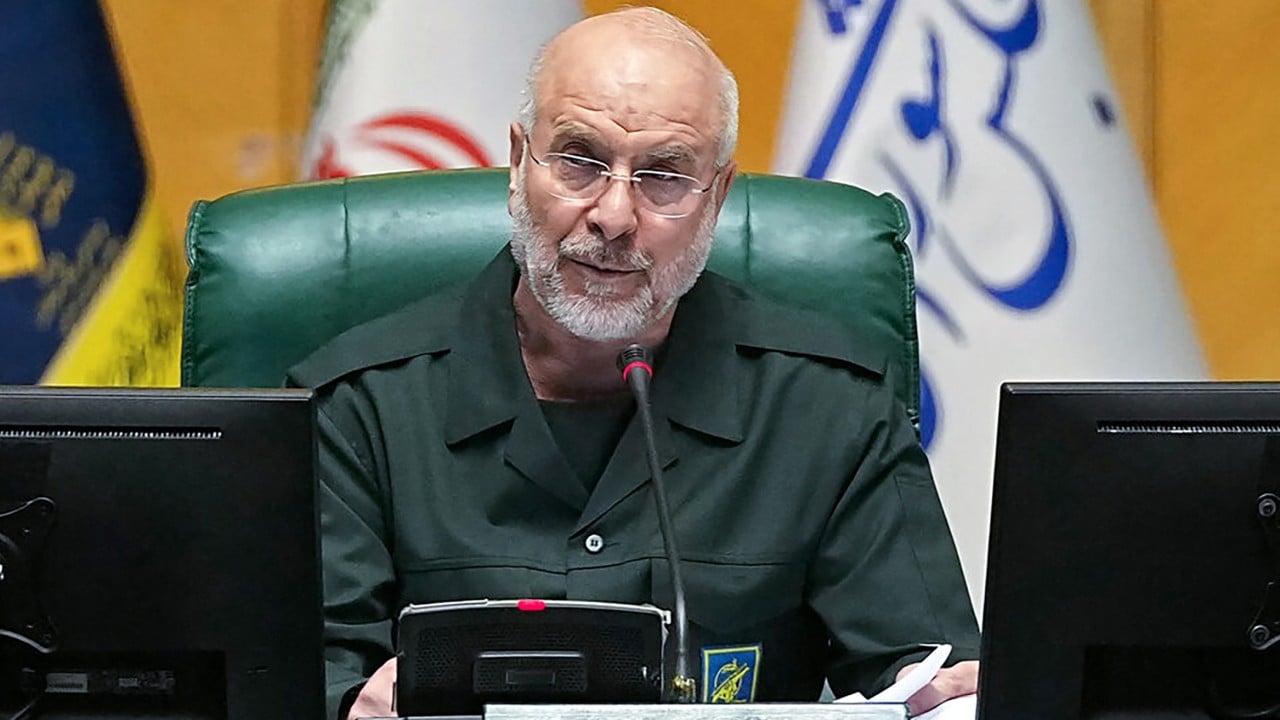
The fragile diplomatic bridge built between Washington and Tehran is buckling under the weight of escalating demands, threatening to plunge the Middle East back into a full-scale conflagration. While public statements focus on a mutual desire to formalize an April ceasefire, the underlying reality reveals a dangerous pattern of shifting goalposts and deep-seated animosity. US President Donald Trump recently sent a revised, significantly stricter peace framework back to Iranian negotiators, prompting a swift and public rejection from Tehran. Iran's chief negotiator, Mohammad Bagher Ghalibaf, stated bluntly that the United States cannot be trusted and that no agreement will be signed unless it fully guarantees Iranian rights.
This diplomatic impasse directly impacts global economic stability, as the competing blockades around the Strait of Hormuz continue to strangle a vital artery responsible for one-fifth of the world’s oil supply.
The Illusion of the Pakistan Mediated Breakthrough
The temporary ceasefire brokered by Pakistan in April was hailed as a significant diplomatic achievement, yet it did little to address the systemic issues driving the conflict. It merely froze a highly volatile frontline. In February, a series of joint US and Israeli air and missile strikes eliminated a substantial portion of the Islamic Republic's senior leadership, fundamentally altering Tehran's internal power dynamics.
Negotiating from a position of perceived vulnerability, Iran's remaining leadership has adopted an unyielding public stance to maintain domestic legitimacy. The survival of the regime depends on projecting strength, making significant concessions to Washington politically unfeasible.
The revised American proposal seeks to capitalize on this military pressure by demanding sweeping, permanent concessions. According to leaked details obtained by media outlets, the new framework demands a total halt to all domestic uranium enrichment and the complete dismantling of Iran's ballistic missile infrastructure.
Washington views these terms as necessary guarantees to prevent a nuclear-armed Iran. Tehran views them as an existential surrender.
The Financial Stalemate and the Battle for the Strait
Behind the rhetoric of security lies a stark financial conflict that has brought negotiations to a standstill. Iran has demanded the immediate release of $12 billion in frozen foreign assets as a mandatory precondition for entering substantive talks regarding its nuclear program.
+-----------------------------------+-----------------------------------+
| Core Iranian Demands              | Core United States Demands        |
+-----------------------------------+-----------------------------------+
| Unfreezing of $12 billion in asset| Absolute zero uranium enrichment  |
| Recognition of Hormuz sovereignty | Unconditional freedom of maritime |
| Lifting of all shipping blockades | Dismantling of ballistic missiles |
+-----------------------------------+-----------------------------------+
The dispute over maritime infrastructure has emerged as a major flashpoint. President Trump publicly claimed that any final agreement would mandate that Iran charge no tolls or fees on international shipping vessels navigating the Strait of Hormuz.
Iranian state media outlets quickly contradicted this assertion. Lawmaker Alireza Salimi confirmed that a bill is moving through the Iranian parliament designed to assert strict sovereignty over the waterway. This legislation includes the implementation of mandatory administrative fees and transit taxes on foreign commercial vessels.
Escalation in the Gulf and the Expansion of the Theater
The rhetoric on the diplomatic stage is frequently contradicted by actions in the field. The ceasefire has been marred by repeated violations that threaten to reignite active hostilities.
Iran's Revolutionary Guards announced they shot down an American military drone that they claimed was violating Iranian territorial airspace. Simultaneously, US naval forces executed a targeted strike against military infrastructure at the strategic Iranian port of Bandar Abbas, drawing retaliatory artillery fire from Iranian coastal batteries.
"We will not approve any agreement until we are certain that the rights of the Iranian people have been upheld."
— Mohammad Bagher Ghalibaf, Iranian Chief Negotiator
Compounding the crisis is the introduction of external geopolitical variables. President Trump recently indicated on social media that any final peace deal might be contingent upon regional states signing onto the Abraham Accords.
Linking a bilateral ceasefire to the broader normalization of Arab-Israeli relations has introduced immense complexity into an already fraught negotiation. It has also alienated key regional players who view the move as an attempt to alter the geopolitical balance of power by force.
The Strategic Failure of Maximized Pressure
The current deadlock exposes the fundamental flaw in relying solely on economic and military coercion to achieve long-term diplomatic objectives. By systematically eliminating the moderate political factions within Iran through targeted strikes, Washington has left itself with no viable interlocutors willing to accept a compromise.
The remaining hardline elements in Tehran view any concession as an invitation to further aggression. They are entirely prepared to endure prolonged economic isolation or risk a return to open warfare rather than sign an agreement that strips the nation of its domestic defense capabilities.
The primary obstacle to peace is not a lack of diplomatic channels, but the irreconcilable core assumptions held by both administrations. Washington believes that military pressure can force an unconditional capitulation. Tehran operates under the conviction that any agreement signed under duress will inevitably lead to regime change.
As both sides continue to amend the draft treaty with increasingly hostile clauses, the window for a negotiated settlement is rapidly closing, leaving the global energy market and the Middle East on the brink of an avoidable catastrophe.