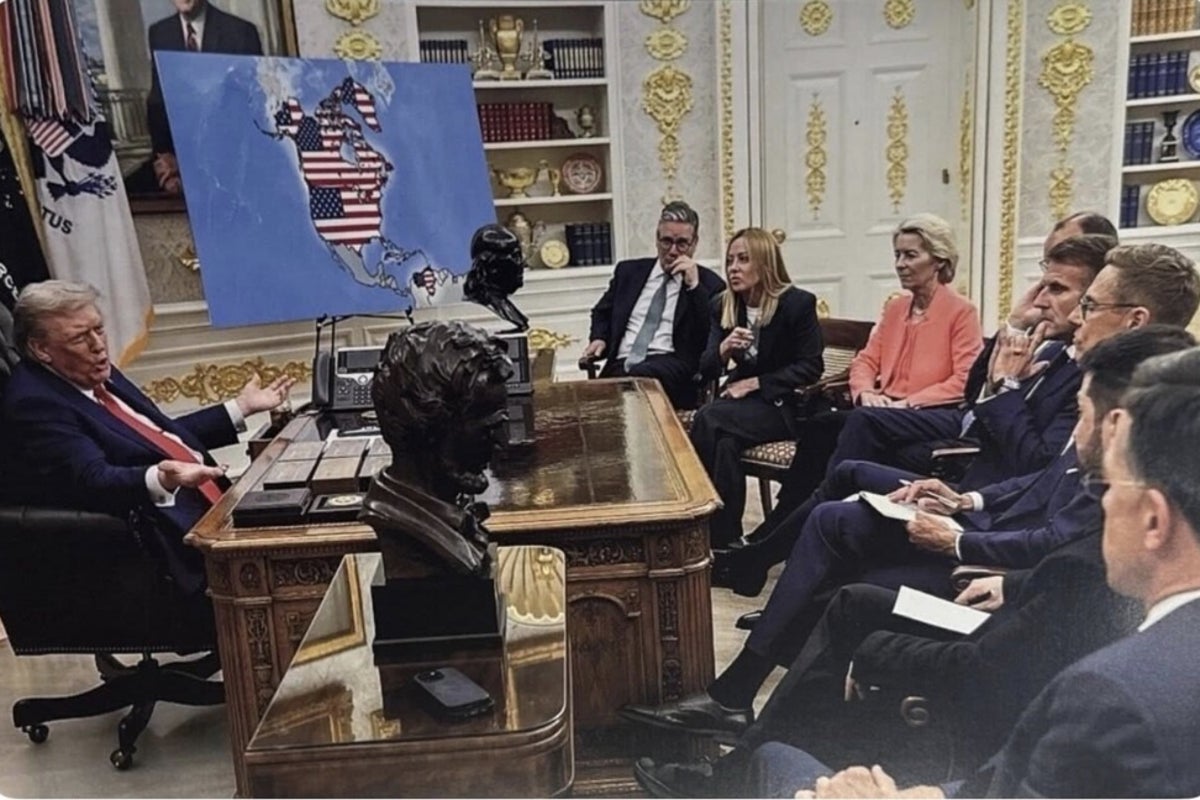
When the cameras are rolling in the Oval Office, diplomacy looks remarkably simple. Handshakes are firm. Smiles are wide. Statements of mutual admiration are read from cue cards, designed to reassure markets and quiet domestic critics.
During the meeting between Donald Trump and the Iraqi Prime Minister, the public got the usual theatrical production. The American president declared his affection for Iraq, a statement that was quickly splashed across international headlines as a sign of warming relations. But behind that superficial display of diplomatic warmth lies a much harsher, colder geopolitical reality.
The United States is not in Iraq out of sentimentality.
The relationship between Washington and Baghdad is dictated by a brutal calculus of survival, energy dominance, and regional containment. While public statements focus on partnership and shared values, the private discussions are dominated by a desperate struggle over oil, Iranian influence, and the strategic footprint of the American military. To understand what is actually happening between these two nations, we have to look past the choreographed handshakes and examine the structural forces that prevent either side from walking away.
The Illusion of Sovereignty and the Reality of Oil
Baghdad wants the world to believe it is a fully sovereign capital, capable of charting its own path. The reality is far more complicated. Iraq is structurally dependent on the American financial system to survive, a vulnerability that Washington exploits with quiet efficiency.
Every single dollar Iraq earns from its oil sales is deposited into an account at the Federal Reserve Bank of New York.
This arrangement, a legacy of the 2003 invasion and subsequent international agreements, gives the United States immense leverage. If Baghdad moves too close to Tehran, or if it demands the immediate expulsion of American troops, Washington can simply slow down the transfer of physical cash to the Iraqi central bank. We saw this play out when the U.S. Treasury restricted access to dollars for several Iraqi banks accused of laundering currency to Iran. The Iraqi dinar plummeted, inflation spiked, and the government in Baghdad suddenly realized how short its leash actually was.
+-------------------------------------------------------------+
|              The Petrodollar Feedback Loop                  |
+-------------------------------------------------------------+
|  1. Iraq sells oil on global markets.                       |
|  2. Revenue is deposited at the Federal Reserve in New York.|
|  3. U.S. Treasury monitors and approves dollar transfers.   |
|  4. Baghdad receives cash to pay public sector salaries.    |
+-------------------------------------------------------------+
This financial dependency makes any talk of a complete American withdrawal highly unrealistic. The Iraqi political class, despite its frequent anti-American rhetoric aimed at appeasing local voters, knows that a total break with Washington would trigger an economic collapse. The public sector, which employs a massive portion of the Iraqi workforce, relies on those New York dollar transfers to get paid. Without them, the state machinery grinds to a halt.
The Shadow of Tehran in the Oval Office
Every American president who sits down with an Iraqi prime minister faces the same silent partner at the negotiating table. That partner is Iran.
Since the fall of Saddam Hussein, Tehran has systematically built a network of political, economic, and military influence inside Iraq. The Popular Mobilization Forces (PMF), a coalition of state-sanctioned militias, answer directly to commanders aligned with Iran's Islamic Revolutionary Guard Corps. These groups are not fringe actors. They hold seats in parliament, control lucrative business empires, and possess heavy weaponry that rivals the official Iraqi army.
       [United States]                      [Iran]
              │                               │
    Financial Leverage               Militia Integration
    (Fed NY Oil Account)            (PMF & Political Allies)
              │                               │
              └─────────► [ BAGHDAD ] ◄───────┘
                                 │
                     Sovereignty Tightrope
When Trump tells an Iraqi prime minister that he "loves" Iraq, he is attempting to buy influence in a market where Iran has already invested heavily. The U.S. strategy relies on offering Baghdad a counterweight to Iranian domination. Baghdad wants this counterweight. The ruling coalition in Iraq does not want to become a vassal state of Tehran, but they also cannot afford to openly defy their powerful neighbor.
This puts the Iraqi prime minister in a delicate position. He must reassure Washington that Iraq remains an ally in the war on terror and a reliable energy partner. At the same time, he must return to Baghdad and assure pro-Iranian factions that he is working to end the foreign military presence. It is a tightrope walk where a single misstep can lead to political assassination or a civil war.
The Permanent Military Footprint
The public debate often focuses on the number of American troops stationed in Iraq. Proponents of withdrawal argue that the fight against ISIS is largely won and that the troops should come home. This view misses the strategic utility of the American presence.
The bases in Iraq are not just about Iraq.
They are critical nodes in a regional intelligence and logistics network. From airbases like Al-Asad in western Iraq, the U.S. military can monitor eastern Syria, track Iranian supply lines, and project power across the Middle East. If the U.S. vacates these positions, the vacuum will immediately be filled by Russian, Chinese, or Iranian assets.
Furthermore, the military partnership provides the U.S. defense sector with a captive market. Iraq's air force flies F-16 fighters; its army drives Abrams tanks. These advanced systems require constant maintenance, spare parts, and training that only American contractors can provide. This creates a technical dependency that binds the Iraqi military apparatus to Pentagon procurement cycles for decades.
The Great Energy Re-alignment
Beyond the military and political dimensions, a massive economic shift is quietly underway. For years, Iraq has relied on Iranian natural gas to keep its electricity grid from collapsing, especially during the scorching summer months. This dependency has forced Washington to repeatedly issue sanctions waivers to Baghdad, allowing it to import energy from Tehran despite the maximum pressure campaign.
The United States is now demanding an end to this arrangement.
The real focus of recent bilateral discussions is not troop levels, but energy independence. Washington is pushing Iraq to sign deals with American energy giants like General Electric and Honeywell to capture flared gas from its oil fields and modernize its electrical grid. The goal is to plug Iraq into the Gulf Cooperation Council's power grid, physically disconnecting Baghdad from Tehran’s energy sphere.
This is a massive undertaking with high stakes. If Iraq succeeds in diversifying its energy imports, Iran loses its most potent economic lever over Baghdad. If it fails, the country will remain vulnerable to seasonal blackouts and political blackmail from Tehran.
The Price of Admission
The theatrical warmth displayed in Washington meetings cannot obscure the transactional nature of this relationship. For the United States, Iraq is a strategic buffer, a major oil producer, and a critical outpost in a hostile region. For Iraq, the United States is an economic guarantor, a source of military technology, and a necessary shield against total Iranian domination.
Neither side can afford to walk away, no matter what they tell their respective domestic audiences. The handshakes will continue, the statements of mutual affection will be read, and the brutal, quiet struggle for control of the Middle East will go on behind closed doors.