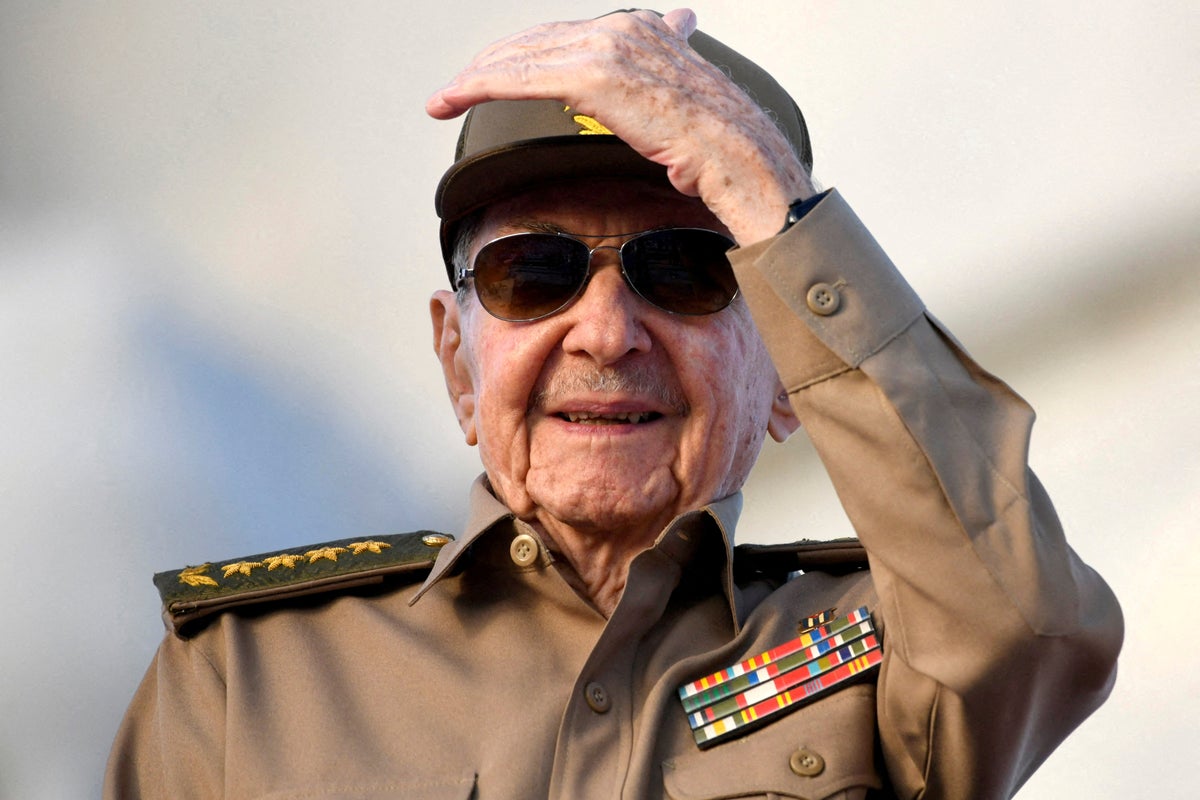
The United States Justice Department has unsealed a federal criminal indictment against 94-year-old former Cuban President Raúl Castro, charging him with conspiracy to kill US nationals, four counts of murder, and the destruction of aircraft. The charges stem from the February 24, 1996, shoot-down of two unarmed civilian planes operated by the Miami-based exile group Brothers to the Rescue, an incident that occurred over international waters and resulted in the deaths of four men. Acting Attorney General Todd Blanche announced the indictment at Miami’s historic Freedom Tower, a venue chosen to maximize symbolic impact on Cuban national day. While the legal filing provides a long-delayed acknowledgment for the victims' families, the sudden resurrection of a 30-year-old cold case is fundamentally a political maneuver disguised as judicial accountability. The aging comandante will never sit in an American courtroom, making this indictment less about penal justice and more about the Trump administration's aggressive strategy to force regime change in Havana.
The Thirty Year Cold Case Weaponized
Digging into the legal mechanics of this indictment reveals a selective revival of historical trauma. For decades, the file on the 1996 shoot-down sat in the archives of the US Attorney’s Office for the Southern District of Florida. The facts of the case have not fundamentally changed since the Clinton administration. On that February afternoon, Cuban MiG-29 fighter jets targeted three Cessna Skymasters; two were obliterated. Cuba maintained the aircraft had violated its sovereign airspace, while international investigators proved the kill zone was in international airspace.
What has changed is the political utility of those facts. By indicting Castro now, alongside five co-defendants including fighter pilot Lorenzo Alberto Pérez-Pérez, Washington is attempting to build a legal scaffold for its current foreign policy goals. The administration is using the Department of Justice to signal that the period of diplomatic accommodation, which peaked during the Obama era, is officially dead.
The Lever of Economic Exhaustion
The timing of the indictment is inextricably linked to an acute, manufactured crisis on the island. Cuba is currently paralyzed by an unprecedented energy collapse, with rolling blackouts triggering spontaneous street protests across Havana. This is not an accident of history. A tightened US oil embargo has systematically choked off the island’s fuel supplies, targeting third-party shipping companies and state entities alike.
President Donald Trump recently framed the administration's objectives in explicit terms, stating at a Coast Guard Academy event that Washington intends to "drive out the forces of lawlessness" from Havana to the Panama Canal. Just weeks prior, during a speech in Palm Beaches, the rhetoric was even more direct, suggesting an imminent American "takeover" of the island.
The indictment acts as the legal component of a multi-front pressure campaign. Consider the sequence of events. Just days before the indictment was unsealed, CIA Director John Ratcliffe led a quiet, high-stakes delegation to Havana. He delivered a blunt ultimatum to Cuban intelligence and Castro’s grandson, Raúl Guillermo Rodríguez Castro. The message was clear: Washington would offer relief from the devastating economic sanctions, but only if Cuba agreed to "fundamental changes" to its governance. The unsealing of the murder charges immediately after those talks indicates that Havana refused the deal. The indictment is the punishment for that refusal.
The Mirage of Extradition
Treating this indictment as a standard criminal proceeding ignores the realities of geopolitics. There is zero probability that Raúl Castro will ever face a jury in Miami. He remains a protected figurehead of the Cuban state, surrounded by a loyal military apparatus that he spent decades building as defense minister. Cuba does not have an active extradition treaty with the United States, and current President Miguel Díaz-Canel has repeatedly rejected American legal assertions as violations of national sovereignty.
This creates a distinct disconnect between the rhetoric of prosecutors and observable reality. Acting Attorney General Blanche declared that "leaders cannot be permitted to target Americans... and not face accountability." Yet, the only tangible outcome of this filing is the permanent restriction of Castro's travel, an irrelevant penalty for a 94-year-old who has not left the island in years.
A History of Legal Symbolism
Washington has a long history of using domestic indictments against foreign leaders as a tool of psychological warfare rather than practical law enforcement. The 1988 indictment of Panamanian dictator Manuel Noriega eventually led to a military invasion. Conversely, the 2020 indictment of Venezuelan President Nicolás Maduro on narcoterrorism charges yielded a $15 million bounty but left his grip on power largely intact.
The Castro indictment falls squarely into the latter category. It provides an immediate political victory for the administration among the powerful, hardline Cuban-exile electorate in South Florida. However, as an instrument of regime change, it is a blunt tool that may produce the opposite of its intended effect.
The Backfire Effect on Havana's Streets
By backing the Cuban regime into a corner with simultaneous economic strangulation and criminal prosecution, the US risks closing the door on any peaceful transition of power. When senior leadership faces the prospect of spending their final years in a federal penitentiary, their incentive to reform or step down vanishes. Survival becomes the only option.
The Cuban Foreign Ministry, led by Bruno Rodríguez Parrilla, has already begun leveraging the indictment to rally nationalist sentiment, characterizing the charges as "unilateral coercive measures" designed to inflict collective punishment. Historically, the Castro regime has proven remarkably adept at converting American aggression into domestic political capital. When the population is focused on basic survival amid blackouts and food shortages, a high-profile attack from Washington allows the government to blame external forces for its own economic mismanagement.
The families of Carlos Costa, Armando Alejandre Jr., Mario de la Peña, and Pablo Morales have waited three decades to see Raúl Castro's name on a federal charge sheet. They now have that document. But the cold reality of international relations dictates that this indictment will remain a piece of paper, a symbolic gesture in a broader, high-stakes geopolitical game that shows no signs of resolving the six-decade stalemate in the Florida Straits.