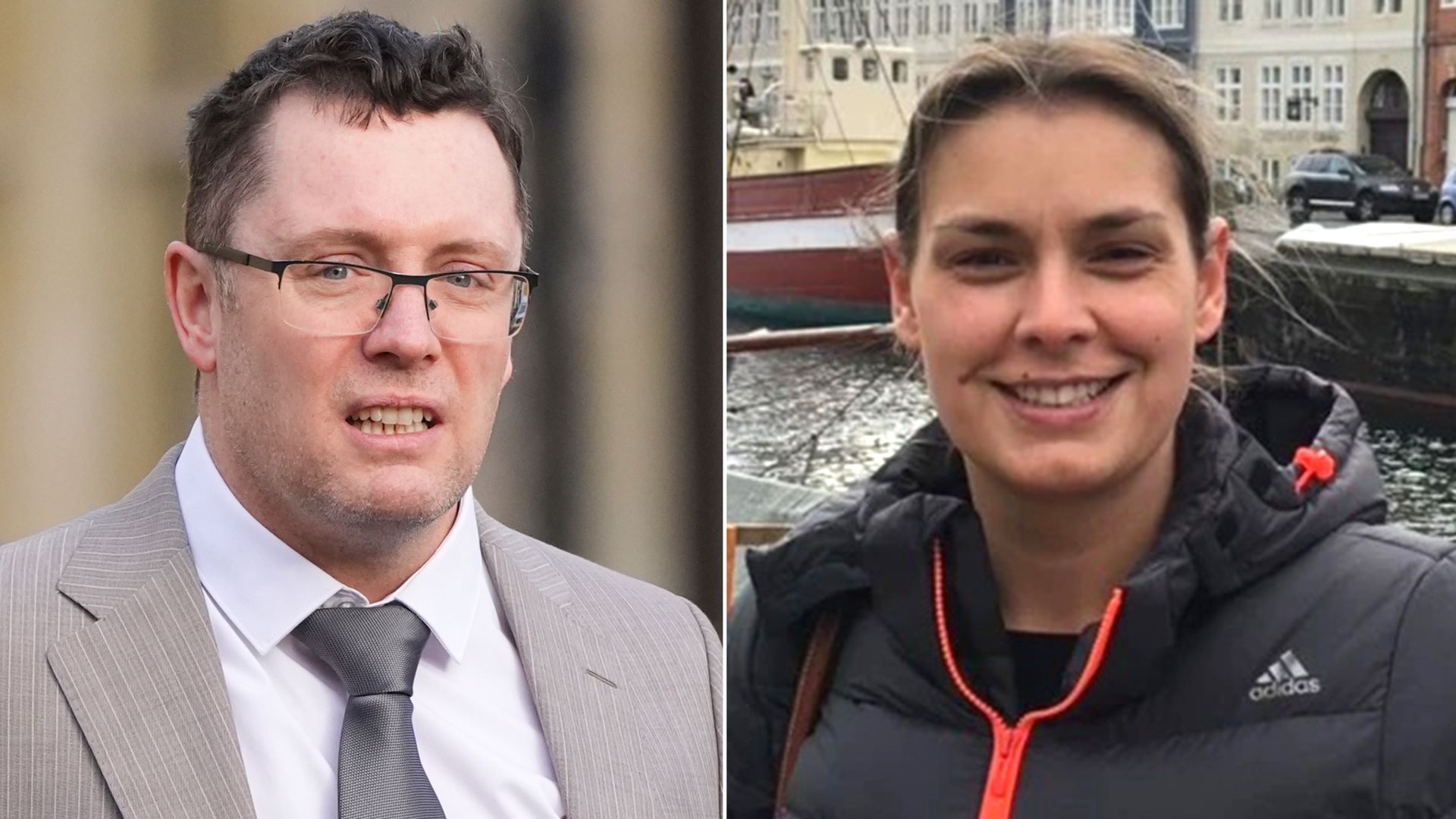
Justice is rarely as clean as a courtroom gavel suggests. When the case against Nicholas Allen ended with his clearance of rape and manslaughter charges, it didn't just mark the end of a legal battle. It pulled back a heavy, uncomfortable curtain on the intersection of mental health, toxic relationships, and the legal system's struggle to quantify emotional pain. Allen, 47, faced the most severe accusations a spouse can face after his wife, Mary, took her own life. The prosecution’s theory was bold. They argued his alleged abuse drove her to that final, desperate act.
The jury didn't buy it. After a trial that lasted weeks, they found him not guilty. But Allen didn't walk out of court claiming everything was perfect. Instead, he spoke about how domestic abuse is "very real," a statement that carries immense weight coming from a man who just sat in the defendant's chair for exactly that. It's a messy story. It’s a tragic one. It’s a case that forces us to look at the gaps in how we protect people before things turn fatal.
The Prosecution Case and Why It Failed
Legal experts knew this was a high-stakes gamble from the start. Charging someone with manslaughter because their partner committed suicide is incredibly difficult. You have to prove "causation." In simple terms, the state had to show that Allen’s actions were the direct, significant cause of Mary’s death.
The prosecution relied on a narrative of controlling behavior and sexual violence. They painted a picture of a home that had become a prison. But the defense had a different angle. They focused on Mary's long history of mental health struggles. They pointed to medical records and previous incidents that predated her relationship with Allen.
In the eyes of the law, "reasonable doubt" is a massive hurdle. If a jury thinks there's even a small chance her tragic decision was fueled by underlying clinical depression or past trauma unrelated to the marriage, they can't convict. That's exactly what happened here. The evidence wasn't "bulletproof" enough to link his alleged behavior to her death in a way that met the criminal standard.
Understanding the Nuance of Domestic Abuse Claims
Just because a man is cleared of a crime doesn't mean the relationship was healthy. Allen’s own comments after the trial suggest a self-awareness that is rare in these cases. He didn't just celebrate his freedom. He acknowledged the dark reality of domestic strife.
Domestic abuse isn't always a black eye. We're getting better at recognizing coercive control—the subtle, grinding way one person can erode another's autonomy. It's about who controls the money. It's about who you're "allowed" to see. It's the constant walking on eggshells.
The problem is that our courts are built for physical evidence. A broken rib is a fact. A broken spirit is an opinion. When a victim isn't there to testify because they've passed away, the difficulty of proving these "invisible" crimes triples. We rely on text messages, diary entries, and the testimony of friends who only saw snippets of the truth. It's a fragmented way to reconstruct a life.
Why We Struggle to Help the "Marys" of the World
Mary’s death is a failure of the safety net. Whether you believe Allen was the primary cause or a contributing factor, the reality is that a woman felt she had no other exit.
Common mistakes people make when looking at these cases:
- Assuming "why didn't she just leave?" is a valid question. It’s not. Leaving is the most dangerous time for a victim.
- Thinking that a "not guilty" verdict means nothing happened. It means the state didn't prove its specific charge beyond a shadow of doubt.
- Ignoring the role of mental health as a compounding factor. Abuse and depression feed each other in a lethal loop.
Real change doesn't happen in the courtroom. It happens in the doctor’s office and the community center. If a woman with a history of mental health issues is in a volatile relationship, she needs specialized, multi-agency support. She doesn't just need a therapist; she needs a safety plan. She needs people who understand that her suicidal ideation might be tied to her domestic situation.
The Legal Precedent of Manslaughter by Suicide
This case wasn't happening in a vacuum. There has been a growing trend in UK and international law to hold abusers accountable for the "ultimate" consequence of their actions. The logic is simple: if you break someone's mind so thoroughly that they see no way out, you are responsible.
But as the Allen case shows, the "but-for" test is a nightmare to apply. But for his actions, would she still be alive? If the answer is "maybe" or "we aren't sure," the prosecution loses.
We saw similar themes in the case of Justyna Rezler or the high-profile trials in the US regarding "encouragement to suicide." The law is trying to catch up to our modern understanding of psychological pressure. Right now, it’s failing. We have a gap where "harm" is clearly occurring, but it doesn't fit into the neat boxes of "Assault" or "Battery."
What Happens When the Cameras Turn Off
Nicholas Allen walks free. The family of his wife is left with a void that a trial couldn't fill. This is the part of the "true crime" cycle people hate to talk about. There is no closure here. A man’s reputation is shredded, regardless of the verdict, and a woman is gone.
He spoke about domestic abuse being "real" because he lived in the center of a storm. He saw how the labels of "victim" and "abuser" are thrown around in a system that sometimes lacks the tools to handle the complexity of human emotions.
If you're in a situation that feels like it's spiraling, don't wait for a "crime" to happen. The legal system is a reactive tool. It’s a blunt instrument that swings after the damage is done. You need proactive intervention.
- Document everything. If you feel controlled or scared, keep a record that isn't on a shared device. Use apps designed for domestic safety that look like something else on your home screen.
- Trust your gut over your heart. Relationships can be loving and abusive at the same time. That’s why they’re so hard to leave. The love doesn't cancel out the danger.
- Talk to a professional who specializes in coercive control. General couples therapy is often useless and sometimes dangerous in abusive dynamics. You need someone who recognizes the power imbalance.
Domestic abuse is a quiet killer. It’s the silence between the arguments. It’s the text message you delete because you don't want to explain who it was from. The Allen trial is a grim reminder that while the law might clear a person of a crime, it can never undo the tragedy of a life lost to despair.
Get out before the legal system has to decide who was at fault for your absence. Use the resources available through organizations like Refuge or the National Domestic Violence Hotline. They don't need a jury's verdict to believe you. They just need you to reach out.