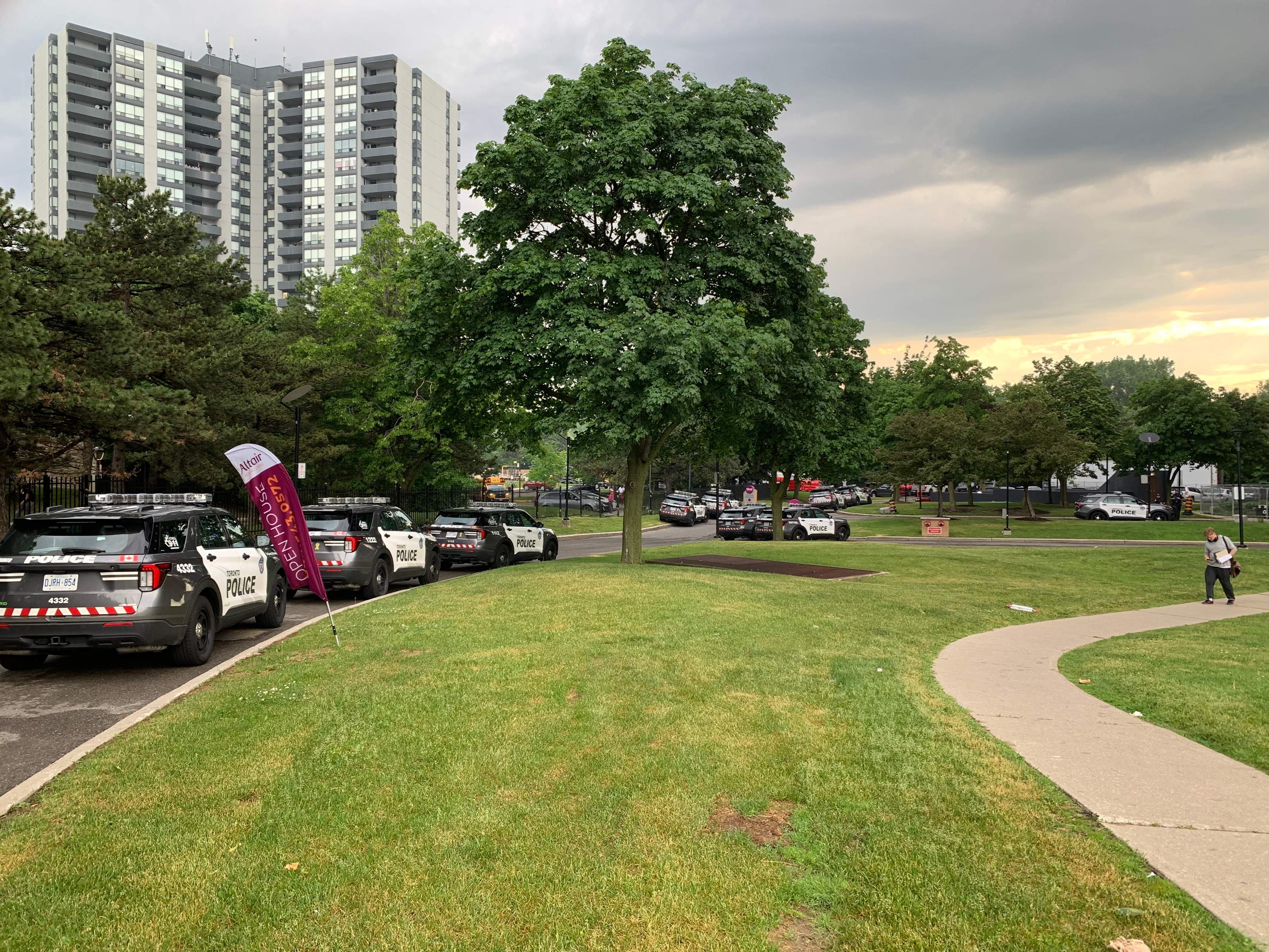
A Toronto police officer is recovering in the hospital after an exchange of gunfire in the city's west end, marking another violent chapter in a trend that frontline workers say has reached a breaking point. The incident occurred during an active investigation when encounters turned lethal, forcing a sudden shootout in a residential area. This shooting is not an isolated tactical failure. It represents a systemic escalation in street-level violence and illegal firearm availability that Toronto’s current policing strategies are struggling to contain.
The incident unfolded rapidly, leaving neighbors shaken and a community questioning how a routine deployment escalated into a gun battle. While the immediate focus remains on the wounded officer’s recovery, the broader investigation must center on the systemic failures that allow illicit weapons to flood municipal streets.
The Anatomy of a Flashpoint
The mechanics of a street-level shootout are rarely about a single tactical decision. They are the result of compounding risks that officers face the moment they step out of a cruiser. In this instance, plainclothes officers were conducting an ongoing investigation when they confronted an armed suspect. Within seconds, a routine command turned into a lethal exchange.
Frontline personnel increasingly find themselves outgunned. The weapons filtering into Ontario cities are no longer just low-caliber handguns. Police forces are seizing prohibited semi-automatic firearms with high-capacity magazines, often smuggled across the border or sourced through sophisticated domestic trafficking networks.
When an officer is shot, the immediate political response is to call for stricter bail laws or increased budgets. However, these reactions ignore the operational reality on the ground. Officers are frequently deployed into high-risk scenarios with insufficient intelligence regarding the firepower they might encounter. The gap between administrative policy and street reality is widening.
The Fragmented Approach to Illicit Firearms
To understand why gun violence persists despite decades of legislative intervention, one must look at the supply chain. Canada's firearm strategy heavily emphasizes restricting legal gun owners, a political talking point that does little to disrupt the criminal black market.
- Border Vulnerabilities: The vast majority of crime guns traced in Toronto originate from outside the country, slipping through commercial border crossings undetected due to low inspection rates.
- The Sourcing Shift: Local manufacturing via 3D printing and the assembly of "ghost guns" from unregulated parts have created a decentralized supply network that defies traditional tracking methods.
- The Enforcement Deficit: Specialized anti-gang units are chronically understaffed, frequently pulled away to handle basic frontline patrol duties due to city-wide staffing shortages.
This enforcement deficit creates a vacuum. Criminal organizations operate with a degree of impunity, knowing that proactive policing has been scaled back in favor of reactive, call-driven models.
The Toll on Retaining Frontline Personnel
The crisis extends beyond physical injuries. Every time an officer is wounded in the line of duty, morale across the entire force plummets. Toronto is already facing a severe recruitment and retention crisis, with senior officers choosing early retirement over prolonged exposure to an increasingly hostile operational environment.
New recruits are entering a profession where the margin for error has shrunk to zero. The psychological burden of knowing a standard traffic stop or community inquiry could result in an ambush is driving high rates of operational stress injuries. If the city cannot guarantee basic safety infrastructure for its officers, it cannot hope to attract the caliber of personnel required to police a complex metropolitan area.
De-escalation Policies Meet Hard Realities
Modern policing doctrine emphasizes de-escalation, a noble principle that frequently collapses when confronted with an active shooter. Training seminars teach officers to use time, distance, and shielding to defuse tense situations. These tactics require a cooperative or at least a rational subject.
They do not work against individuals who are actively looking to avoid arrest at any cost.
Traditional Policing Model: Focus on containment -> Negotiation -> Resolution
Current Street Reality: Immediate ambush -> High-volume gunfire -> Forced tactical response
The data shows a disturbing trend. Suspects are opting to shoot their way out of police encounters rather than fleeing or surrendering. This shift in criminal behavior suggests a lack of deterrence within the judicial system, where perceived leniency removes the fear of consequences for assaulting peace officers.
Redefining Municipal Safety Strategies
Fixing this crisis requires moving past the standard political talking points. Throwing money at police leadership does not automatically translate to safer streets if those resources are swallowed by administrative overhead or mismanaged technology initiatives.
True reform demands a reallocation of resources directly to proactive street intelligence and specialized interdiction teams. Municipalities must pressure federal authorities to secure points of entry, while simultaneously upgrading the protective gear and tactical training provided to every single officer on patrol, not just elite tactical units.
The shooting in Toronto is a stark reminder that peace is fragile. Until leadership addresses the proliferation of illegal firearms and the systemic vulnerabilities facing frontline personnel, more officers will find themselves in hospital beds, and more neighborhoods will become active crime scenes.