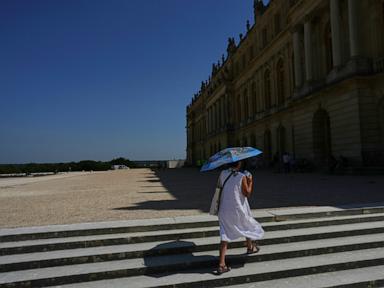
Stop looking at the thermometer. The sensationalist headlines screaming about France bracing for a week of punishing heat are missing the point entirely. Every summer, the media unrolls the exact same script: a predictable loop of rising temperatures, flashing red alerts, and apocalyptic warnings about the climate. They treat the annual summer heat as an unprecedented, unpredictable alien invasion.
It is a comfortable lie.
Framing this as a purely meteorological crisis allows policymakers, urban planners, and grid operators to escape accountability. The panic over 40°C days in Paris or Lyon is not a climate revelation; it is a glaring indictment of outdated European infrastructure. The narrative implies that if we could just fix the weather, everything would be fine. The reality is far more uncomfortable. Even if global temperatures stabilized tomorrow, our cities would still bake, our power grids would still falter, and our buildings would still trap heat like brick ovens. We do not have a temporary weather emergency. We have a permanent architectural deficit.
The Lazy Consensus of the Heat Warning
The standard media coverage relies on a familiar premise: red alerts mean citizens must hide indoors, drink water, and wait for the sky to cool down. This reactive posture treats extreme heat as a passing storm.
I have spent over a decade analyzing urban resource distribution and infrastructure resilience. I have watched municipalities dump millions into temporary "cooling zones" and public misdirection while ignoring the structural flaws right beneath their feet. The current strategy is the administrative equivalent of putting a band-aid on a severed artery.
When Météo-France triggers a red alert, it signifies a failure of the built environment to protect the population. Consider the physical makeup of a city like Paris. The classic Haussmann buildings, celebrated for their zinc roofs and aesthetic uniformity, are thermodynamic nightmares. Zinc absorbs solar radiation and turns top-floor apartments into literal kilns. The dense asphalt streets act as giant thermal batteries, soaking up energy during the day and radiating it back out at night, preventing the city from cooling down.
This is the Urban Heat Island (UHI) effect, and it is entirely man-made. The temperature difference between a heavily paved urban center and its surrounding rural areas can be as much as 10°C. When a headline says a city is experiencing 38°C, the actual heat index on a paved boulevard wrapped in stone architecture is vastly higher. Blaming the sun for this is like blaming the stove for burning your hand when you refuse to pull it away.
The Air Conditioning Paradox
The immediate, knee-jerk reaction to severe heat waves is the demand for mass air conditioning. Critics lambast European reluctance to adopt American-style HVAC saturation, viewing it as a stubborn cultural quirk.
This is where the mainstream analysis falls apart. A rapid, uncoordinated surge in air conditioning usage across southern and central Europe is a catastrophic trap.
Let us break down the thermodynamics. Air conditioning does not destroy heat; it moves it. It extracts thermal energy from an interior space and dumps it directly into the street. If every apartment in a dense European quarter installs a traditional split-system AC unit, the local outdoor temperature skyrockets. You end up in an architectural arms race: my AC makes your street hotter, forcing you to buy a bigger AC, which makes my apartment even harder to cool.
+-------------------------------------------------------------+
|               THE URBAN HEAT ACCELERATION LOOP              |
+-------------------------------------------------------------+
|  1. Rising Ambient Temperature                              |
|     ---> 2. Mass Adoption of Traditional AC Units           |
|          ---> 3. Huge Thermal Energy Dumped into Streets    |
|               ---> 4. Urban Heat Island Effect Intensifies  |
|                    ---> 5. Higher Ambient Temperature       |
+-------------------------------------------------------------+
Worse, the European electrical grid is fundamentally unsuited for this sudden, massive cooling load. Unlike the US grid, which was built alongside the expansion of suburban air conditioning, European networks were optimized for winter heating loads and steady industrial consumption.
Imagine a scenario where 40% of Parisian households simultaneously switch on a 1.5 kW air conditioner during a July peak. The localized distribution transformers would face instantaneous overload. We are not just talking about rolling blackouts; we are talking about physical transformer fires and long-term grid degradation. The solution isn't to plug in millions of power-hungry cooling boxes. The solution is to change how buildings interact with light.
Decoupling Architecture from the Thermostat
To break this cycle, we must stop viewing cooling as an active mechanical process and start viewing it as a passive structural requirement. The status quo dictates that we build glass-and-steel monoliths or preserve uninsulated historical monuments, and then use massive amounts of electricity to fight the laws of physics.
We need to look at historical vernacular architecture in arid regions instead of modern corporate blueprints. For centuries, civilizations in North Africa and the Middle East managed extreme heat without a single watt of electricity. They used windcatchers, heavy thermal mass walls, internal courtyards, and strategic shading.
Europe’s obsession with historical preservation often borders on the suicidal. Preserving the facade of a 19th-century building at the expense of the lives of the elderly citizens living on the top floor is a twisted priority. We need aggressive, invasive retrofitting:
- Replacing Zinc Roofs: High-albedo, reflective coatings must replace dark or metallic roofing materials. Coating a roof white can reflect up to 85% of incoming solar radiation, dropping internal top-floor temperatures by several degrees without using electricity.
- External Automated Shading: Interior blinds are useless; once sunlight passes through the glass, the heat is already inside. External shutters, awnings, and dynamic brise-soleil systems must become mandatory for any building facing south or west.
- Depaving the Concrete Deserts: Square kilometers of public plazas, currently covered in dark asphalt or gray granite, need to be torn up. Replacing them with permeable soil, deep-root trees, and urban wetlands leverages evaporative cooling—nature's most efficient air conditioner.
This approach has a downside. It is incredibly expensive, logistically disruptive, and violates strict European heritage preservation laws. It requires tearing up historic streets, altering the iconic skylines of ancient cities, and forcing property owners to invest heavily in structural modifications. But the alternative is continuing to watch cities grind to a halt every time a high-pressure system parks itself over the continent.
The Flawed Premise of Public Health Advice
During these red alert weeks, public health authorities release checklists: stay inside, avoid exercise, check on neighbors. This advice assumes everyone has equal agency over their environment. It ignores the stark socioeconomic divide of urban heat.
Heat is a class issue. A wealthy resident in a leafy, affluent suburb or a modern, well-insulated apartment complex experiences a heat wave as an inconvenience. A low-income worker in a top-floor studio or a concrete social housing block experiences it as a physiological assault.
When public health officials say "stay indoors," they are assuming the indoors is safer than the outdoors. For millions of people living in poorly insulated housing stock, the indoor temperature can exceed the outdoor temperature by nightfall, creating a continuous, 24-hour thermal stress environment that prevents the cardiovascular system from recovering.
Stop asking how citizens can adapt to the heat. Start asking why our cities are built to amplify it. The red alerts are not a call to change your daily routine; they are a signal that our current model of urban living is fundamentally broken.
Stop blaming the sun. Rewrite the building codes, tear up the asphalt, and dismantle the architectural choices that are actively cooking our populations. Anything less is just hot air.