Elena keeps a folder in her top desk drawer, right next to the spare house keys and the birth certificates. It is a mundane object—a simple manila jacket containing a decade of life. There are tax returns from the years she worked two jobs, a marriage certificate with a coffee stain on the corner, and the pristine, high-resolution scans of her fingerprints. For ten years, that folder represented the finish line. In the quiet logic of the American Dream, you do the work, you pay the fees, and eventually, the folder turns into a plastic card that says you belong.
But the finish line is moving.
Recent warnings from the upper echelons of U.S. Citizenship and Immigration Services (USCIS) have sent a cold shiver through living rooms like Elena’s. The message is blunt: the government is no longer just looking at the paperwork you submit today. They are looking backward. They are reopening the "cold cases" of immigration—files that have been gathering dust for years—to find the one loose thread that can unravel a person's entire life.
The Ghost in the Machine
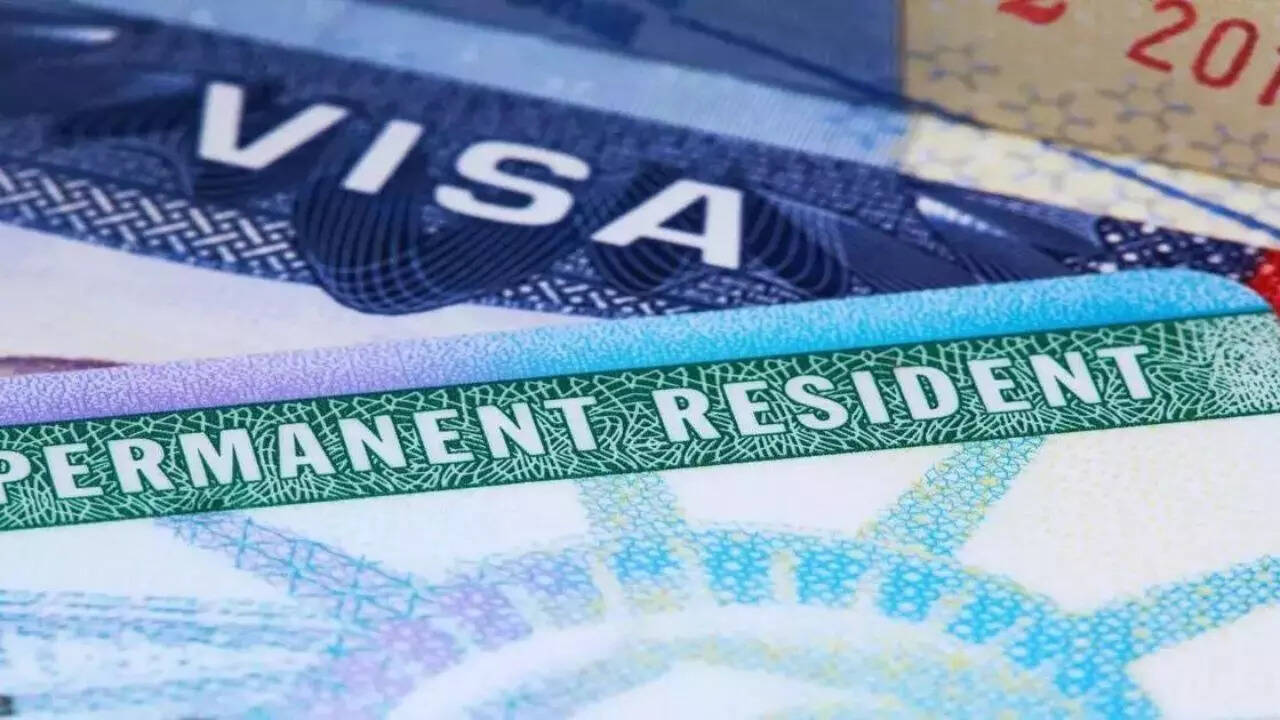
Most people view a Green Card as a permanent status. The word "Permanent" is right there in the title: Lawful Permanent Resident. We assume that once the government vetters you, stamps your passport, and welcomes you in, the trial is over.
That is a dangerous misconception.
Imagine a structural engineer inspecting a bridge. Ten years ago, they signed off on the foundation. Today, a new inspector arrives with a more powerful microscope and a different set of instructions. They aren't looking at how the bridge is standing now; they are looking for a microscopic hairline crack in the cement poured a decade ago. If they find it, the bridge is condemned. It doesn’t matter how many thousands of cars have crossed it safely since.
This is the reality of "opening older cases." The USCIS director’s warning isn't just about administrative efficiency. It is a fundamental shift in how the state views its residents. It suggests that your status is not a house you own, but a lease that can be terminated if the landlord finds a clerical error in the original application from 2014.
The Invisible Stakes of a Forgotten Mistake
What does it actually look like to have a "cold case" reopened? It rarely looks like a dramatic raid. Instead, it looks like a letter in the mail.
Consider a hypothetical man named David. David arrived fifteen years ago. During his initial entry, perhaps there was a misunderstanding about a previous visa. Maybe he checked a box he didn't fully understand, or a notary gave him bad advice that he followed in good faith. He was granted residency. He started a landscaping business. He bought a home. He has three children who play varsity soccer and don't speak a word of his native language.
Under the current directive, David’s file is pulled from a warehouse. An officer, pressured by new quotas or a shift in policy, finds that original discrepancy. Suddenly, the fifteen years of tax-paying, community-building, and child-rearing are irrelevant. The "law" says the original entry was flawed. Therefore, everything built on top of it is a house of cards.
This isn't about catching criminals or "bad actors" in the way the nightly news portrays them. The vast majority of these reopened cases involve people who have been living quietly among us for years. The "warning" is a signal that the grace period is over. The government is hunting for technicalities.
The Anxiety of the Long Memory
There is a psychological toll to living in a state of retroactive scrutiny. It creates a secondary class of residency—one where you are "permanent" until someone decides to look closer.
When the director of an agency with the power to deport warns about reopening cases, they are weaponizing time itself. They are saying that your past is never truly past. For the millions of people waiting on the backlog, or those who recently crossed the threshold to residency, the message is clear: the paperwork is a minefield.
We often talk about immigration in terms of numbers—backlogs, quotas, and fiscal years. But the reality is measured in heartbeats. It is the sound of a father’s breath hitching when he sees a government envelope in the mailbox. It is the way a mother tells her children to "be extra good" today, without ever explaining why she is so afraid of a broken taillight.
The technical reason for this shift is often framed as "integrity." The argument is that the system must be pure, and that any error, no matter how old, must be corrected. But integrity is a two-way street. Does a system have integrity if it grants a status, allows a human being to root themselves into the soil of a community for a generation, and then rips them out because of a decade-old clerical oversight?
The Paperwork Trap
The complexity of U.S. immigration law is often compared to the tax code, but that is an insult to the tax code. If you make a mistake on your taxes, you pay a fine. If you make a mistake on an I-485 form, you lose your family.
The "warning" from the USCIS director specifically targets people who might have had "open" or "pending" issues that were bypassed during previous administrations. In the past, there was a sense of "prosecutorial discretion." If a case was old and the person had been a model resident, the government chose not to waste resources on an old, minor flaw.
That era of discretion is ending.
The new mandate is to find the flaw. This means that even if you have your Green Card in hand, you are not necessarily safe. If your original path to that card involved a "gray area"—even one approved by a previous officer—you are now a target for a "Notice of Intent to Rescind."
Why This Matters to Everyone
It is easy to look at this and think it only affects "them"—the people in the folders, the people with the accents. But the health of a democracy is measured by how it treats the people who are most vulnerable to its bureaucracy. When we allow a government agency to retroactively hunt for reasons to disqualify people who have already been "cleared," we are endorsing a system where the rules can change after the game has started.
It creates a culture of fear that stops people from engaging with the law. Why would someone come forward to report a crime or testify in a case if they know that doing so might trigger an officer to pull their "red file" from the bottom of the stack?
The director’s warning isn't just a policy update. It is a declaration of a new kind of surveillance—one that looks backward across the years to find a reason to say "no."
The Weight of the Folder
Elena still has her folder. She looks at it differently now. It used to be her shield. Now, she wonders if it is a map of her own vulnerabilities. She traces the lines of her signature from 2016 and wonders if she understood every word of the fine print. She wonders if the officer who interviewed her was having a bad day, or if they missed a detail that a new, hungrier officer will find tomorrow.
The tragedy of the "cold case" initiative is that it ignores the most important fact of all: the people in these files are no longer the people they were when the files were created. They have aged. They have contributed. They have become part of the American fabric.
To pull a file from ten years ago and use it to destroy a life today is to pretend that time hasn't passed. It is to treat a human being like a defective product on a shelf, rather than a living, breathing part of a community.
As the sun sets, Elena tucks the folder back into the drawer. She pushes it all the way to the back. She locks the drawer. But the lock doesn't feel as strong as it did yesterday. The folder is still there. The government is still looking. And for thousands of families across the country, the past is no longer a memory—it is a threat.
The red file is at the bottom of the stack, and someone is finally reaching for it.