The air inside a federal penitentiary has a specific, heavy weight. It smells of floor wax, damp wool, and the slow, agonizing passage of unspent time. For thousands of inmates languishing under disproportionately harsh sentences, the President’s power of executive clemency is not an abstract legal concept discussed in clean, air-conditioned senate chambers. It is a literal lifeline. It is the only door left when every other door has been slammed and bolted shut.
Now, imagine a desk in Washington. On that desk lies a file containing a plea for mercy—a petition that has undergone months, sometimes years, of rigorous vetting by the Justice Department’s Office of the Pardon Attorney. This office exists to separate the worthy from the dangerous, ensuring that when a president signs a commutation, justice is served. Learn more on a similar topic: this related article.
But in late 2024, a quiet intervention occurred. A single hand reached out, intercepted the process, and simply shut the folder.
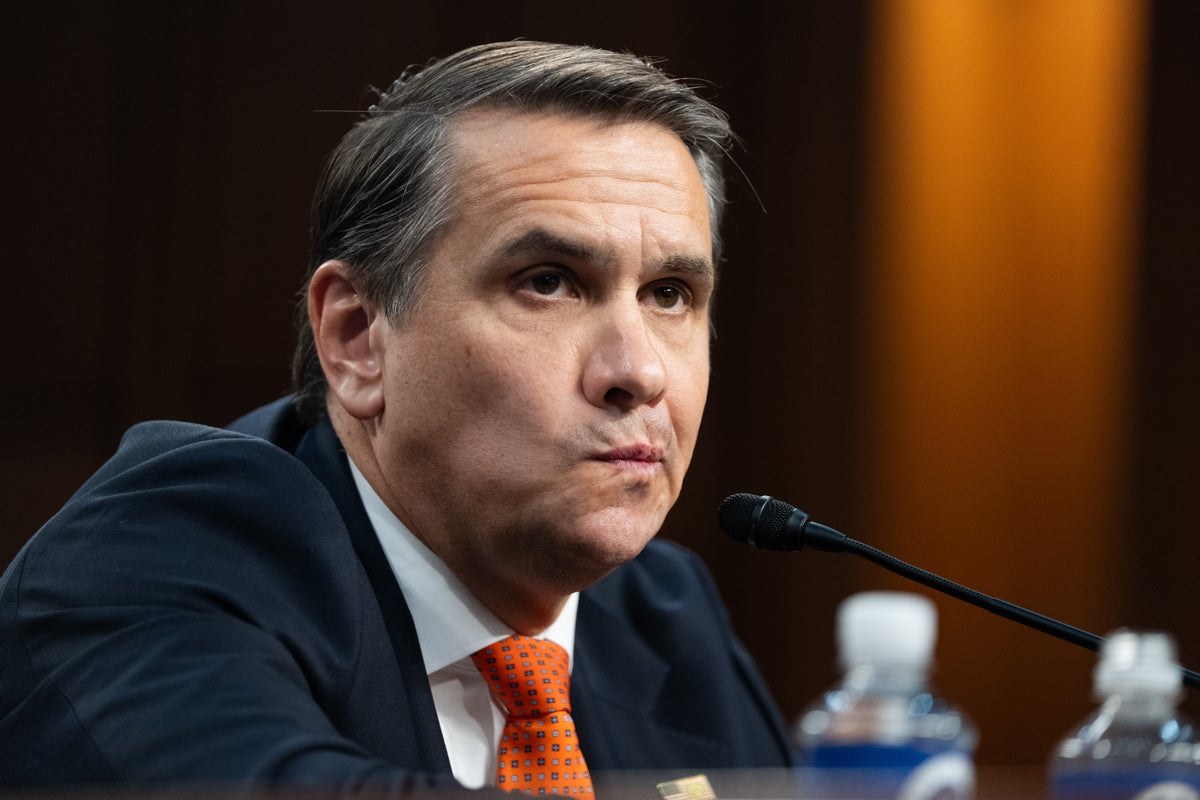
The name on that hand belonged to Todd Blanche. More journalism by Al Jazeera highlights similar views on this issue.
To the public, Blanche is known as the sharp-suited defense attorney who stood by Donald Trump through his high-profile criminal trials, eventually earning a nomination for a top-tier role in the Justice Department. But to a growing bipartisan group of United States senators, Blanche is currently the focal point of a deeply troubling question: Did a private defense attorney use his political proximity to hijack the federal justice system and spike an active clemency inquiry?
The stakes are not merely bureaucratic. They are intensely, painfully human.
The Invisible Gatekeeper
To understand the weight of what occurred, one must look at how the machinery of mercy is supposed to work.
Under normal circumstances, the Office of the Pardon Attorney operates as an independent, merit-based filter. Lawyers sift through thousands of desperate pleas, verifying rehabilitation, evaluating the severity of the original crime, and checking for systemic sentencing disparities. It is a slow, grinding, but remarkably fair process.
Then came the transition.
During the chaotic handoff of presidential power, Blanche—acting as a key adviser—allegedly bypassed these career prosecutors. According to internal reports that have recently surfaced, Blanche intervened directly to halt a crucial inquiry into a high-profile clemency case. He didn't just offer an opinion. He effectively shut down the investigation into whether a specific individual deserved to walk free.
Why does this matter?
Because when the informal advisers of an incoming administration begin pulling the levers of justice before they even take their oaths of office, the line between the rule of law and personal favor evaporates. The system stops being about what you did to reform yourself. It becomes entirely about who you know in the lobby of Mar-a-Lago.
A Tale of Two Files
Let us look at two hypothetical files side by side to understand how this plays out in the real world.
In File A, we have Marcus. Marcus was sentenced to thirty years under outdated crack cocaine laws in the late 1990s. For two decades, he has tutored other inmates, avoided disciplinary infractions, and prepared himself for a world that has entirely moved on without him. His petition has climbed the ladder. It is sits on a desk, waiting for the final nod.
In File B, we have a wealthy political donor or a well-connected operative. They have served six months of a minor white-collar sentence. They have high-priced lawyers who can text the President-elect's inner circle at two in the morning.
When a gatekeeper like Blanche steps in to bypass the official channels, File A is swept onto the floor. It is forgotten. The career lawyers who spent hundreds of hours verifying Marcus's rehabilitation are told to stand down. Meanwhile, File B fast-tracks straight to the Resolute Desk.
This is the core of the fury currently bubbling over in the Senate. Lawmakers from both sides of the aisle are demanding to know whether Blanche operated as an unauthorized traffic cop, routing mercy only to those who could help his client or his own standing, while actively suppressing the files of those who had played by the rules.
The Senate Demands an Answer
The letters sent by senators are written in the dry, polite language of congressional oversight, but the anger beneath them is white-hot. They are demanding a full accounting of Blanche's role in halting the clemency inquiry. They want emails. They want call logs. They want to know by what authority a private citizen—which Blanche was at the time—could tell federal officials to stop doing their jobs.
Justice is supposed to be blindfolded, holding a pair of balanced scales.
But when the blindfold is ripped off and replaced with a developer's eye for political real estate, the scales tip violently. The Senate inquiry is not just a political headache for an incoming nominee; it is a battle for the integrity of the Justice Department itself. If Blanche’s actions are allowed to pass without scrutiny, it sets a chilling precedent: the formal pardon process is dead, replaced by a courtier system where mercy is a currency to be traded.
Consider the silence that followed the halt of that inquiry.
In that silence, a cell door remained locked. A family somewhere in America sat down to another dinner with an empty chair, unaware that their loved one's chance at freedom wasn't rejected because of their record, but because their file was caught in the gears of a political power play.
The Senate must now decide if those gears will be allowed to keep turning in the dark, or if someone will finally throw a wrench into the machine.