The modern airport terminal is a masterclass in psychological conditioning. You shuffle through the security line, shoes in a plastic bin, belts removed, reduced to a uniform state of minor indignity. But the moment you step onto the jet bridge, a subtle bifurcation begins. If you turn left, or if you are among the first few rows, the air smells faintly of warm nuts and high-end upholstery. If you walk past those rows, heading toward the triple-digit seat numbers, the space shrinks. Elbows press against ribs. Knees knock against cheap plastic.
This is not accidental. It is the architectural manifestation of a massive, permanent shift in the economics of human flight.
For decades, the math of commercial aviation was simple. Airlines made their steady bread on economy tickets and counted on a few corporate high-rollers to pad the margins. But the landscape—the literal layout of the cabin—has been aggressively redrawn. U.S. carriers are no longer just transportation companies; they are real estate developers capitalizing on premium square footage. The domestic flight has become a flying caste system, and the gap between the front and the back of the plane is wider than it has ever been.
The Anatomy of the Split
Consider two passengers on a standard six-hour flight from New York to Los Angeles.
Let’s call the first passenger Sarah. She is flying for a mid-sized marketing firm that recently cut travel budgets. Sarah sits in 28B, a middle seat near the lavatories. Her knees press firmly into the seatback in front of her, which houses a magazine she has already read twice and a safety card. Every time the person in 28A needs to stretch, Sarah must perform a cramped, apologetic dance into the aisle. Her experience is defined by scarcity. Scarcity of legroom, scarcity of overhead bin space, scarcity of dignity.
Then there is Marcus, sitting in 3F. Marcus is not a millionaire. He is a consultant whose company pools loyalty points, or perhaps he is a leisure traveler who decided that, after years of pandemic-induced grounding, he deserved to splurge. Marcus has a lie-flat seat. He has noise-canceling headphones provided by the airline. His luggage was whisked away before everyone else's.
The physical distance between Sarah and Marcus is roughly forty feet. Economically, they are on different planets.
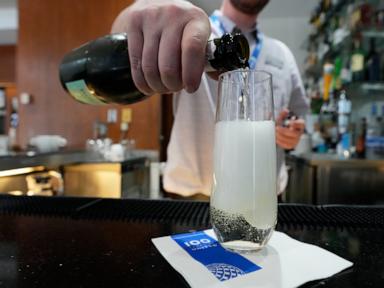
Historically, this divide was muted. In the golden age of aviation, everyone got a hot meal, everyone had decent legroom, and the primary differentiator in first class was free champagne and a slightly wider seat. Today, airlines are actively shrinking the economy experience to make the premium experience look like an oasis. The misery of the back of the plane is the best marketing tool for the front of the plane.
The Margin Miracle
To understand why this is happening, you have to look at the cold spreadsheets driving the industry. Major U.S. carriers like Delta, United, and American have discovered that the traditional economy cabin is a race to the bottom. Ultra-low-cost carriers stripped away every amenity to offer fifty-dollar tickets, forcing major airlines to compete on price alone in the cheap seats.
The profit isn't there anymore. It’s up front.
Domestic airlines have invested billions of dollars retrofitting their fleets to add premium economy, business class suites, and extra-legroom zones. During recent investor calls, airline executives dropped the polite corporate language and spelled it out clearly: premium revenues are outpacing standard economy revenues by significant margins. In some cases, premium cabins generate nearly half of an aircraft's total passenger revenue despite taking up a fraction of the physical seats.
It turns out people are willing to pay an astronomical premium to avoid discomfort. The industry calls this "unbundling" and "product segmentation." A normal human calls it paying a ransom for their kneecaps.
This strategy worked incredibly well during the post-2020 travel boom. When leisure travel surged, it wasn't just corporate accounts buying up first class. Regular people, flush with savings or simply desperate for a better experience, started bidding on upgrades. The airlines realized they had hit a goldmine. If you make the baseline experience uncomfortable enough, comfort becomes a luxury good with an infinite price ceiling.
The Ghost of Regular Coach
There was a time when the middle class could expect a dignified journey. You packed your bags, arrived at the gate, and boarded a vessel that felt like a public utility. It wasn't luxurious, but it wasn't punitive either.
Now, the standard economy ticket has been hollowed out. First came the checked bag fees. Then the fees to select a seat. Then the basic economy tier, which explicitly forbids you from using the overhead bin on certain routes. If you want the experience that used to be standard in 1995, you have to pay for Main Cabin Premium, Economy Plus, or whatever euphemism the marketing department has conjured this quarter.
This creates a strange psychological friction on board. The flight attendants, stretched thin and tasked with enforcing a dizzying array of rules based on fare codes, become border guards. They must police who gets a free snack box and who must hand over a credit card for a stale sleeve of crackers. They must pull the heavy blue curtain shut between cabins after takeoff, a physical reminder to those in the back that they are not part of the club.
The real problem lies in how this alters our collective behavior. Travel used to be a shared human experience. Now, it is a stark reminder of economic stratification from the moment you scan your boarding pass. The airline cabin is one of the few places left in modern society where we are forced to sit in tight quarters with people of vastly different economic realities, separated only by a piece of fabric.
The Price of the Curtain
The industry shows no signs of reversing course. Newer planes are delivered from Boeing and Airbus with even larger premium footprints. The economy rows are pushed further back, the seats sculpted thinner to squeeze in an extra row, the pitch reduced to thirty inches or less.
We accept this because we want the cheap flight. We complain about the lack of room, but when booking a vacation, we sort by "lowest price" on search engines and click the cheapest option. The airlines are simply giving us exactly what we asked for: ultra-cheap transit for those who cannot pay, and an exclusive, cushioned sanctuary for those who can.
Next time you fly, watch the boarding process closely. Watch the faces of the people in the economy queue as they walk past the wide, smiling rows of the premium cabin. There is no anger there, usually. Just a quiet, exhausted resignation. We have accepted that the sky is no longer a great equalizer.
The plane taxies down the runway, lifts into the clouds, and the flight attendant reaches out to pull the curtain shut, clicking the magnet into place with a small, definitive snap.