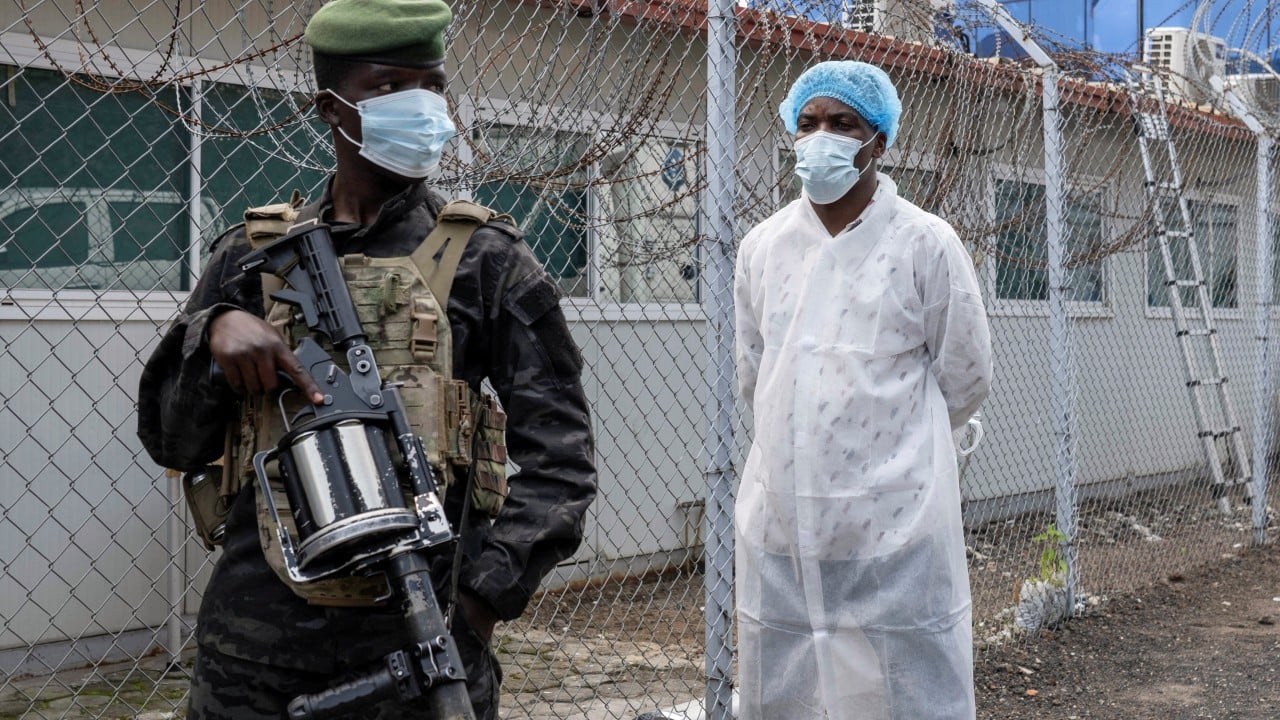
The heat inside a yellow vinyl biohazard suit is not a metaphor. It is a suffocating, blinding reality. Within ten minutes, sweat pools in your rubber boots. Within twenty, the condensation inside your plastic face shield turns the world into a blurred nightmare of shadows. You are breathing your own hot air, listening to the rhythmic, terrifying sound of your own respirations, hyper-aware that a single tear in the fabric means a horrific death.
Outside the suit, in the dust of a makeshift clinic in West Africa, the world is bleeding. Meanwhile, you can explore other stories here: The Price of a Second Chance.
Thousands of miles away in Geneva, Switzerland, the air conditioning hums quietly. The floors are polished marble. The air smells of espresso and expensive paper. Here, the crisis does not look like a dying child or a mass grave dug by bulldozers under the moonlight. It looks like a sequence of charts, a flurry of emails, and an agonizingly slow climb through the gears of international bureaucracy.
This is the story of the gap between those two worlds. It is the story of how the World Health Organization found itself fighting for its own survival while a microscopic killer tore through villages and cities, and why the man at the top insisted that the failure was not one of intent, but of infrastructure. To understand the bigger picture, check out the recent report by Healthline.
The Clock That Started Too Late
To understand the fury that surrounded the World Health Organization during the height of the Ebola epidemic, you have to look at the timeline. Epidemics are won or lost in the dark, during the weeks when a disease is still just a whisper in remote villages.
Consider a hypothetical patient. Let us call him Amadou. In December, Amadou gets a fever in a forested region of Guinea. He bleeds. He dies. Traditional healers comfort his family, contract the virus, and carry it to the next village. Local clinics, used to malaria and Lassa fever, miss the signs. The virus is a ghost, moving ahead of the data.
By the time the world officially noticed, the ghost was a monster.
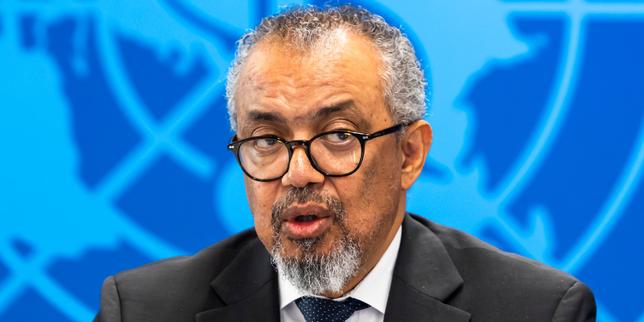
When the head of the W.H.O. stood before critics to defend the agency’s response, the core accusation was simple: you waited too long. The declaration of a Public Health Emergency of International Concern—the global alarm bell—was not sounded until August. By then, the virus had already breached national borders, entered crowded capital cities, and transformed from a localized outbreak into an existential threat.
The defense offered from Geneva was not an denial of the tragedy, but a stark, uncomfortable lesson in global politics. The W.H.O. is not a global health police force. It cannot storm into a sovereign nation, seize control of its hospitals, and dictate terms. It operates at the invitation of governments. In the critical early months, the full scale of the disaster was obscured by broken local surveillance systems and a desperate, human desire by local authorities to avoid economic panic.
The agency was flying blind in a storm it was never fully equipped to measure.
The Anatomy of an Underfunded Fire Department
Imagine your town’s fire department. Now imagine that the fire department is not allowed to buy trucks, cannot hire full-time firefighters, and must ask twenty different neighborhood committees for permission before turning on the hydrant.
That is the structural reality of the W.H.O.
During the post-mortem of the crisis, leadership pointed to a truth that many critics preferred to ignore: the organization’s budget had been systematically gutted in the years leading up to the outbreak. The epidemic disease department had been slashed. When the fire started, the department was already understaffed and underfunded.
Worse still is the nature of that funding. The money that flows into Geneva is largely earmarked by wealthy donor nations for specific, high-profile projects. A country might donate millions, but specify that it can only be used for polio eradication or diabetes research. The flexible, uncommitted funds—the money needed to build a rapid-response strike force that can deploy within forty-eight hours—amounted to a fraction of the total budget.
The world expected a global vanguard. It had funded a secretariat.
When the virus hit places like Liberia and Sierra Leone, it did not just encounter patients; it encountered collapsed societies. Decades of civil war had left these nations with a medical infrastructure that was already hovering near zero. There were fewer than a dozen doctors for the entire population of Liberia when the outbreak began. You cannot reinforce a medical system that does not exist.
The Humility of the Spreadsheet
It is easy to villainize bureaucrats. It is satisfying to look at a man in a tailored suit speaking from a mahogany podium and see indifference. But the reality is far more tragic. The defense of the response was not born out of arrogance, but out of a desperate, late-stage realization that the international architecture for fighting disease was fundamentally broken.
The leadership acknowledged the missteps. The delays were real. The bureaucratic inertia cost lives. To hear the head of a global institution admit that mistakes were made is rare, but it was necessary because the blood on the ground made denial impossible.
But the defense was also a warning.
If the world continues to treat global health as a charity project rather than an essential component of national security, the next virus will do worse. Ebola was terrifying, but it required direct contact with bodily fluids to spread. A respiratory virus, airborne and highly contagious, moving through the same fractured international system, would be catastrophic.
The defense was a plea for a permanent contingency fund, for a standing army of medical professionals, and for the power to act independently of geopolitical posturing. It was an argument that you cannot blame the mirror for reflecting a broken image.
The Weight of the Yellow Suit
The meetings in Geneva eventually ended. The resolutions were drafted. The budgets were adjusted, or at least promised to be. The news cameras packed up and moved on to the next crisis.
But back in the red zones, the dirt remains red.
The graveyard workers in Kenema and Freetown still remember the weight of the bodies. The survivors still carry the stigma of a disease that turned love into a vector for death. The real tragedy of the institutional delay is that it forced ordinary people—local nurses, volunteer burial teams, community leaders—to become heroes just to keep their world from ending.
They fought the virus with chlorine spray and bare hands while the global machinery ground through its gears.
The next time an unknown fever begins in a remote corner of the earth, the alarm will be raised again. The charts will be updated in Geneva. The question that remains is whether the world will have built a faster gear, or if another generation of doctors will be left sweating in yellow suits, waiting for the bureaucracy to catch up with the dying.