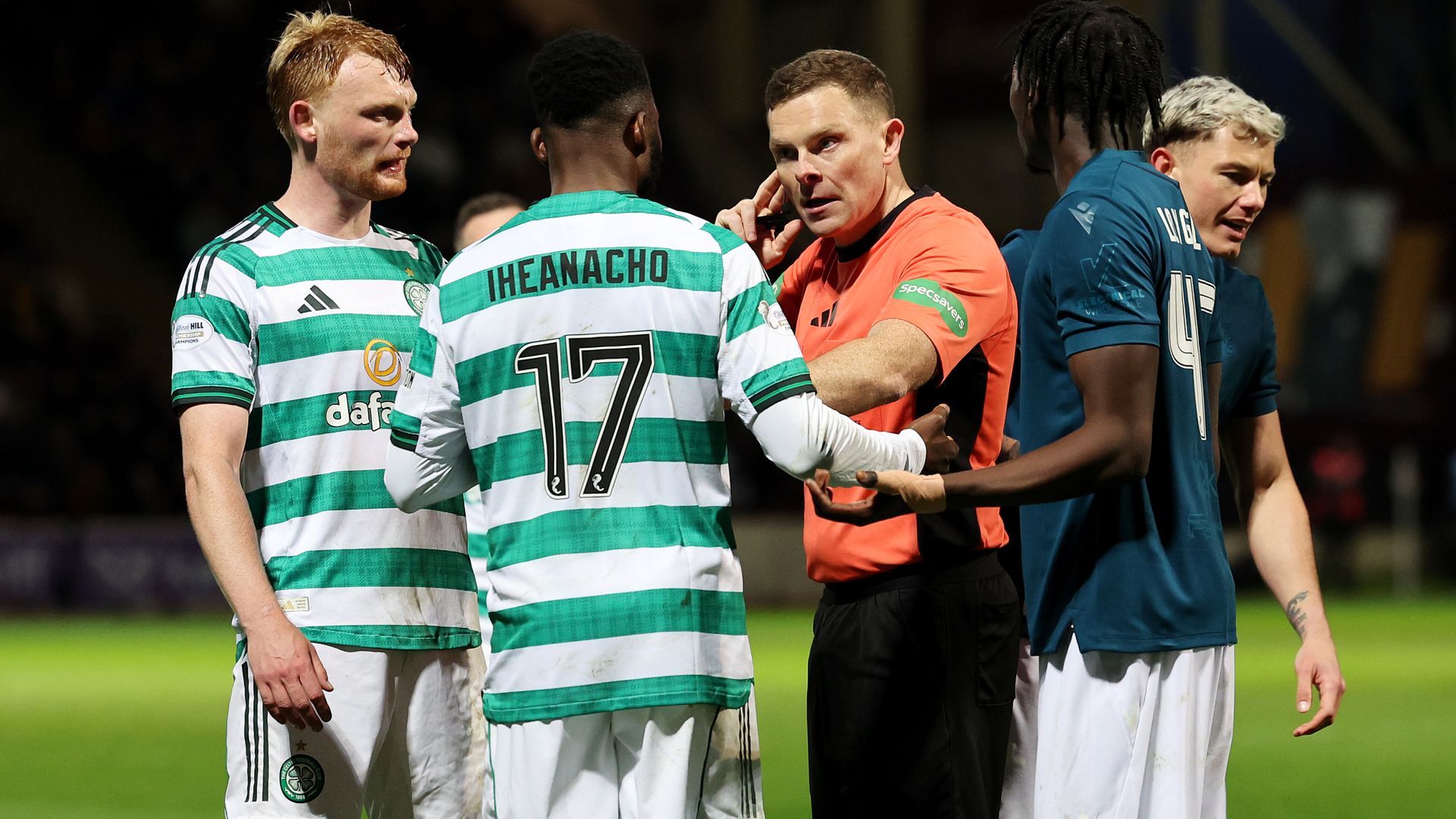
A police siren wails in Lanarkshire, a 28-year-old man faces criminal charges, and the mainstream sports media immediately falls into its favorite, comfortable rhythm: moral panic. Following the data breach of a referee’s personal details after a high-friction Motherwell versus Celtic match, the press has lined up to demand harsher crackdowns, tighter digital security, and a collective scrubbing of our collective sins.
They are missing the entire point.
The mainstream consensus treats doxxing as an isolated digital anomaly—a sudden breach of the peace perpetrated by a few rogue actors hidden behind avatars. That is a lazy, surface-level diagnosis. The leak of an official’s personal information is not a failure of cyber security, nor is it merely a symptom of internet toxicity. It is the logical, inevitable endpoint of an entire multi-million-pound industry built on weaponizing grievance.
For decades, clubs, pundits, and governing bodies have cultivated a culture where match officials are not viewed as flawed human arbiters, but as active participants in a grand, tribal conspiracy. You cannot spend generations feeding a beast with paranoia and then act shocked when it grows teeth.
The Economics of Engineered Grievance
Let’s dismantle the premise that this is just about "bad fan behavior." Scottish football operates on a financial model that actively profits from refereeing controversy.
Look at the Monday morning sports cycle. The back pages do not analyze tactical shifts, overlapping full-backs, or pressing triggers. They analyze freeze-frames. They zoom in on a handball till the pixels blur. Radio phone-ins thrive on four-hour blocks of pure, unadulterated outrage directed at whatever schoolteacher or lawyer happened to be holding the whistle on Saturday afternoon.
I have sat in broadcast production meetings where the directive is clear: find the controversy, lean into the anger, and drive the clicks. Outrage is the highest-yielding currency in Scottish sports media.
When a governing body or a club issues a statement "demanding clarity" or "seeking urgent explanations" over a subjective VAR decision, they are signaling to the fringe elements of their fan base that the referee is a legitimate target. They validate the delusion. The jump from a club statement hinting at institutional bias to a disgruntled supporter finding a phone number online is a tiny, logical step.
By treating referees as corrupt political figures rather than fallible workers, the sport has created an environment where fans feel a righteous obligation to cross the line. The man charged over the Motherwell v Celtic leak did not operate in a vacuum. He operated in a market designed to validate his fury.
The Hypocrisy of the "Protect the Referees" Campaign
Every time an incident like this occurs, the Scottish Football Association and club executives issue identical, sanitized statements condemning the behavior. They promise solidarity. They talk about respect.
It is entirely performative.
If the football establishment truly cared about protecting match officials from the digital mob, they would change the structural mechanics of how refereeing is managed and communicated. Instead, they keep officials isolated, mute, and defenseless.
The Real Power Dynamic
| Stakeholder | Action | Consequence |
|---|---|---|
| Clubs | Issue vague statements questioning official integrity to appease angry fanbases. | Deflects blame from poor team performance; amplifies fan hostility. |
| Media Networks | Run 48-hour loops of slow-motion controversial decisions. | Drives massive engagement; ensures the referee remains a target for the week. |
| Governing Bodies | Hide referees behind a wall of silence; issue post-match apologies weeks too late. | Breeds suspicion and fills the information vacuum with conspiracy theories. |
We lock referees in a gilded cage of enforced silence. They are not allowed to explain their decisions post-match. They are not permitted to hold press conferences to say, "I saw the contact, I thought it was minimal, but looking at the replay, I got it wrong."
Imagine a scenario where a corporate CEO refused to speak to shareholders after a massive financial loss, hiding behind a public relations department that only issued statements in legalese three weeks later. The shareholders would mutiny. In football, that mutiny takes the form of digital retaliation.
Dismantling the People Also Ask Mythos
Do we need harsher laws to stop referee harassment?
No. The obsession with legislating our way out of cultural problems is a fool's errand. Scotland already possesses robust legislation regarding malicious communications and stalking. Adding specific, football-centric laws does nothing to deter an individual driven by tribal fanaticism. The threat of a criminal record does not register when a fan genuinely believes they are defending their tribe against an existential threat.
Should referees be fully professionalized to fix this?
This is the ultimate red herring. Critics argue that paying referees a full-time salary will magically elevate the standard of officiating and cure fan anger. Look at the English Premier League. Their referees are fully professional, highly paid, and backed by a massive technological infrastructure. Yet, the vitriol, the death threats, and the accusations of bias are identical, if not worse. Professionalism changes the tax bracket of the official; it does not change the psychology of the mob.
The Vulnerability of Total Transparency
The standard counter-argument to my position is simple: if you expose referees to the public, you make them more vulnerable, not less. Critics will claim that letting a referee speak to the media after a heated fixture like Motherwell v Celtic would just provide more ammunition for the wolves.
That view is fundamentally wrong. It underestimates the humanizing power of accountability.
Right now, because referees are faceless entities who appear only as figures of authority on a pitch, they are easily dehumanized. It is incredibly easy to leak the address of an abstract villain. It is much harder to do that to a worker who just spent five minutes on television explaining their thought process, admitting their flaws, and showing genuine humility.
Microphones on referees—allowing the stadium and the broadcast audience to hear the conversation between the on-pitch official and the VAR hub—would immediately defuse the conspiracy theories. When you hear the step-by-step logic behind a decision, the myth of the "secret agenda" evaporates. The sport refuses to implement this because mystery maintains the drama, and drama maintains the revenue.
Stop Trying to Protect Referees, Change the Incentive Structure Instead
We do not need more police statements. We do not need more hand-wringing over the dark corners of the internet. We need to stop the profitable pipeline of synthetic outrage.
If football clubs are serious about ending this behavior, they must face a hard truth: they have to sacrifice their favorite excuse. For a manager under pressure, blaming the referee is a lifeline that saves their job for another week. For a board that spent millions on underperforming strikers, targeting the SFA is an easy way to distract the season-ticket holders.
Until clubs are financially penalized for dog-whistling to their fans through aggressive post-match statements, nothing changes. Until media outlets realize that treating a missed penalty like a geopolitical crisis is a betrayal of basic journalistic ethics, the leaks will continue.
The man arrested after the Celtic match is a product of the system we built, paid for, and consume every single weekend. We are all customers of the outrage factory. Stop acting surprised when the machinery works exactly as it was designed to. Ensure the executives who stoke the fire face the same scrutiny as the idiots who throw the matches.