Cold.
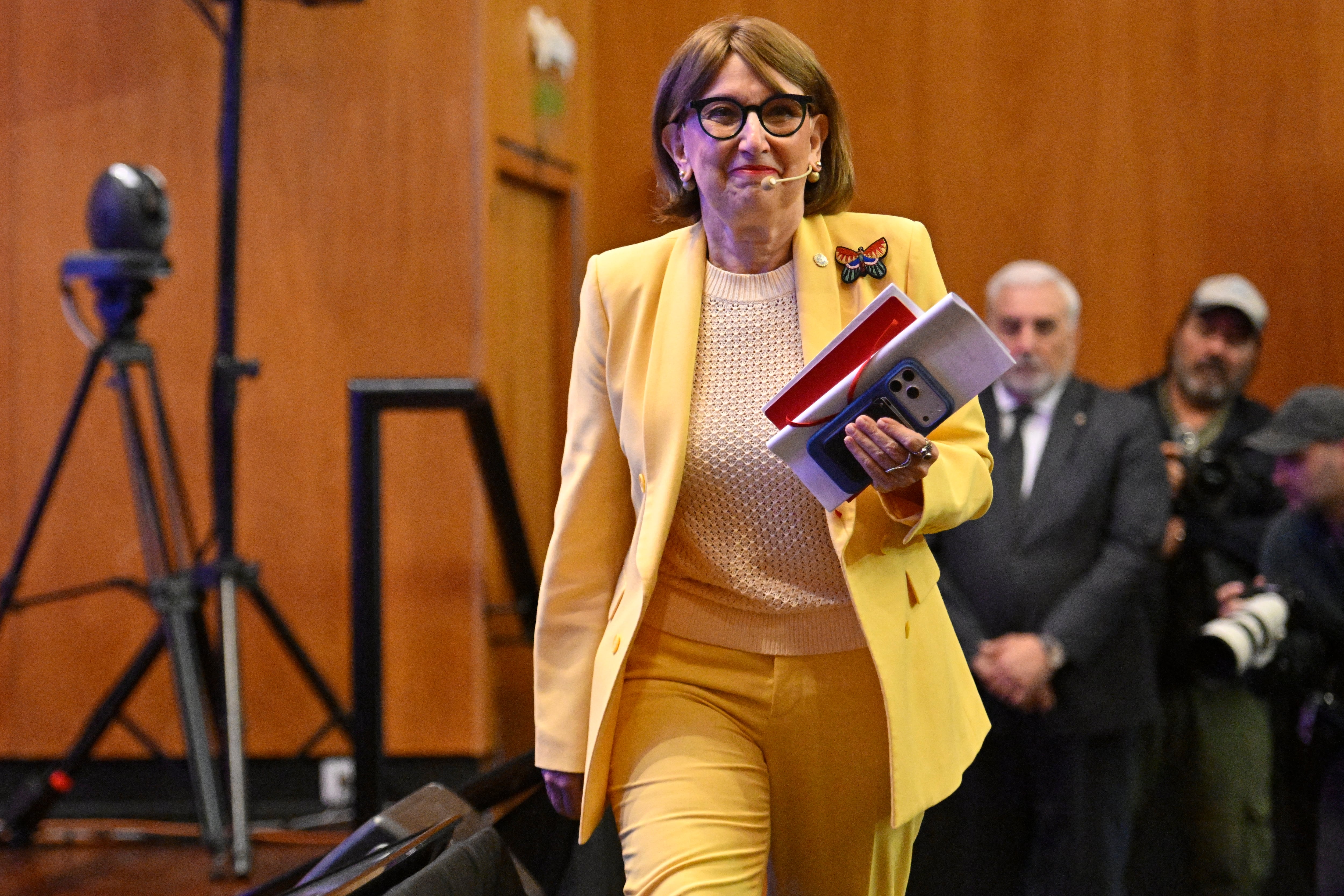
That is the first thing you notice about Warsaw in the dead of winter when you are standing on Szucha Avenue, watching breath turn into ghost-smoke against the floodlights of a neoclassical building. You feel the dampness creeping through the soles of your boots, rising up your ankles, settling right into the marrow of your bones. Across the street, metal barricades clatter against the pavement as riot police form a tight, unyielding wall around Poland’s Constitutional Tribunal. Building on this theme, you can find more in: Washington Just Sold Ukraine 500 Patriot Missiles and Everyone Is Celebrating the Wrong Victory.
To an outsider scrolling past a news ticker on their phone, this looks like another distant political squabble in Eastern Europe. A headline about judicial appointments, suspension orders, and administrative disputes. Easy to swipe away. Easy to forget.
Until you realize what that building actually represents. Observers at The Washington Post have shared their thoughts on this situation.
Think of a democracy like a championship football match played in front of millions of people. Two fierce rivals are on the pitch, pushing every boundary, arguing every foul, desperate to win. Now, imagine that halfway through the second half, one of the teams decides they no longer like the calls being made. Instead of playing by the rules, they walk over to the sidelines, suspend the head referee, and station security guards at the tunnel doors to make sure he cannot step back onto the grass.
Once the referee is gone, the game does not stop. The players keep running, the crowd keeps roaring, and goals are still scored. Yet the match itself has become a fiction, because without an independent arbiter, the rules mean whatever the strongest person on the field says they mean.
The Invisible Architecture of Trust
Most of us go through our entire lives without ever thinking about a constitutional court. Why would we? When you wake up in the morning, brew your coffee, drop your kids off at school, and sign a mortgage or a business contract, you are not reciting articles of the constitution. You are simply operating on a quiet, unspoken assumption that the ground beneath your feet is solid.
You assume that if a local official tries to seize your property unlawfully, a judge will stop them. You assume that if parliament passes a law that violates your basic rights, there is a final, uncorrupted room where that law will be struck down. You assume the referee is watching.
Let us step away from the freezing crowd on Szucha Avenue for a moment and consider a hypothetical scenario. Picture Marek, a forty-two-year-old carpenter living in a mid-sized town outside Kraków. Marek does not care about party politics; he cares about timber prices, his daughter’s piano lessons, and keeping his small workshop afloat.
One Tuesday, a new local regulation is passed—rushed through without proper oversight—that retroactively invalidates his workshop’s zoning permit to make room for a politically connected developer. Marek takes his case to court. He wins at the local level, wins on appeal, and watches as the government challenges the ruling all the way to the highest constitutional authority in the land.
In a healthy system, Marek sleeps soundly that night, knowing the supreme judges owe their loyalty to the law, not to the politicians who appointed them. Now, imagine Marek turning on the evening news and seeing police cordons blocking the entrance to that very court because the chief justice has just been suspended in a bitter power struggle. Suddenly, Marek’s workshop is no longer protected by law. It is protected only by luck.
That is the hidden cost of a judicial crisis. It never stays confined to the marble hallways of the capital. It seeps downward, slowly eroding the certainty of every contract, every property deed, and every civil liberty held by ordinary citizens who never asked to be part of a political war.
How a Constitutional Crisis Actually Happens
People often expect the breakdown of democratic institutions to look like a movie. We picture tanks rolling down boulevards at dawn, dramatic radio broadcasts, and sudden, unmistakable ruptures with the past.
History tells a much quieter, far more disorienting story.
In modern Europe, constitutional crises rarely arrive with a bang. They arrive wrapped in dense legal jargon, competing interpretations of parliamentary procedure, and rival press conferences where both sides claim to be the true defenders of the rule of law. That is precisely what makes them so exhausting—and so dangerous.
To understand why protesters spilled onto the streets of Warsaw when the Tribunal’s chief was suspended, you have to look at the long, tangled decade that led up to that night. Over years of bitter political turnover in Poland, successive governments clashed furiously over who gets to sit on the bench of the Constitutional Tribunal, the body tasked with deciding whether laws passed by parliament actually obey the Polish constitution.
Years earlier, disputes erupted over whether certain judges had been appointed legally, leading to a fractured bench where critics argued the court had lost its independence and become aligned with political interests. When a new coalition came to power promising to restore democratic norms and untangle the judicial gridlock, they collided head-on with the institutional structures left behind.
Then came the flashpoint: the suspension of the Tribunal’s president, accompanied by an immediate deployment of police to secure the building’s perimeter.
From one perspective, those defending the move argued it was a necessary step to uphold legal accountability and prevent an illegitimate lock on power. From the opposing side—and to the thousands of citizens who bundled up in heavy coats and marched toward the barricades—it looked like a stark, physical takeover of an independent branch of government.
I will be honest with you: watching this unfold in real time is deeply unsettling, even for people who spend their lives studying legal systems. When two branches of the state stop recognizing each other’s authority, a terrifying fog settles over the country. One side waves a judicial order; the other waves a ministerial decree. Both claim legality. Both accuse the other of a coup.
And standing in the middle of that fog is the ordinary citizen, wondering whose signature on a piece of paper actually counts anymore.
The Sound of Barricades in the Night
If you have ever stood in a protest crowd outside a courthouse, you know the atmosphere feels entirely different from a standard political rally. There is less anger and more grief—a sharp, anxious realization that something fragile is cracking right in front of you.
On Szucha Avenue, the visual contrast told the entire story before a single speech was delivered. Inside the warm, brightly lit offices of the Tribunal sat clerks, legal scholars, and judges whose entire professional existence is built on words, precedent, and quiet deliberation. Outside, standing shoulder to shoulder in dark tactical gear, stood young police officers staring blankly into the glare of television cameras.
Law is supposed to be the alternative to physical force. The whole point of writing a constitution is so that human beings can settle their fiercest disagreements with ink instead of barricades. Whenever riot shields have to be brought out to guard the doors of a constitutional court, something profound has already broken down.
Consider what happens next in a country where the highest court is paralyzed or contested:
First, legal paralysis sets in. Lower court judges across the nation suddenly face an impossible dilemma. When they issue a ruling, should they follow the precedent set by the contested Constitutional Tribunal, or ignore it on the grounds that the court’s leadership is invalid? Different judges make different choices. Two citizens with identical legal cases can walk into two different courtrooms and walk out with opposite verdicts, purely depending on which judge heard their file.
Second, international trust begins to fray. Poland does not exist in a vacuum; it sits at the heart of the European Union, bound by shared treaties and economic integration. Foreign investors do not pour billions of euros into factories, tech hubs, and infrastructure because they love a country’s scenery. They invest because they trust the courts to enforce contracts fairly. When the supreme constitutional referee is locked in a standoff with the state, capital grows nervous. Billions in shared European funds can be frozen over rule-of-law disputes, hitting hospitals, schools, and local transport networks far away from Warsaw.
Third, and worst of all, cynicism takes root among the public. When people watch lawmakers and judges treat the constitution like a weapon to be swung at enemies rather than a shield meant to protect everyone, they stop believing in fairness altogether. They conclude that the law is merely a game for the powerful.
Why This Matters Far Beyond Poland’s Borders
It is tempting, especially if you live thousands of miles away in London, Paris, or Chicago, to treat the turmoil around Poland’s Constitutional Tribunal as a strictly local drama. After all, every nation has its own constitutional quirks, its own historical scars, and its own political feuds.
That would be a mistake.
What is happening on the streets of Warsaw is a stress test for a question every modern democracy is currently struggling to answer: What happens when political polarization becomes so intense that neither side trusts the referee?
Look around the democratic world today and you will see echoes of this exact dilemma everywhere. From debates over supreme court term limits in the United States to fierce battles over judicial oversight in Israel and Hungary, the quiet consensus that once surrounded high courts is dissolving. For generations, democracies relied on unwritten norms—restraint, mutual respect, and an unspoken agreement not to push legal powers to their absolute breaking point.
Poland’s crisis shows us what happens when those unwritten guardrails finally give way. Once trust evaporates, every institutional mechanism turns into a battlefield. Appointing a judge becomes trench warfare. Suspending a court chief requires a police perimeter. Every move invites a counter-move, ratcheting up the tension until the entire constitutional architecture groans under the strain.
Yet there is another side to that crowd standing in the freezing Warsaw night—one that offers a quiet, stubborn flicker of hope.
Nobody paid those people to stand in the cold. Nobody forced them to hold up hand-painted signs reading Konstytucja into the biting wind. They came because, despite decades of political exhaustion, ordinary Polish citizens still instinctively understand that a court belongs to them, not to the politicians currently occupying government ministries.
In a country that endured partitions, foreign occupations, and decades of authoritarian rule where courts were mere rubber stamps for the state, memory runs deep. Poles know intimately what life looks like when the law bends to whoever holds the keys to the building. That lived history is the very reason thousands of people refused to stay home and watch television while police lined the steps of their highest court.
The Weight of a Locked Door
By midnight on Szucha Avenue, the crowds begin to thin. Fingers are numb, voices are hoarse from chanting, and the steam rising from thermos flasks of hot tea dissipates into the dark winter sky. The television vans pack up their cables and roll away toward the hotels.
Yet the metal barricades remain. The floodlights stay on, casting long, sharp shadows across the cobblestones outside the Constitutional Tribunal.
Inside that quiet, guarded building sit thousands of pages of legal briefs—cases involving pension rights, environmental protections, free speech, and the delicate balance of power between the state and the individual. Those files belong to real people waiting for answers that will shape the rest of their lives.
A constitution is nothing more than words printed on paper until human beings agree to honor them, especially when honoring them is inconvenient. You can surround a courthouse with steel barriers, post guards at every entrance, and argue endlessly over who holds the legal title to the corner office.
Still, the real test of any democracy happens on the morning after the protests end—when a quiet door unlocks, a judge walks into an empty room, and the people in power decide whether they are brave enough to obey a verdict they hate.