Structural Realignment of Class I Rail Operations
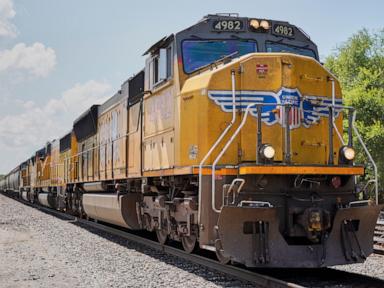
The proposed $85 billion acquisition of Norfolk Southern (NS) by Union Pacific (UP) represents a fundamental structural shift in North American freight logistics. Combining UP's Western network with NS's Eastern network creates a single-line transcontinental carrier controlling approximately 40% of U.S. freight rail traffic across a 50,000-mile system.
Historically, rail consolidation encounters severe regulatory drag at the Surface Transportation Board (STB) due to antitrust mechanics under the board’s 2001 merger rules. These rules require applicants to prove that a transaction actively enhances competition and serves the public interest, rather than merely maintaining baseline market access.
To satisfy this standard, UP executed a targeted concessions agreement with Canadian National (CN). This maneuver converts a key potential objector into a supporting party, directly altering the regulatory review dynamics.
Strategic Architecture of the UP-CN Agreement
The agreement between UP and CN addresses the structural overlap and bottleneck risks inherent in joining Western and Eastern rail systems. The concessions focus on three core operational friction points:
[Joint Track Access]  --> Mitigates parallel route overlaps between St. Louis & Kansas City
[Terminal Offloading] --> Neutralizes majority control of KCT and TRRA bottleneck yards
[Trackage Rights]     --> Provides CN alternative routing to bypass Chicago congestion
1. Overlap Neutralization and Trackage Rights
The geographic intersection of UP and NS exhibits high density in the St. Louis–Kansas City corridor. Under the agreement, CN receives trackage rights across this route. This operational carving guarantees that shippers along the corridor retain an independent Class I routing option, effectively preempting regulatory challenges regarding regional duopolies or reduced options for captive shippers.
2. Resolution of Terminal Infrastructure Control
To eliminate vertical foreclosure risks at major Midwest interchanges, Norfolk Southern’s ownership equity in the Kansas City Terminal Railway Company (KCT) and the Terminal Railroad Association of St. Louis (TRRA) will transfer directly to CN. This equity transfer prevents the combined UP-NS entity from holding a dominant voting position or operational control over these vital switching hubs.
3. Network Diversion and Interchange Capacity
CN gains expanded access to tracks connecting into Kansas City rail yards, strengthening its cross-border capabilities into Mexico. Simultaneously, UP acquires alternative track access to bypass high-congestion bottlenecks in the Chicago terminal district. This trade converts local routing friction into expanded interchange capacity for both carriers.
Market Realignment and Competitive Dynamics
The agreement creates distinct strategic choices for the remaining major carriers: BNSF, CSX, and CPKC.
| Carrier | Position / Strategy | Operational Vulnerability |
|---|---|---|
| BNSF | Opposes merger; argues benefits are achievable via bilateral agreements without consolidation. | Risk of volume diversion toward UP single-line transcontinental routes. |
| CSX | Opposes merger; faces Eastern footprint isolation. | Competing against a single-line East-West carrier offering faster transit times. |
| CPKC | Opposes merger; highlights risks of secondary consolidation forced upon smaller Class I carriers. | Pressure on North-South corridor pricing as UP-NS leverages scaled intermodal reach. |
| CN | Neutral/Supportive following structural concessions and asset acquisition. | Capitalizes on Midwest asset acquisition to expand cross-border trade flows. |
BNSF’s core counterargument posits that single-line service efficiencies—such as eliminating interchange delays and reducing dwell time—can be achieved through voluntary interchange agreements without the systemic risk of mega-mergers. However, contract-based voluntary arrangements lack the operational integration, single-dispatching authority, and unified capital allocation that single-line ownership delivers.
Voluntary Interchanges:  Multiple Dispatchers -> High Dwell Time -> Fragmented Capital Investment
Single-Line Network:    Unified Dispatching -> Reduced Dwell Time -> Concentrated System Reinvestment
Regulatory Hurdles and Economic Trade-offs
The Surface Transportation Board faces a complex review process under its 2001 rules. The central economic evaluation centers on three trade-offs:
- Efficiency vs. Market Power: The combined entity projects $3.5 billion in annual shipper savings by shifting 2.1 million truckloads to rail and converting 10,000 interline routes into single-line service. The STB must weigh these microeconomic gains against the long-term pricing leverage held by an entity controlling 40% of domestic rail tonnage.
- Defensive Consolidation Pressures: Approving a transcontinental carrier risks triggering a reactive merger request from BNSF and CSX. Granting approval under current rules effectively sets the blueprint for an end-state U.S. rail duopoly.
- Shipper Heterogeneity: Shippers requiring long-haul intermodal routes benefit from reduced transit times and eliminated interchange handoffs. Bulk commodity shippers (e.g., agriculture and chemicals) tied to specific geographical tracks risk exposure to localized rate increases if alternative routes are degraded.
Strategic Execution Framework
To secure final STB approval, UP must execute a three-step regulatory strategy:
First, extend structural trackage-rights packages to captive short-line operators and localized bulk shippers along overlapping Western routes, formalizing maximum tariff caps for single-served facilities.
Second, establish binding Service Level Agreements (SLAs) with performance metrics tied to transit times and yard dwell operational standards. These SLAs should include clear financial penalties payable directly to affected shippers if service disruptions occur during operational integration.
Third, leverage the CN settlement model as a precedent to offer targeted, localized trackage rights to CSX and BNSF at high-density Midwest gateways. Isolating opposing carriers by settling individual operational disputes prevents a unified legal and lobbying front during public STB hearings.