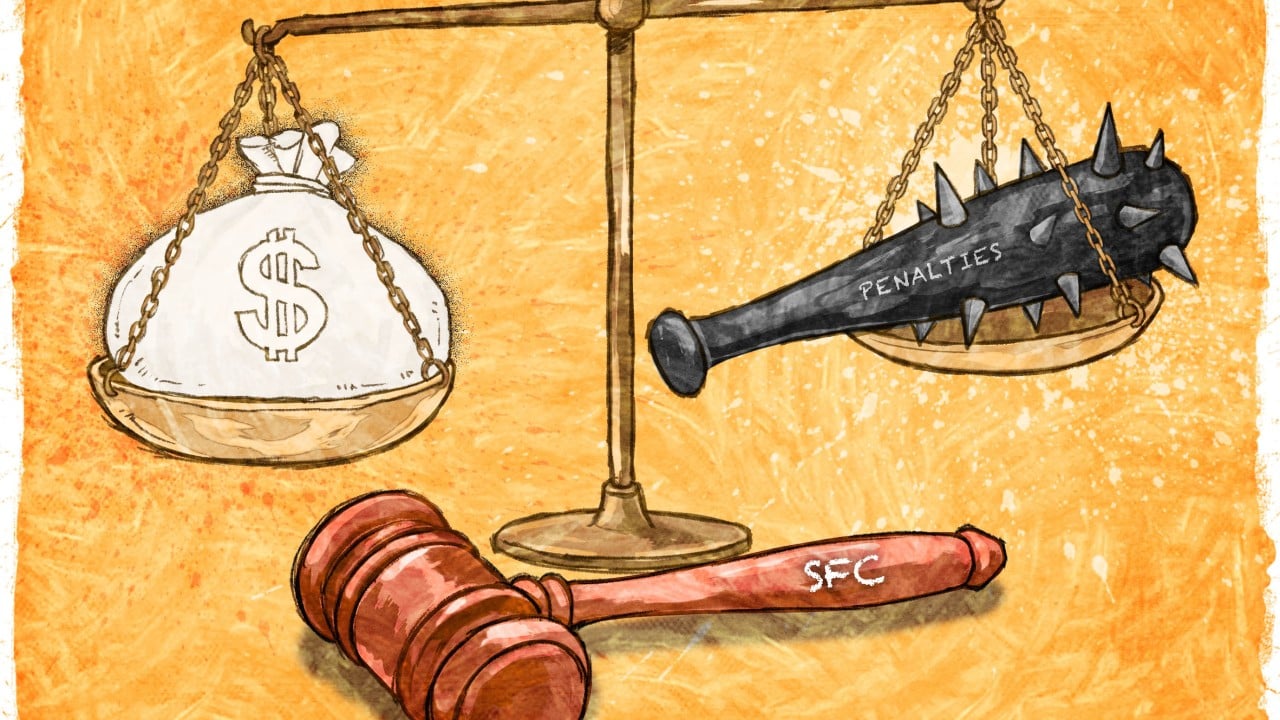
The Securities and Futures Commission (SFC) of Hong Kong is currently executing a fundamental pivot from traditional conduct-based policing to a proactive model of victim restitution. This transition effectively transforms the regulator into a "collection agent" for minority shareholders, a role traditionally reserved for private litigants or class-action suits—mechanisms that remain underdeveloped in the Hong Kong legal system. By utilizing Section 213 of the Securities and Futures Ordinance (SFO), the SFC is bypassing the friction of private litigation to secure direct financial remediation from corporate malfeasance.
The Restitutionary Mechanism under Section 213
To understand the current regulatory shift, one must first isolate the functional utility of Section 213. Unlike criminal prosecutions that aim for deterrence through incarceration or fines that accrue to the government treasury, Section 213 allows the SFC to seek "restorative orders" from the Court of First Instance. These orders can compel a defendant to:
- Restore the parties to the position they were in before the transaction occurred.
- Pay damages to any person who sustained a loss as a result of the contravention.
- Declare a contract void or voidable.
The operational advantage here is the circumvention of the "collective action problem." Individual retail investors rarely possess the capital or the evidentiary access to sue a listed corporation for fraud. The SFC, acting as the primary investigator, uses its statutory powers to gather evidence, freezes the assets of the wrongdoer, and then petitions the court for a distribution plan. This creates a state-sponsored recovery vehicle that operates with significantly higher efficiency than a fragmented group of plaintiffs.
The Triad of Enforcement Friction
The SFC’s increased reliance on this "collection" role is a response to three specific systemic bottlenecks within the Hong Kong financial ecosystem.
The Jurisdictional Shield
A significant percentage of companies listed on the Stock Exchange of Hong Kong (HKEX) are incorporated offshore—often in the Cayman Islands or Bermuda—and have their primary operations and assets in Mainland China. This creates a jurisdictional barrier where local court judgments are difficult to enforce. By freezing liquid assets held within Hong Kong’s banking system at the start of an investigation, the SFC secures the "pot" before the defendants can expatriate capital to unreachable jurisdictions.
The Absence of Class Action Suits
Hong Kong does not have a formal class-action mechanism for securities litigation. While "representative proceedings" exist under the Rules of the High Court, the "same interest" requirement is interpreted strictly, making it nearly impossible for shareholders with varying purchase prices and timings to sue as a single block. The SFC fills this vacuum by acting as a singular legal representative for the entire class of aggrieved investors.
Evidence Asymmetry
Corporate fraud, particularly involving "ram-and-dump" schemes or sophisticated accounting manipulation, is difficult to prove using only publicly available information. The SFC’s powers to compel document production and interview suspects under oath provide a discovery phase that no private litigant could replicate.
The Economic Impact of Regulatory Restitution
When the SFC secures a $100 million settlement for shareholders, the economic impact extends beyond the immediate recipients. This creates a quantifiable "governance premium" for the Hong Kong market.
Reduction in the Cost of Equity
Investors price in the risk of fraud. When a regulator demonstrates a consistent ability to claw back funds, the perceived risk of total capital loss decreases. This leads to a lower required rate of return from investors, effectively lowering the cost of equity for honest issuers.
Disincentivizing "Exit-at-Any-Cost" Fraud
In many fraudulent schemes, the perpetrators calculate that even if they are caught and banned from the industry, the retained illicit gains outweigh the professional cost. The "collection agent" model changes this cost-benefit analysis. If the SFC successfully strips 100% of the illicit profit plus penalties, the "Net Present Value" of the fraud becomes negative, regardless of whether the perpetrator avoids jail time.
Case Archetype: The "Pump and Dump" Recovery
The recent surge in SFC activity has focused heavily on social media-driven "pump and dump" schemes. The lifecycle of these cases reveals the SFC's new tactical playbook:
- Surveillance and Freeze: The SFC uses real-time market surveillance to identify suspicious price-volume surges. Before an official charge is even filed, they issue "restriction notices" to brokers to freeze accounts suspected of holding the proceeds.
- The Section 213 Filing: Once the accounts are secured, the SFC applies to the court for a restoration order.
- The Distribution Phase: The court appoints independent administrators (often accounting firms) to verify claims from investors who bought the stock during the manipulation period and distribute the frozen funds pro-rata.
This process is not without limitations. If the manipulators successfully move the funds out of Hong Kong before the restriction notices are served, the "collection" role is neutralized. The SFC is essentially racing against the speed of a wire transfer.
Structural Challenges to the Collection Model
Despite its efficacy, the SFC’s role as a restitutionary agent faces three structural headwinds that prevent it from being a panacea for investor losses.
Asset Sufficiency
The SFC can only distribute what it can catch. In many cases of large-scale corporate fraud, the assets have been dissipated or hidden through complex layers of offshore entities long before the regulator intervenes. In these instances, the "collection agent" role remains theoretical; the regulator may win the legal argument but find an empty vault.
The Definition of "Victim"
Determining who is entitled to a payout is complex. In a volatile market, distinguishing between a "victim of fraud" and an investor who simply made a poor timing decision is a technical challenge. If the SFC sets the parameters too broadly, it dilutes the recovery for those truly harmed; too narrowly, and it faces criticism for being arbitrary.
Resource Competition
Every hour the SFC spends acting as a liquidator or a claims processor is an hour not spent on its primary mandate of systemic oversight and policy setting. There is a risk of "mission creep" where the regulator becomes overwhelmed by the administrative burden of managing thousands of individual investor claims.
Strategic Realignment for Market Participants
The SFC’s evolution into a restorative body necessitates a shift in how institutional and retail investors approach the Hong Kong market.
For Institutional Investors
Fund managers should no longer view regulatory actions merely as "headline risk" or a signal to exit a position. Instead, the initiation of a Section 213 proceeding should be tracked as a potential asset recovery event. There is a growing need for "recovery analytics"—estimating the likely percentage of a claim that can be recovered based on the volume of frozen assets versus the estimated total loss.
For Listed Issuers
The bar for internal compliance has moved. It is no longer sufficient to avoid criminal liability. Boards must now account for the risk that the SFC could essentially "bankrupt" the company or its major shareholders through a restoration order if disclosure failures lead to significant investor loss. The threat is no longer just a fine; it is a total disgorgement of assets.
The Next Regulatory Frontier
The logical progression of this trend is the integration of the SFC’s restitutionary powers with Mainland China’s regulatory framework. As the "Wealth Management Connect" and other cross-border schemes expand, the ability of the SFC to act as a collection agent will depend on reciprocal enforcement of freeze orders in Mainland courts.
If a defendant’s assets are in Shanghai but the fraud occurred in Hong Kong, the current mechanism hits a wall. The strategic objective for the next 24 months will be the formalization of a "cross-border restitution bridge." This would allow the SFC to trigger asset freezes within the Mainland legal system, effectively closing the jurisdictional loophole that remains the single greatest obstacle to 100% investor recovery.
The SFC has signaled that it will prioritize cases where there is a clear "identifiable pool of assets." Investors should prioritize transparency in corporate holdings and liquid asset locations when conducting due diligence. The presence of a "restitutionary backstop" only works if the assets are within the regulator’s reach. In a market where traditional litigation is slow and expensive, the SFC’s pivot to a collection model is the only functional mechanism for maintaining the integrity of the capital-raising ecosystem.