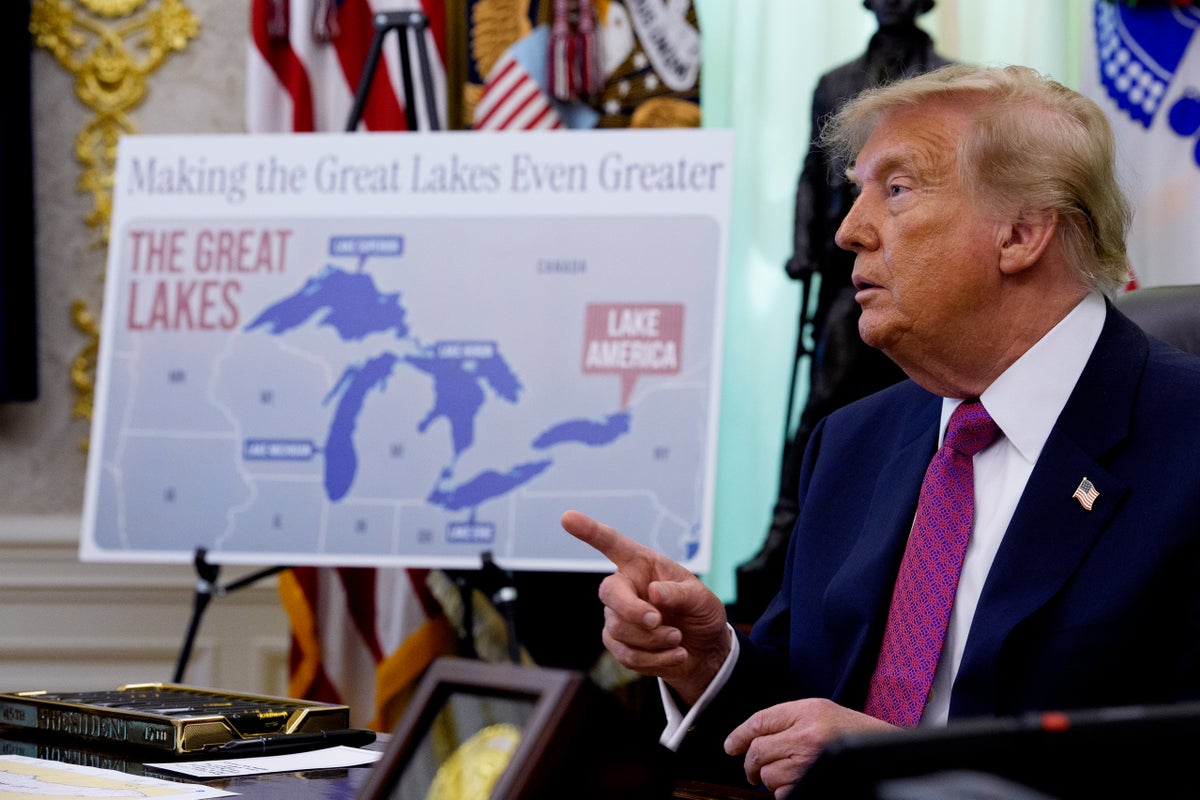
Geographic cartography just got dragged into an ongoing trade war. White House officials watched as President Donald Trump signed an executive order instructing federal agencies to cross out centuries of history and refer to Lake Ontario as Lake America.
If this sounds familiar, that is because it mirrors last year's stroke-of-a-pen rebranding of the Gulf of Mexico into the Gulf of America. It is loud. It is legally toothless outside US borders. And it highlights a growing preference for governance by Sharpie rather than actual diplomacy.
The Mechanics of Cartographic Fiat
Let us look at what this executive order actually does. Within 30 days, the Department of the Interior and the Board on Geographic Names must purge mentions of Lake Ontario from federal electronic databases, maps, and official documents.
The administration justifies this by pointing out that the United States carries a massive financial burden in the region. Washington funds the vast majority of the icebreaking vessels keeping shipping lanes clear, and has poured roughly four billion dollars into Great Lake environmental protections over the last decade.
Administration talking points lean heavily on ownership and contribution. Since the deepest parts of the water sit inside American territory, the argument goes, the naming convention should reflect that reality.
Of course, maps do not change simply because a president signs a piece of paper in the Oval Office. Canada owns the northern half of the lake. International bodies do not care about domestic US naming directives, and global mapmakers are not going to redesign school atlases over a tariff dispute.
Why Ottawa and State Capitals Are Rolling Their Eyes
The reaction from north of the border was swift and dismissive. Canadian Prime Minister Mark Carney pointed out that the name Ontario comes from the Indigenous Wendat word oniatar:io, meaning lake of shining waters. That name has survived for over four hundred years—long before the United States ever declared independence.
Regional leaders didn't hold back either. Nova Scotia Premier Tim Houston brushed off the announcement with a blunt declaration that everyone is dealing with pure foolishness.
Even inside the United States, local leaders pushed back against the administration's new vocabulary. New York Governor Kathy Hochul made it clear that her state shares a border with the water and won't be adopting the new moniker. Michigan Governor Gretchen Whitmer reminded people of the basic elementary school acronym HOMES—Huron, Ontario, Michigan, Erie, Superior—designed to help children remember the Great Lakes, not political rebrandings.
The Deeper Trade Dispute Driving the Maps
You cannot separate this executive order from the economic chaos happening right now. Trade talks between Washington and Ottawa recently collapsed entirely. The White House slapped a steep 50% tariff on billions of dollars worth of Canadian imports, prompting immediate retaliatory duties from Ottawa on American steel, dairy, and farm equipment.
Trump even floated the idea that Canada should simply become the fifty-first state if they want frictionless economic access, a suggestion that infuriates Canadian voters and politicians alike.
When diplomatic channels break down, symbolic retaliation takes over. Renaming a massive freshwater reservoir isn't about geography. It is a calculated distraction and a rhetorical weapon used to signal dominance during an ugly economic face-off.
As Trump himself joked in the Oval Office after signing the order, pointing out that they have a gulf and a lake now, maybe they will have to rename the Atlantic or the Pacific next. Until then, Lake Ontario remains Lake Ontario to the rest of the world, no matter what federal databases inside Washington claim.


