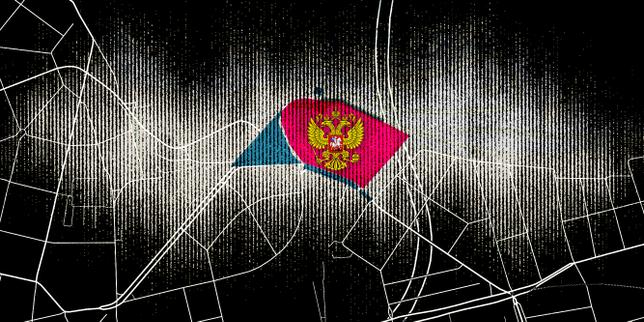
You want to insult a foreign superpower, but you don't want to start a war. Sending troops is too risky, and economic sanctions often hurt your own businesses. So, what do you do? You change a street sign.
It sounds petty, even ridiculous. Yet, municipal governments and national leaders have weaponized urban geography for decades. By renaming the exact stretch of asphalt outside a rival nation's embassy, countries force diplomats to look at their worst geopolitical nightmares every single day.
It's the ultimate passive-aggressive foreign policy. Every time a Russian or American ambassador receives mail, prints a business card, or orders a taxi, they're forced to write down the name of a person their government exiled, jailed, or killed. Here is how street names became the cheapest, sharpest psychological weapons in global diplomacy.
The geography of trolling
The logic behind this tactic is simple. Foreign embassies are sovereign territory, but the streets running right past their front gates belong to the host city. This loophole gives local city councils a strange amount of geopolitical power.
If you rename the road directly in front of an embassy, you force that embassy to change its official mailing address. Suddenly, the state's official diplomatic correspondence must carry the name of its biggest rival or most prominent dissident.
It's a highly visible, incredibly cheap way to register dissent. It costs next to nothing—just a couple of metal signs and a city council vote—but the psychological toll on the targeted diplomats is massive. They can't ignore it. They have to live with it, drive past it, and print it on their official letterheads.
When Washington played the naming game
The United States has a long history of using street names to needle its adversaries right in the heart of Washington, D.C.
During the Cold War, the Soviet Union was a prime target. In 1984, Congress stepped in to rename the block of 16th Street NW right in front of the Soviet Embassy. They called it Andrei Sakharov Plaza, honoring the Nobel Prize-winning nuclear physicist turned dissident who was then exiled in Gorky. The Soviets were furious, but there was nothing they could do to stop the local mail carrier from dropping off letters addressed to "Sakharov Plaza."
Decades later, the playbook remained exactly the same, only the names changed:
- Boris Nemtsov Plaza (2018): Washington renamed the section of Wisconsin Avenue outside the Russian embassy after the prominent opposition leader who was shot dead near the Kremlin in 2015.
- Jamal Khashoggi Way (2021): The city council targeted the Saudi Arabian embassy by renaming its street after the assassinated Washington Post journalist.
- Alexei Navalny Way (Proposed): Following the death of opposition leader Alexei Navalny in a Siberian penal colony, U.S. lawmakers pushed to rename the street outside the Russian ambassador’s residence.
The global theater of postal warfare
This isn't just an American hobby. Countries all over the world use geographic trolling to make a point, often with brilliant comedic timing or devastating historical irony.
Tehran vs. London
In 1981, the British Embassy in Tehran sat comfortably on Winston Churchill Avenue. Following the Iranian Revolution, the local government saw an opportunity to strike a nerve. They renamed the street Bobby Sands Avenue, honoring the Irish Republican Army hunger striker who had just died in a British prison.
To avoid the humiliation of putting Bobby Sands' name on their official documents, the British diplomats got creative. They sealed off the main entrance of the embassy on Bobby Sands Avenue and knocked a new door through a brick wall onto Ferdowsi Street, changing their official address entirely.
Kolkata vs. Washington
During the height of the Vietnam War, local authorities in Kolkata, India, decided to show their solidarity with North Vietnam. They renamed the street housing the United States consulate to Ho Chi Minh Sarani. For years, American diplomats had to process visas and write official cables from an address bearing the name of the man leading the war against U.S. forces.
Ankara vs. Washington
In 2018, relations between Turkey and the U.S. soured over American support for Kurdish forces in Syria. When the U.S. built a brand-new embassy in Ankara, the local municipality didn't wait for it to open. They changed the street name to Olive Branch Street, a direct reference to the Turkish military operation targeting those same U.S.-backed Kurdish fighters. Later that year, they changed another nearby street to Malcolm X Avenue.
The Great European renaming of 2022
The Russian invasion of Ukraine in 2022 triggered the largest coordinated street-renaming campaign in modern history. Cities across Europe realized they couldn't send armies, but they could absolutely humiliate Russian ambassadors.
Within weeks, a wave of cartographic defiance swept through European capitals:
- Vilnius, Lithuania: The previously unnamed dead-end road leading to the Russian embassy was officially named Ukrainian Heroes' Street.
- Riga, Latvia: The city council renamed the section of Antonijas Street where the Russian embassy operates to Ukrainian Independence Street.
- Tirana, Albania: The street housing the Russian, Ukrainian, and Serbian embassies became Free Ukraine Street. The Russian embassy reportedly moved its operations shortly after.
- Oslo, Norway: The intersection directly outside the Russian embassy's driveway was designated Ukraine Square.
These changes forced Russian diplomats to write "Ukraine" on their visa applications, official invitations, and incoming deliveries, a constant, daily reminder of the international backlash against their state's actions.
Why this cheap tactic actually works
It's easy to look at street renaming as a silly gesture. But symbols matter in diplomacy. When a city changes a street name, it creates a permanent, public, and highly visible protest.
Diplomats can't just block the view or close the blinds. They have to tell their home governments that their official address now honors their worst enemy. It is a brilliant form of asymmetric warfare: it costs the host city almost nothing, but it inflicts a persistent, nagging diplomatic headache on the rival nation.
Next time you see a local city council arguing over a street sign, look closely at the map. It might just be the opening salvo in the next silent international conflict.
If you are interested in how local politics can suddenly turn into a global geopolitical statement, pay attention to the addresses of new embassy constructions in your closest metropolitan city. The next name change is usually only one city council vote away.