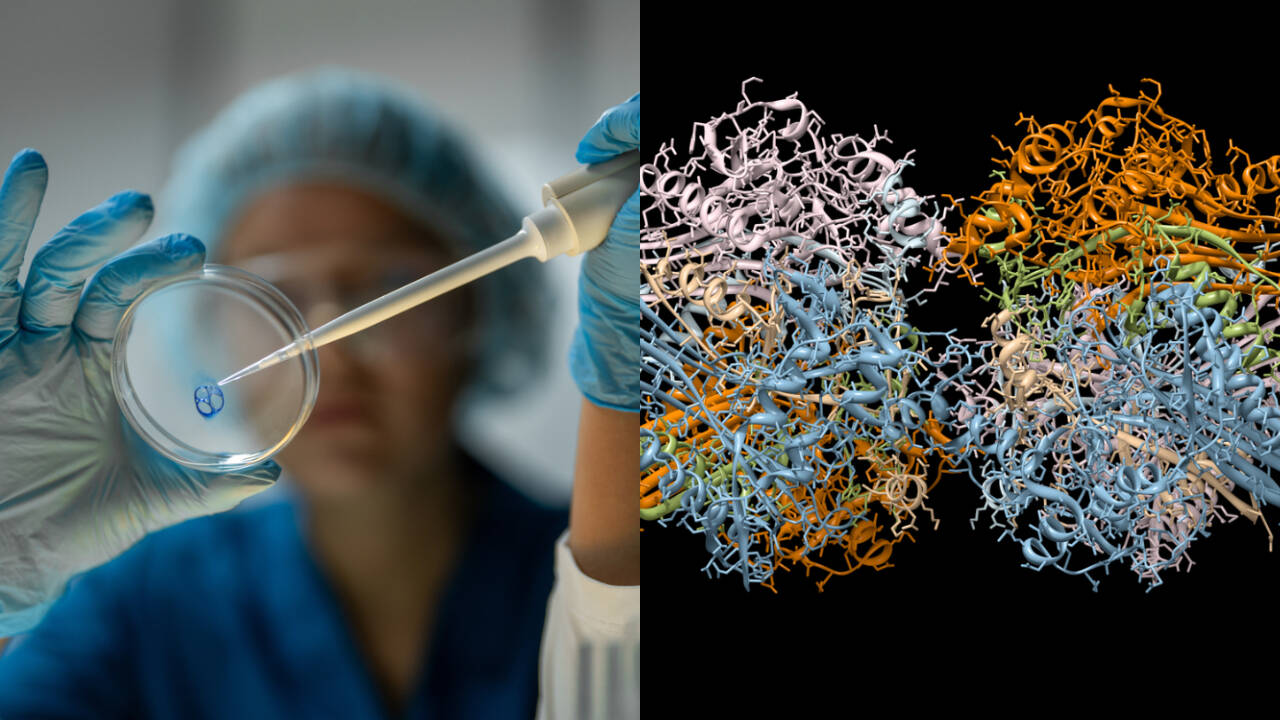
Antibacterial resistance functions as an escalating thermodynamic and biochemical attrition war. Pathogenic microorganisms continuously iterate survival mechanisms against synthetic and natural small-molecule inhibitors faster than pharmaceutical pipelines can deploy structural updates. Traditional antibiotic discovery relies almost exclusively on screening contemporary ecological niches—soil microbes, marine fungi, and known chemical libraries. This empirical space is largely exhausted, yielding diminishing returns characterized by high structural redundancy and severe cellular toxicity profiles.
To break this evolutionary stalemate, drug discovery strategy must pivot from horizontal spatial exploration to vertical temporal excavation. The methodology of reconstructing ancestral proteins from deep geological time represents a fundamental operational paradigm shift. By computationally resurrecting ancient molecules that evolved under distinct geochemical pressures millions of years ago, researchers can access functional space entirely orthogonal to the defense matrices deployed by modern multi-drug-resistant pathogens.
The Evolutionary Mechanics of Ancestral Sequence Reconstruction
Ancestral Sequence Reconstruction relies on phylogenetic algorithms to calculate the most probable ancestral amino acid sequences at internal nodes of a gene family tree. By aligning extant homologous protein sequences across modern species spanning vast evolutionary distances, statistical models evaluate amino acid substitution rates over geological timescales.
The process operates through three distinct analytical phases:
- Phylogenetic Tree Topography: Constructing high-resolution evolutionary trees using maximum likelihood or Bayesian inference frameworks to map the divergence of target protein families, such as antimicrobial peptides or metabolic enzymes.
- Probabilistic State Estimation: Calculating the posterior probability distribution for amino acid identities at every ancestral node. Residues with ambiguous statistical support undergo targeted combinatorial mutagenesis to test physical stability.
- Synthetic Gene Synthesis: Translating the inferred ancestral amino acid sequences into complementary DNA constructs, expressing them in heterologous hosts, and purifying the resulting resurrected proteins for biochemical characterization.
This workflow circumvents the evolutionary adaptations that modern bacteria have spent millennia neutralizing. Pathogens encounter molecular topographies that have not existed on Earth for hundreds of millions of years, neutralizing pre-adapted resistance mechanisms such as beta-lactamase degradation or efflux pump recognition.
Comparative Structural Efficiency and Biochemical Profiles
Contemporary antibiotics are constrained by the biochemical environment of the Anthropocene, where widespread selection pressure has optimized bacterial membrane permeability barriers and enzymatic inactivation cascades. Ancestral proteins evolved during periods characterized by radically different atmospheric oxygen concentrations, thermal regimes, and competing microbial ecosystems. Consequently, their biophysical design principles diverge significantly from current clinical agents.
Modern antibiotic pipelines typically prioritize high-affinity binding to contemporary target conformations. Ancestral reconstruction yields molecules optimized for broader thermodynamic stability. This structural robustness translates directly into several operational advantages:
- Thermal Stability: Resurrected proteins frequently exhibit elevated melting temperatures ($T_m$), allowing for sustained structural integrity under harsh physiological or storage conditions.
- Evasion of Enzymatic Cleavage: Because the active sites of ancestral enzymes or the structural folds of ancestral peptides lack the specific geometric conformations targeted by modern bacterial resistance enzymes, catalytic inactivation is severely impaired.
- Multivalent Interaction Surfaces: Ancient proteins often display conserved hydrophobic and electrostatic patches capable of disrupting bacterial cell membranes through physical mechanisms rather than stereospecific enzymatic inhibition, dramatically raising the genetic barrier required for pathogens to develop resistance mutations.
Translational Bottlenecks and Quantitative Limitations
Despite its theoretical elegance, ancestral sequence reconstruction is bound by strict computational and biological constraints. The primary failure mode stems from phylogenetic model misspecification. If the underlying evolutionary model incorrectly estimates substitution rates or fails to account for heterotachy—where evolutionary rates vary across both lineages and sites—the reconstructed sequence will contain structural defects, leading to protein misfolding or complete loss of function.
Furthermore, computational predictions must be validated via empirical high-throughput expression assays. Not every statistically probable ancestral protein is biologically viable. The cellular machinery of modern heterologous expression hosts (such as Escherichia coli) may fail to correctly fold proteins optimized for ancient cellular environments.
Scaling the discovery pipeline requires addressing the cost function of combinatorial library generation. While computational inference narrows the search space, phenotypic validation remains labor-intensive, requiring iterative cycles of biophysical optimization to balance antimicrobial potency against mammalian cytotoxicity.
Operational Deployment and Clinical Integration
Integrating resurrected ancestral proteins into the pharmaceutical development lifecycle requires treating deep-time biochemistry as a lead-generation engine rather than a direct clinical endpoint. The workflow demands a synthesis of computational phylogenetics, structural biology, and high-throughput screening.
Initial efforts target high-consequence priority pathogens, specifically carbapenem-resistant Enterobacteriaceae and multidrug-resistant Pseudomonas aeruginosa. By deploying ancestral libraries against these clinical isolates, researchers can map quantitative structure-activity relationships, isolating molecular scaffolds that display high therapeutic indices.
The ultimate utility of this approach lies in structural diversification. As contemporary pharmacological arsenals face structural obsolescence, deep-time excavation provides an inexhaustible reservoir of novel chemical architecture, shifting humanity's position in the evolutionary arms race from reactive defense to proactive biochemical innovation.