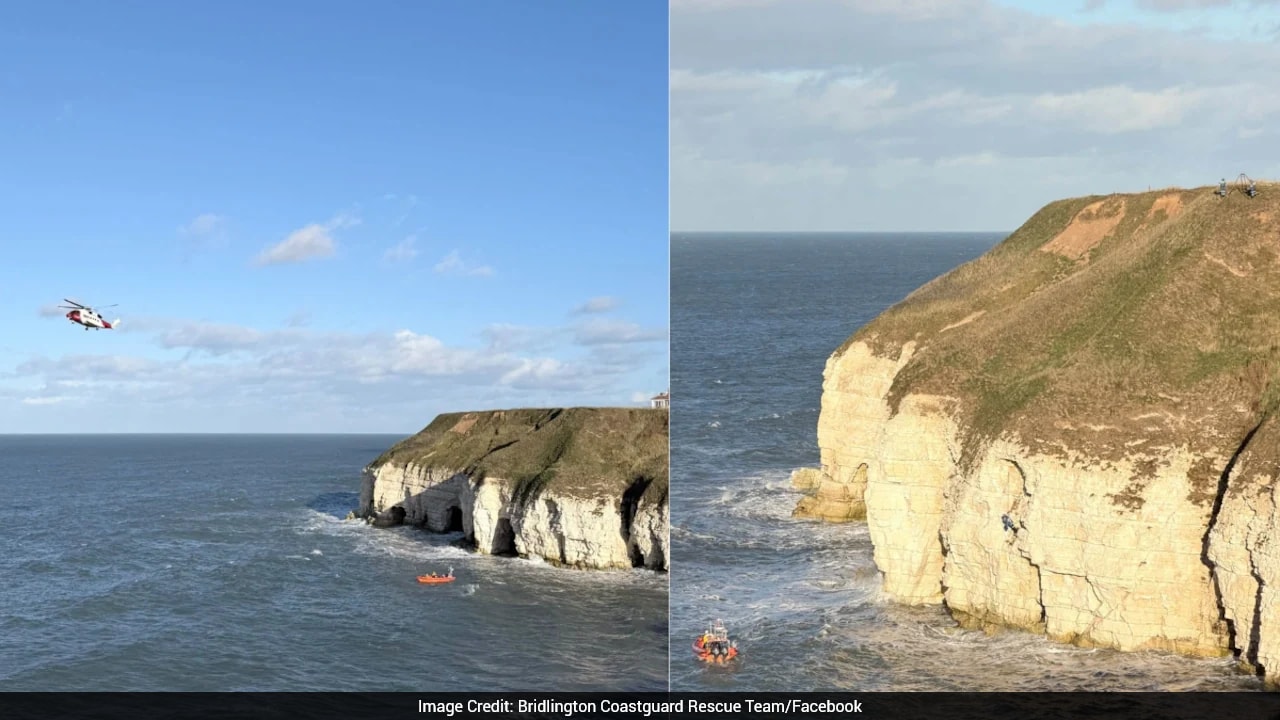
The sea does not hurry. It possesses an ancient, indifferent patience. It rolls against the jagged British coastline with a rhythm that has carved limestone pillars, dissolved ancient pathways, and swallowed entire villages over centuries. To stand beneath a chalk cliff when the sun is bright and the water is a flat, deceptive turquoise is to feel completely safe. The air smells of salt, roasted pebbles, and the sharp, clean ozone of open water.
Then, the clock strikes. Expanding on this topic, you can also read: The Asymmetric Calculus of Cross Border Attrition.
Water moves according to the relentless pull of the moon, indifferent to human schedules, holiday itineraries, or the sudden panic of a rising tide.
Consider what happens on a stretch of British beach when a family or a group of holidaymakers finds a particularly good spot. The sun is warm. The sand is soft beneath a towel. Ahead of them lies the expanse of the ocean; behind them, a towering wall of rock rises like a cathedral pillar, casting a cool, protective shadow. It feels like an amphitheater built just for them. They lose track of time. A conversation stretches on. A book is read chapter by chapter. The children dig deeper into the wet sand, hunting for translucent crabs and spiral shells. Observers at The Guardian have shared their thoughts on this matter.
By the time someone looks up and notices that the dry path of sand they walked across an hour ago has vanished under a sheet of dark, frothing water, the trap has already closed.
That is the hidden danger of the British coastline. It is not that the ocean attacks with sudden, cinematic fury. It is that the geography changes quietly while people are looking the other way. Headlands that served as open gateways at low tide become subterranean bottlenecks when the water rises. A small, inviting alcove or a recessed sea cave turns into a concrete-hard prison cell. The water climbs inch by inch, sliding over the shingle, licking at the base of the cliff, and cutting off every avenue of escape.
Panic does not arrive all at once. It creeps in through the chest.
First comes the confusion. Surely there is another way around? Surely the water won't go much higher? Then comes the realization that the cliff face is vertical, slick, and completely unclimbable, and the open sea stretches out infinitely in front of them, cold enough to sap the breath from a swimmer's lungs in minutes. The shore they left behind is gone, replaced by a churning grey boundary.
This was the terrifying reality for a group of beachgoers stranded in a cliffside cave along the UK coast, cut off by the merciless advance of the tide.
When people think of the UK Coastguard, they often picture a distant, bureaucratic entity—a distant voice on a marine radio or a helicopter hovering somewhere over the grey horizon. But behind that uniform image lies an intricate, hyper-localized network of human determination. These are teams composed of local volunteers, experienced mariners, cliff rescue technicians, and aviation crews who know intimately how unforgiving their local waters can be.
When the call came in—stranded by the tide, cut off in a cave, daylight fading, water rising—the machinery of rescue did not hesitate.
Time is the one currency that cannot be bartered with during a maritime emergency. Every minute the tide advances, the space inside a coastal cave shrinks. The air gets colder. The spray reaches higher. Waves begin to crash against the mouth of the recess, throwing up jagged sheets of water that batter anyone standing near the entrance. Hypothermia does not wait for formal permission; it begins to numb fingers and slow cognitive function long before the water reaches chest height.
On the cliffs above, Coastguard Rescue Officers moved with precision born of countless drills and bitter experience. Deploying to a cliff edge in deteriorating weather requires an absolute mastery of physics and rope geometry. You cannot simply walk down a sheer cliff face. You must descend vertically, trusting your anchors, your gear, and the person holding your safety line hundreds of feet above the crashing surf.
Below, the lifeboat launched into the churning surf.
Imagine sitting inside that cave as the light begins to fail. The sound of the ocean is no longer a gentle, soothing background hum; it is a deafening, concussive roar that reverberates off the stone walls. Every wave that strikes the mouth of the cave sends a shudder through the ground. The people trapped inside are wet, shivering, and entirely at the mercy of forces far larger than themselves. They watch the waterline climb past their ankles, then their knees.
Then, a light cuts through the gloom.
A red flare hisses overhead, painting the grey spray in a brief, arterial crimson. A shout carries across the water—human voices rising above the violence of the sea.
The rescue operation in these environments is a masterclass in coordination between air, sea, and land. While the inshore lifeboat maneuvers through the chaotic wash of the shallows, fighting the backwash that threatens to smash the hull against the rocks, cliff rescue technicians rig extraction systems from above. There is no room for error. A miscalculated wave can swamp a lifeboat in a heartbeat; a slipping rope can spell disaster on the jagged stone.
The extraction is rarely a clean, cinematic sweep. It is wet, chaotic, and exhausting. Rescuers must wade into freezing water, grab panicked individuals, secure them in harnesses, and guide them step-by-step away from the rising death trap. They offer steady hands, calm voices, and the quiet reassurance that everything is going to be alright, even as their own gear is soaked through with salt water.
Once the survivors are hauled aboard the lifeboat or hoisted clear of the cliff base, the immediate danger recedes, but the emotional shock wave lingers. Wrapped in thermal blankets, staring blankly at the receding coastline from the relative safety of a rescue vessel, the rescued individuals face the strange, jarring contrast between the ordinary holiday they intended to have and the catastrophic end they just narrowly avoided.
We tend to view nature as a backdrop—a scenic postcard designed for our enjoyment, a place to clear our heads, take photographs, and escape the indoor rigidity of modern life. We forget that the natural world does not recognize our boundaries. It operates on ancient, unyielding laws. The ocean does not care about your weekend plans. The cliffs do not care about your photographs.
Every year, emergency services across the UK execute countless rescues not because people are reckless, but because the margin between a peaceful afternoon walk and a life-threatening emergency is far thinner than most of us care to admit. It takes only a momentary lapse in attention, an unread tide table, or a misjudged headland to change everything.
The next time you walk down a British beach, listen to the warning signs. Check the tide charts before you set foot on the sand. Look behind you as you walk, noting where the pinch points are, where the water could cut you off if you linger too long. Respect the boundary where the land ends and the deep water begins.
Because when the tide turns, the stone does not yield, and the sea does not wait.