The water used to be a mirror. In the South Kivu province of the Democratic Republic of Congo, the rivers once reflected the deep, bruised purple of the storm clouds and the endless green of the forest canopy. Today, the water is the color of a rusted penny. It is thick, opaque, and heavy with the sediment of a thousand churned-up dreams. When the women of the village dip their plastic yellow jerrycans into the flow, they aren't just collecting water. They are collecting the waste of a global hunger they didn't ask to feed.
Everything starts with the sound. It is a low, mechanical thrum that vibrates in the soles of your feet long before you see the machines. These are the dredges—massive, metallic insects owned by foreign corporations, primarily Chinese firms, that have descended upon the riverbeds like a fever. They do not mine with the slow, rhythmic strike of a pickaxe. They devour. Don't forget to check out our recent coverage on this related article.
The Geography of Disappearance
Consider a man named Jean. He is a hypothetical composite, but his reality is repeated in every cluster of mud-brick homes along the Elila River. Jean used to own a small plot of land where he grew cassava and beans. One morning, he woke up to find a yellow excavator idling at the edge of his field. There was no knock on the door. There was no legal summons. There was only a piece of paper signed by a distant official in Kinshasa and a group of armed men who didn't speak his language.
This is the "accaparement des terres"—the land grab. It is a clinical term for a violent erasure. When a mining company secures a permit, the lines on a map in a skyscraper thousands of miles away suddenly override the ancestral boundaries of the people living on the ground. Jean’s field is now a crater. The topsoil is gone, replaced by a grey, lunar expanse of gravel. To read more about the history of this, USA Today offers an informative summary.
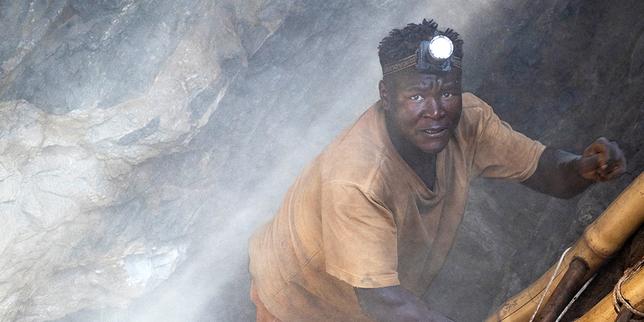
The scale of this displacement is staggering. Between 2021 and 2026, thousands of hectares of Congolese forest and farmland have been converted into industrial scars. This isn't just about losing a job. It is about losing the ability to exist. When the land is gone, the community dissolves. The young men head to the pits to work for three dollars a day, breathing in dust and mercury, while the elders sit in the shade of trees that are marked for felling, watching their history get loaded onto trucks.
The Toxic Alchemy
Gold is a clean metal. It doesn't tarnish, it doesn't rust, and it shines with a light that feels divine. But the process of pulling it from the Congolese earth is filthy. To separate the tiny flakes of gold from the mountain of dirt, miners use mercury and cyanide.
Imagine the chemistry of a slow-motion disaster. Mercury is a neurotoxin. It doesn't stay in the pits. It seeps into the groundwater. It flows into the rivers. It settles into the fatty tissues of the fish that the children eat. Over time, the damage manifests in ways that feel like a curse: trembling hands, blurred vision, and children born with bodies that refuse to grow correctly.
The fish are dying. The ones that survive are poisoned. For a fisherman on the Ulindi River, the choice is now between starvation or slow intoxication. The corporations argue that they are bringing "development," but development shouldn't taste like metal. In the Ituri and South Kivu provinces, the mercury levels in the river systems have spiked far beyond the safety limits set by the World Health Organization. This is a silent debt being accrued, a biological bill that the Congolese people will be paying for generations after the gold veins have been tapped dry.
The Shadow of the Contract
Why does it happen so easily? The answer lies in the dark, tangled thicket of Congolese bureaucracy and corporate opacity. In 2023 and 2024, investigations revealed a pattern of "phantom" permits. Companies would operate under the guise of small-scale artisanal cooperatives to bypass the stricter environmental and social regulations placed on large industrial firms.
It is a shell game. A Chinese company partners with a local figurehead. They bring in heavy machinery that no local cooperative could ever afford. They extract tons of gold. They pay little to no taxes because, on paper, they barely exist. Then, when the river is ruined and the gold is gone, the company dissolves, leaving behind a hollowed-out landscape and a community with no legal recourse.
Corruption is the grease that keeps these dredges turning. Reports from civil society groups in the DRC point to millions of dollars in "informal" payments—bribes—that flow from mining interests to local military commanders and provincial officials. This money buys silence. It buys the right to dump tailings directly into the river. It buys the right to ignore the cries of the farmers whose land has been swallowed.
The Human Toll of the Shine
We often talk about "conflict minerals" in the context of our smartphones—tantalum, tin, tungsten. But gold is the ultimate prize. It is portable. It is untraceable once it hits the refineries in Dubai or Switzerland.
The human cost is not just environmental; it is social. The "rush" creates a hyper-inflated economy where the price of a bag of salt doubles overnight because the miners have cash and the farmers have nothing. It brings an influx of "protection" forces—militia groups and rogue soldiers who extract their own taxes at the barrel of a gun. The presence of these mining sites often correlates with an increase in sexual violence and forced labor.
The gold doesn't stay in the Congo. It leaves in armored trucks and private jets. It ends up in the vaults of central banks, in the delicate circuitry of high-end electronics, and in the wedding bands of couples who will never know the name of the river that died so they could say "I do."
The Illusion of Progress
There is a hollow argument often made by those defending these practices: that the DRC needs the investment. They say that without the Chinese machines, the gold would stay in the ground, useless.
But wealth is not just what you extract; it is what you sustain. If a company takes ten million dollars' worth of gold and leaves behind twenty million dollars' worth of environmental destruction and a broken healthcare system, that isn't an investment. It is a heist.
The Congolese people are not anti-progress. They are not against mining. They are against being treated as an inconvenient obstacle on their own land. They are against a system where the "rules of the game" are written in a language they don't speak and enforced by people who don't care if they live or die.
The Silence of the Forest
There is a specific kind of silence that falls over a village after the mining company moves on. It isn't the peaceful silence of the forest. It is a heavy, expectant stillness. The birds don't sing in the gravel pits. The water doesn't murmur; it just sits, stagnant and toxic.
We are told that the world is transitioning to a "green" economy, and that the minerals of the Congo are the key to this future. But there is nothing green about a poisoned river. There is nothing sustainable about a child born with mercury in their blood.
The "Gold Rush" in the DRC is painted by some as a triumph of modern logistics and global trade. In reality, it is an ancient story. It is the story of the many sacrificed for the few. It is the story of a land so rich it has become a curse to those who walk upon it.
Until the transparency of the supply chain matches the clarity of the rivers as they once were, every ounce of gold coming out of South Kivu carries a weight that cannot be measured on a scale. It is the weight of stolen land, of poisoned water, and of a people waiting for a justice that never seems to arrive. The machines keep thrumming, the river keeps turning red, and the world keeps looking at the shine, never at the blood.