Water has a long memory. For generations, the fishermen of Prahovo watched the surface of the Danube and saw only a mirror of the sky, or a grey, rushing current carrying the weight of half a continent toward the Black Sea. They knew the water was deep. They knew it was cold. They trusted it to keep its secrets.
Then came the drought.
It did not arrive all at once. It crept in through the spring, withholding the snowmelt from the Alps, baking the mud of the riverbanks until they cracked open like dry bone. By late summer, the great river had shrunk. It pulled back from its shores, exposing gravel bars that had not felt the sun since the middle of the last century.
And with the water gone, the ghosts came up for air.
Standing on the exposed silt near the Serbian port town of Prahovo, you do not just see metal. You see jagged teeth of grey steel biting into the pale sky. These are not ordinary wrecks. They are the remnants of the Black Sea fleet, scuttled in 1944 by Nazi Germany's retreating Black Sea fleet as the Red Army closed in. More than two hundred warships rested here for nearly eighty years, smothered in silt, hidden beneath twenty feet of dark water.
Now, they are rusting monuments to an old catastrophe, sitting stranded in the middle of a shrunken shipping lane.
To understand what happens when a river dies piece by piece, you have to talk to the people who live along its edges. Consider a hypothetical local captain named Milan, whose grandfather steered timber rafts down this exact stretch of water. Milan remembers listening to stories about the iron graveyard beneath the waves. But hearing about a ghost ship and standing next to one are entirely different experiences.
When Milan walks out onto the baked mud of the riverbed, the scale of the disaster hits him. The hulls are massive, encrusted with freshwater mussels that died by the millions when the water receded. Turrets point mutely toward an empty horizon. Inside those twisted compartments, ammunition boxes still sit in the dark, relics of a war that Europe thought it had safely buried beneath the mud.
The ships are dangerous. That is the first thing the local authorities tell you. As the water level dropped, narrowing the navigable channel from a generous width down to a treacherous bottleneck, modern cargo barges began scraping against the very hulls that sank eighty years ago. Millions of tons of coal, grain, and oil move through this artery every single day. When the artery clogs, the economic pulse of Europe stutters.
Dredging has begun, but it is slow, agonizing work. Engineers are trying to carve a safe passage through the wreckage while racing against the unpredictable temperament of the weather. Every scoop of the excavator brings up more than just rust. It brings up history, heavy and unyielding.
Yet, the iron warships are only part of the story.
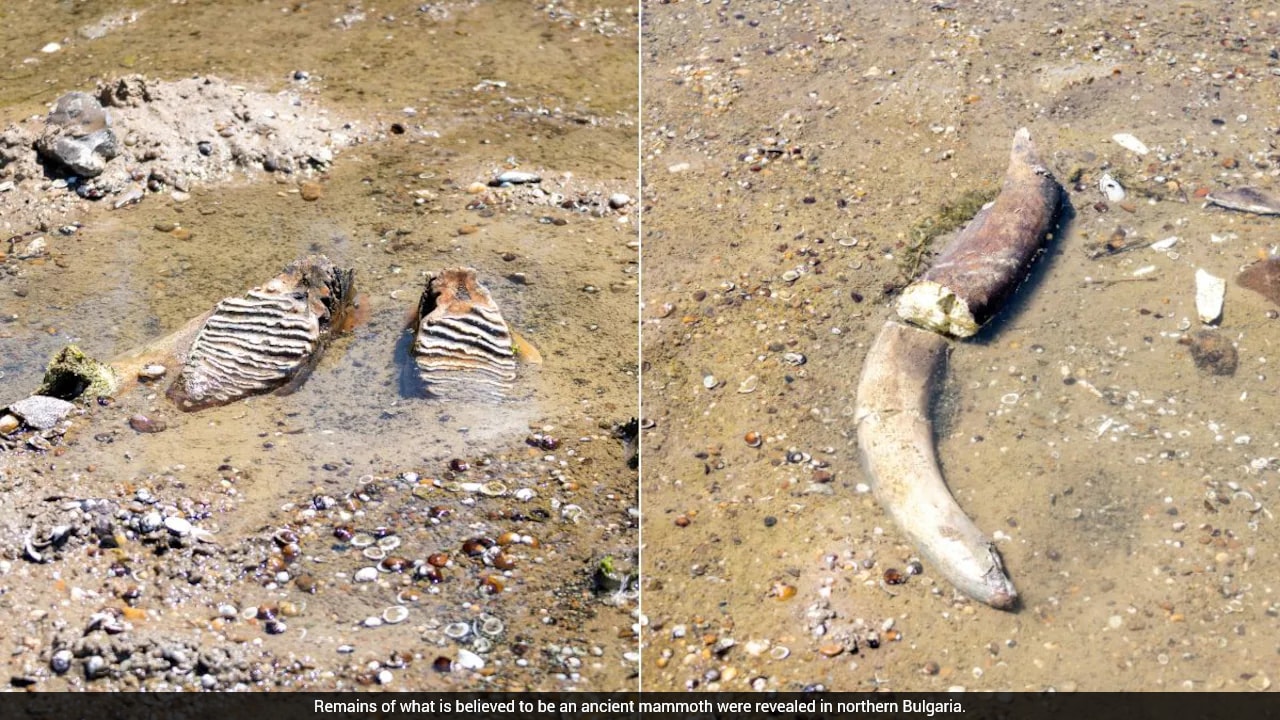
Farther upstream, where the current cuts through deeper gorges and ancient limestone, the shrinking river has laid bare something much older than the Second World War. Prehistoric fossils, long swallowed by the depths, are beginning to emerge from the receding banks. Mammoth teeth. Bones of creatures that roamed a green, warm European continent long before humans ever carved a canoe from a willow tree.
It is a strange sensation, walking along a riverbank and realizing you are standing on a floor that was meant to stay submerged until the end of time.
Climate scientists tell us that the 2022 drought—and the subsequent dry spells that continue to plague the basin—was the worst Europe had seen in five hundred years. But statistics are cold things. They do not capture the sound of the wind whistling through the hollow skeleton of a German destroyer. They do not capture the smell of decaying riverbeds, a sharp, mineral scent of ancient mud meeting sudden sunlight.
We have treated our great waterways as infinite resources for centuries. We built dams, channeled currents, dumped industrial runoff, and assumed the water would always be there to wash away our sins. We turned rivers into highways and drainage ditches.
The Danube is fighting back by simply disappearing.
When you look at the exposed hulls of Prahovo, you are not just looking at a footnote from World War II. You are looking at a warning flare. The river is telling us a story about our own fragility. If a channel that has sustained human civilization since the Neolithic era can be choked down to a muddy trickle in a matter of weeks, what does that mean for the cities downstream that rely on it for drinking water, for cooling power plants, for cooling the fever of a warming continent?
The ships will likely be cut up and removed eventually. Engineers will dredge the shipping lanes, widen the bottleneck, and restore the flow of commerce. The cargo barges will move again, uninterrupted, carrying their freight through the heart of Europe.
But the mud remembers.
Next time you look at a map of a great river, remember that the blue line is not a permanent fixture of the earth. It is a fragile ribbon of life, holding fast against the heat, guarding things we thought we had lost forever, waiting to see what we will do when the water finally runs out.