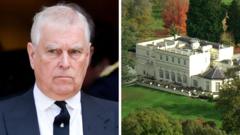
Two thousand pounds a month sounds small by royal standards. In Windsor, on Crown Estate land, it sparked a parliamentary reckoning that goes way past one disgraced former prince.
When the Public Accounts Committee published its inquiry findings in November 2026, attention zeroed in on Andrew Mountbatten-Windsor collecting just over £2,000 a month before maintenance and expenses by subletting cottages on the Royal Lodge estate. For a period of less than a year starting in late 2021, three cottages brought in that sum. Another cottage had been sublet for most of his roughly 22-year tenancy at below market rates to a royal employee, with rent tied to a share of salary rather than open-market value.
If you only read headlines about a £2,000 monthly payout, you miss the real story. Honestly, nobody is shocked that an arrangement tied to Royal Lodge drew scrutiny after Andrew was stripped of his royal titles over his links to Jeffrey Epstein and eventually left Windsor for Sandringham. What actually matters to taxpayers is how opaque the rules were, how the Crown Estate handled oversight, and why profits that belong in public coffers got tangled up in old lease mechanics.
How the Royal Lodge Subletting Worked in Practice
To understand why lawmakers pushed back so hard, you have to separate rumor from what officials actually confirmed. Earlier in 2026, a National Audit Office review flagged that three cottages on the Royal Lodge grounds had been sublet with income going to Andrew rather than the Crown Estate, without disclosing the exact figures. Later, a September 7, 2026 letter from Keeper of the Privy Purse James Chalmers to the Public Accounts Committee put numbers on that window: just over £2,000 a month before expenses during that sub-year stretch starting in late 2021, alongside the long-running below-market arrangement for an in-situ royal worker.
Even then, Chalmers noted he lacked access to full historical records or underlying documentation to calculate a lifetime total over two decades. Think about that for a second. Public auditors and the monarch's senior financial official could confirm a slice of the picture, yet full historical books weren't sitting neatly in front of them. That gap is exactly what frustrates MPs when public assets and royal privileges overlap.
Meanwhile, the broader financial wind-down around Royal Lodge involved serious sums. Following the surrender of the lease in October 2026, repair and restoration obligations tied to the property reached £1.8 million, with £302,000 in early surrender compensation deducted so King Charles privately paid £1.5 million to settle with the Crown Estate. Those numbers dwarf £2,000 a month. Yet the monthly cottage rent struck a nerve because it highlighted who captured value from land held for the public good.
Why the Crown Estate and Royal Household Mix-Up Matters
A lot of people lump "the royals" and "the Crown Estate" into one bucket. They aren't the same thing, and that confusion hides real accountability questions.
The Crown Estate is a distinct statutory body—not the King's private property—whose net profits are surrendered to HM Treasury for public spending. By May 2026, National Audit Office figures cited in parliamentary evidence showed the Crown Estate managed 2,475 residential properties, whereas the Royal Household managed 255. Each operates under different legal structures, governance rules, and reporting habits.
When leases sit across that boundary, oversight gets blurry. MPs on the Public Accounts Committee concluded that the Crown Estate hadn't clearly identified specific lessons from the Royal Lodge lease and seemed reluctant to spell out how future arrangements would change, treating the old lease largely as a product of its time. In property governance, shrugging off an old contract as "just how things were done" is a weak defense when taxpayers expect clear guardrails.
The committee's scrutiny didn't stop at cottages or Royal Lodge. Lawmakers also pointed to inconsistencies in how residential rents were set across Royal Household properties occupied by Princess Beatrice and Princess Eugenie, where rents funded by the King had leaned on out-of-date open-market valuations over several years. On top of that, MPs flagged a 129% jump in the Crown Estate's administration costs between 2020-21 and 2025-26—alongside a 106% rise in the chief executive's pay over that span—and pressed the estate to show clearer trade-offs between commercial returns, sustainability, and public value.
Where Lawmakers Want Standard Leases to Go
One of the sharpest practical takeaways from the UK Parliament Public Accounts Committee inquiry is a push for default bans on sub-letting unless the landlord grants prior permission—and even then, expecting full financial visibility rather than casual side arrangements. If a tenant holds a long lease on public-linked land, subletting without tight approval and transparent accounting invites exactly this kind of backlash.
From a landlord's standpoint, prohibiting unauthorized sub-letting isn't radical. Most commercial and residential leases restrict sub-letting for a simple reason: control over occupancy, upkeep, insurance, and who profits from the space. When a lease lacks clear modern controls, enforcement becomes messy years later.
Common Misconceptions About This Story
Coverage of high-profile royal property stories tends to flatten messy details into punchy lines. A few myths deserve clearing up right away.
- Myth one: Andrew pocketed £2,000 a month for over twenty years. Not what the disclosure says. According to the letter shared with the Public Accounts Committee, combined income from subletting three cottages was just over £2,000 a month—before maintenance and expenses—for an undisclosed period of less than a year starting in late 2021, while another cottage had a separate long-running below-market arrangement for a royal worker.
- Myth two: The £2,000 figure was pure net profit. Expenses and maintenance weren't netted out in that headline figure, and historical records were incomplete. Calling gross receipts "pure profit" distorts the math even when the optics already look bad.
- Myth three: Taxpayers footed the £1.5 million Royal Lodge settlement. The King privately paid the £1.5 million balance to the Crown Estate after the £302,000 surrender credit against the £1.8 million repair and restoration figure. Still, the broader governance questions around how the lease worked and how Crown Estate spending grew remain public issues.
What You Can Actually Do With This Lesson
You probably don't hold a 75-year lease on a Windsor estate. Fair enough. Yet the underlying mechanics of property leases, sub-letting rules, and paper trails apply to everyday landlords, tenants, and anyone watching how public institutions handle money.
If you manage or rent property, put sub-letting rules in plain writing from day one. Spell out whether sub-letting or short-term hosting is banned, what triggers landlord consent, and how any permitted rent or expense sharing is documented. Verbal understandings and outdated valuation habits are where disputes—and audit headaches—start.
If you want to verify claims like this yourself instead of relying on recycled summaries, read primary committee releases and audit reports rather than second-hand social posts. You can track the inquiry record directly through the UK Parliament Public Accounts Committee and check official audit context via the National Audit Office. Looking at the source documents takes ten minutes and saves you from falling for half-baked narratives.


