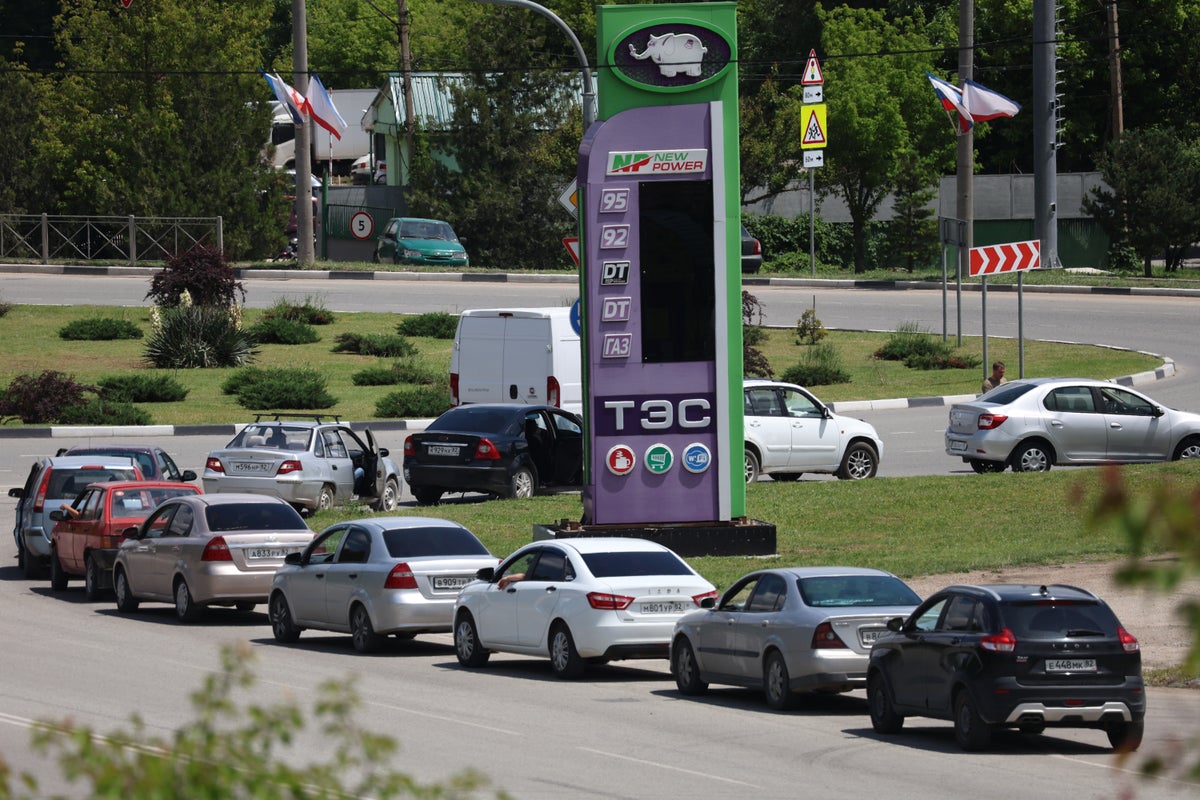
You can't run an occupation without gas. On June 21, 2026, the Kremlin-appointed authorities in occupied Crimea finally admitted what local motorists had feared for weeks. The pumps are dry, and the public is cut off.
Sergey Aksyonov, the Russian-installed governor of the peninsula, announced a total freeze on civilian fuel distribution. Starting at 9:00 a.m., gas stations across Crimea and the naval hub of Sevastopol completely cut off sales to individuals and private businesses. Cash, cards, or even previously issued digital coupons don't matter anymore. If you aren't driving a state vehicle, an ambulance, or a military truck, you aren't getting a single drop.
This isn't a temporary logistical hiccup. It is the direct result of a calculated, relentless Ukrainian air campaign designed to isolate the peninsula and choke Russian military logistics. Kyiv wants to turn Crimea into an unsustainable economic and military island. Right now, that strategy is working.
The Strategy Behind Dropping the Fuel Axe
If you want to understand why the Kremlin took such a drastic step, look at the fires burning on both sides of the Kerch Strait. Over the weekend, Ukrainian Unmanned Systems Forces launched a coordinated strike using medium-range drones and missiles. They didn't just hit random targets. They systematically punched holes in the exact infrastructure Russia uses to keep Crimea supplied.
The strikes hit oil terminals, gas compressors, and crucial radar systems. Overnight attacks targeted a Black Sea oil terminal in the village of Chushka and a vital ferry transport hub in Russia's southern Krasnodar region. By hitting the transport ferries and the oil depots simultaneously, Ukraine effectively severed the energy umbilical cord connecting mainland Russia to the occupied territory.
Ukrainian President Volodymyr Zelenskyy called these actions long-range sanctions against Russian war infrastructure. It is an aggressive shift in tactics. Instead of fighting bloody, grinding battles over every inch of trenches in the east, Kyiv is squeezing Russia where it hurts most: its fuel tanks.
Without fuel, tanks don't move. Trucks can't transport artillery shells. Air defense radars can't run backup generators. By shutting down civilian gasoline sales, Aksyonov and the occupation administration are hoarding what little fuel remains to keep the Russian military from grinding to a halt.
A Crisis Ten Years in the Making
This is the worst energy crisis Crimea has faced since Russia illegally annexed the territory in 2014. Anyone who tells you this happened overnight hasn't been paying attention. The cracks started showing clearly back in May.
At the end of May, occupation authorities tried to managed the dwindling supply by restricting gas sales to 20 liters per vehicle owner per week. They used a coupon system distributed via an official messaging app channel. Predictably, those digital vouchers vanished within minutes. Motorists spent hours baking in summer heatlines just to fill up a fraction of their tanks.
When the lines grew too long, people turned to the black market. Speculators began reselling fuel at double the market price. Some desperate drivers even tried to bring their own gas cans over the Kerch Bridge from Krasnodar, though authorities capped that at 100 liters per vehicle due to security fears.
Now, even those desperate workarounds are dead. Mikhail Razvozhaev, the governor of Sevastopol, initially blamed the shutdown on simple delivery delays. But you don't shut down every gas station on a peninsula because a few fuel trucks are running late. You do it because your storage depots are smoking ruins.
What This Means for Everyday Life on the Peninsula
The immediate fallout for the local population is brutal. Local social media channels are flooded with panic. People are trapped, and they know it.
- The Tourist Trap: The timing couldn't be worse for the Kremlin. June is the start of the summer tourist season, an industry Russia has desperately tried to maintain to show a veneer of normalcy. Now, thousands of Russian vacationers who drove down via the Kerch Bridge find themselves stranded with empty tanks. Authorities have scrambled to set up a tourist hotline, but a phone number can't fill a gas tank.
- Economic Stagnation: Private businesses can no longer transport goods. Deliveries to local grocery stores and businesses are freezing up. If you operate a private delivery service, a construction firm, or a farm, your operations are effectively dead until further notice.
- The Psychological Shift: For over a decade, Moscow pitched Crimea as a safe, permanent part of the Russian Federation. That illusion is shattered. When civilian residents look at their cars and realize they can't even drive to the next town to buy medicine, the reality of the war lands squarely on their doorsteps.
The Broader Air Campaign Squeezing Russia
The crisis in Crimea doesn't exist in a vacuum. It matches a broader, highly sophisticated Ukrainian campaign hitting deeper into Russian territory. Just days before the Crimean shutdown, on June 18, Moscow faced a massive barrage of nearly 200 Ukrainian drones. That attack forced a major domestic refinery to halt operations indefinitely.
Kyiv has figured out that Russia's vast geographic size is actually a vulnerability. Moscow cannot protect every oil depot, refinery, and transport bridge across its massive territory. By picking apart these soft economic targets, Ukraine is forcing the Kremlin into an impossible choice: protect the frontline military assets or protect the energy infrastructure keeping domestic life functional. In Crimea, the military won that choice, and the civilians lost.
Practical Steps for Observers Tracking the Escalation
If you are analyzing how this fuel freeze alters the map, look at these specific indicators over the next few weeks.
First, watch the movement of Russian military assets out of northern Crimea. If the fuel crisis deepens, Moscow may have to pull back heavy equipment closer to the logistics hubs in Krasnodar just to keep them supplied.
Second, monitor the traffic volume on the Kerch Bridge. If the fuel ban remains in place for more than a couple of weeks, expect to see a significant exodus of civilians trying to cross back into mainland Russia on foot or via state-run trains, further complicating military transport lines.
Finally, pay attention to the state-run coupon distribution apps. Any attempt by the occupation government to restart partial sales will show up there first. But until Ukraine stops dropping drones on Black Sea oil terminals, don't expect the civilian pumps in Crimea to turn back on anytime soon. The battle for the peninsula is no longer just about artillery and troops. It is a battle of endurance, and right now, the tank is running on empty.