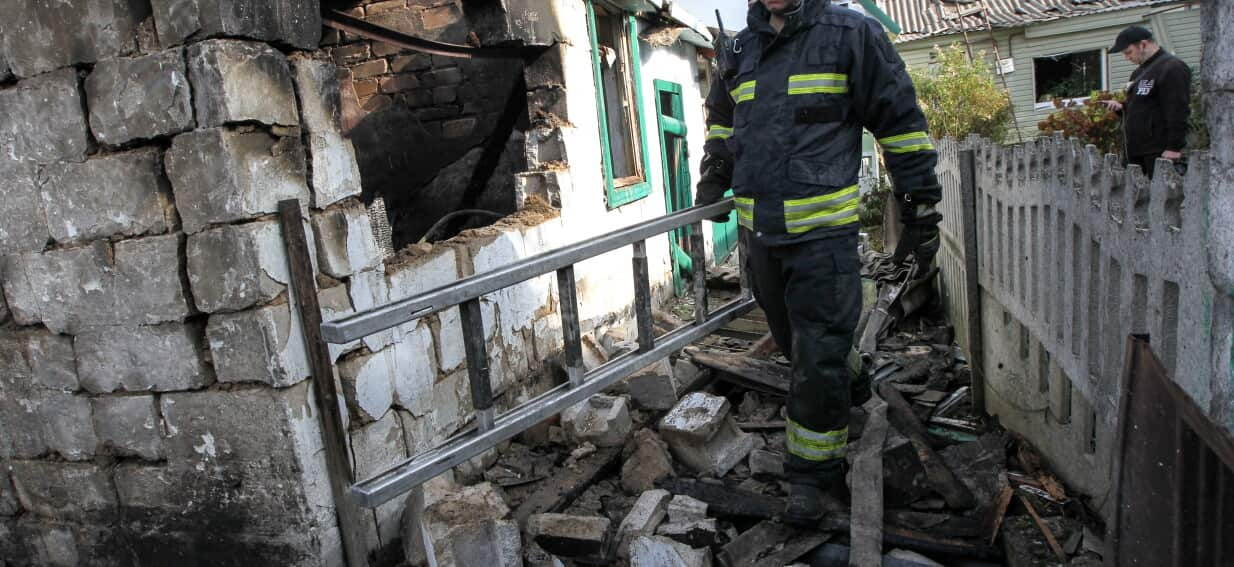
Whenever diplomatic channels hum with talk of renewed negotiations, both Russia and Ukraine routinely step up long-range strikes, drone swarms, and front-line assaults. That escalation looks like a contradiction on paper. In practice, it is standard bargaining behavior in modern attrition warfare. When Russia and Ukraine intensify attacks during diplomatic openings, commanders on both sides are racing to lock in leverage, drain enemy air defenses, and prove that stalling at the table carries a steep physical price on the ground.
Anyone who has covered conflict zones long enough knows better than to read a diplomatic headline and expect quiet skies. Peace rumors rarely slow down artillery. Often, they pull the trigger faster.
Diplomacy Never Freezes the Front
Diplomacy moves on calendars, summits, and leaked drafts. Warfare moves on logistics, weather windows, ammunition stocks, and tactical opportunity.
When diplomats float ceasefire ideas or back-channel talks, military planners do not hit pause. They treat every rumored negotiation as a potential clock. If a freeze or partial truce takes hold tomorrow, whatever ground a force holds tonight becomes harder to dislodge without paying a higher cost later.
That dynamic is old. In twentieth-century wars—from Korea to Vietnam and the Balkans—heavy offensives and intense bombardment frequently coincided with bargaining sessions. Negotiators talk about lines on a map; armies try to draw those lines in steel before ink dries.
Even when neither side expects an immediate breakthrough, posture matters. A commander who enters talks from a position of visible momentum argues from strength. A force that looks static or battered risks being pressed into concessions before talks even start.
The Mechanics of Pre-Talk Escalation
Escalation around renewed negotiations rarely happens by accident. It follows clear operational logic across several fronts at once.
Shaping the Map and the Ledger
On the ground, an attack before talks aims to test weak sectors, widen buffer zones, or force an opponent to commit reserves. Even small tactical gains give negotiators something tangible to cite as momentum.
Deep strikes work differently. Long-range drones, cruise missiles, and ballistic systems target energy infrastructure, fuel depots, rail hubs, weapons plants, and command nodes. Hitting those assets raises the economic and operational cost of fighting on.
Consider a hypothetical example of how deep strikes interact with talks. Suppose a country prepares for talks while its rival faces winter grid strain. A wave of strikes against substations and transformer yards does not win a war by itself, yet it forces emergency repairs, diverts air-defense interceptors, and reminds foreign backers how expensive prolonged stalemate remains.
Exhausting Air Defenses and Stockpiles
Modern air-defense networks face a brutal math problem. Expensive interceptors are often fired at cheaper drones or decoys sent ahead of heavier strike packages.
Intensifying barrages during diplomatic chatter tests how thin those interceptor magazines have grown. Every missile spent defending a power plant or a depot is one fewer missile available to protect a city block or a forward headquarters the next week.
There is also a signaling element. By launching complex, multi-axis attacks while talk of settlement circulates, a military demonstrates endurance. It tells rivals and third-party mediators: we still have munitions, we still have launch platforms, and we are not negotiating out of exhaustion.
| Escalation Lever | Primary Target | Strategic Purpose During Talks | Trade-Off or Risk |
|---|---|---|---|
| Front-line assaults | Trenches, logistics roads, strongpoints | Claim territory or tie down reserves before any freeze | High casualty and equipment attrition |
| Long-range drone and missile waves | Power grids, fuel storage, defense factories | Impose economic strain and deplete interceptors | High munition cost; uneven military payoff |
| Electronic warfare and recon probes | Radars, communications, command posts | Blind defenders and map gaps for future strikes | Exposes emitter locations and tactics |
Domestic Politics and External Backers
External pressure shapes the timing just as much as battlefield geometry. Rumors of talks often emerge when foreign capitals signal fatigue, shift aid packages, or push for a political off-ramp.
Neither Moscow nor Kyiv operates in a diplomatic vacuum. Both watch how Washington, European capitals, and global trading partners react to battlefield news. A sharp spike in attacks can serve as a warning shot against an unwanted deal—or an attempt to shape what third parties view as a "realistic" starting point.
Inside each country, domestic audiences also weigh in. Leaders who appear to bend under diplomatic pressure risk looking weak at home, especially among hardliners and frontline units bearing heavy losses. Demonstrating resolve through forceful action helps leaders frame any future diplomacy as a choice made from strength rather than surrender.
Yet escalation carries political risk too. Civilian casualties, blackouts, and cross-border strikes harden public anger. When fury spikes on both sides, compromises that looked difficult a month earlier become politically toxic.
Why Talks Stall When Firepower Rises
Here is the trap built into pre-negotiation escalation. The very strikes meant to improve bargaining leverage often poison the atmosphere needed to reach an agreement.
When missiles hit cities or critical infrastructure while envoys are trading messages, trust collapses further. Each side reads the other's barrage as proof of bad faith. Mediators end up spending half their energy just trying to keep basic communication channels open.
Verification becomes another sticking point. If both sides are pushing hard right up to the eve of talks, agreeing on what constitutes a "freeze," a "ceasefire," or a "stand-down" turns into a minefield. Who stops firing first? How do observers verify a pause when drones fly hundreds of miles behind lines?
A sharp escalation can also miscalculate. Commanders rely on intelligence and assumptions about how much pain an opponent can absorb. Sometimes a strike intended to nudge an adversary toward flexibility instead stiffens resistance—or triggers a retaliatory wave that erases any short-term advantage.
Intelligence gaps make miscalculation even more likely. Fog of war does not lift just because diplomats book a flight.
What Serious Observers Watch Instead of Headlines
Anyone tracking this conflict can skip the loudest diplomatic rumors and watch a few grounded indicators instead.
- Munition mix and tempo. Watch whether strikes rely mostly on massed low-cost drones or heavy concentrations of precision missiles. Shifts in mix often reflect stockpile realities and specific target priorities rather than mere rhetoric.
- Infrastructure versus military targets. Notice whether attacks concentrate on logistics and defense production or spread across civilian power and heating systems ahead of cold weather.
- Force posture behind the front. Look for troop rotations, armor staging, and air-defense repositioning. Talk of peace is cheap; moving heavy equipment and air-defense batteries takes planning and fuel.
- Information and rhetoric discipline. Pay attention to how official statements frame talks—whether leaders treat negotiations as a serious track or dismiss them as a distraction while bragging about strike results.
Negotiations do not quiet a war of attrition on their own. Until the underlying incentives and costs on the battlefield shift in a durable way, diplomatic smoke and battlefield smoke will keep rising together.