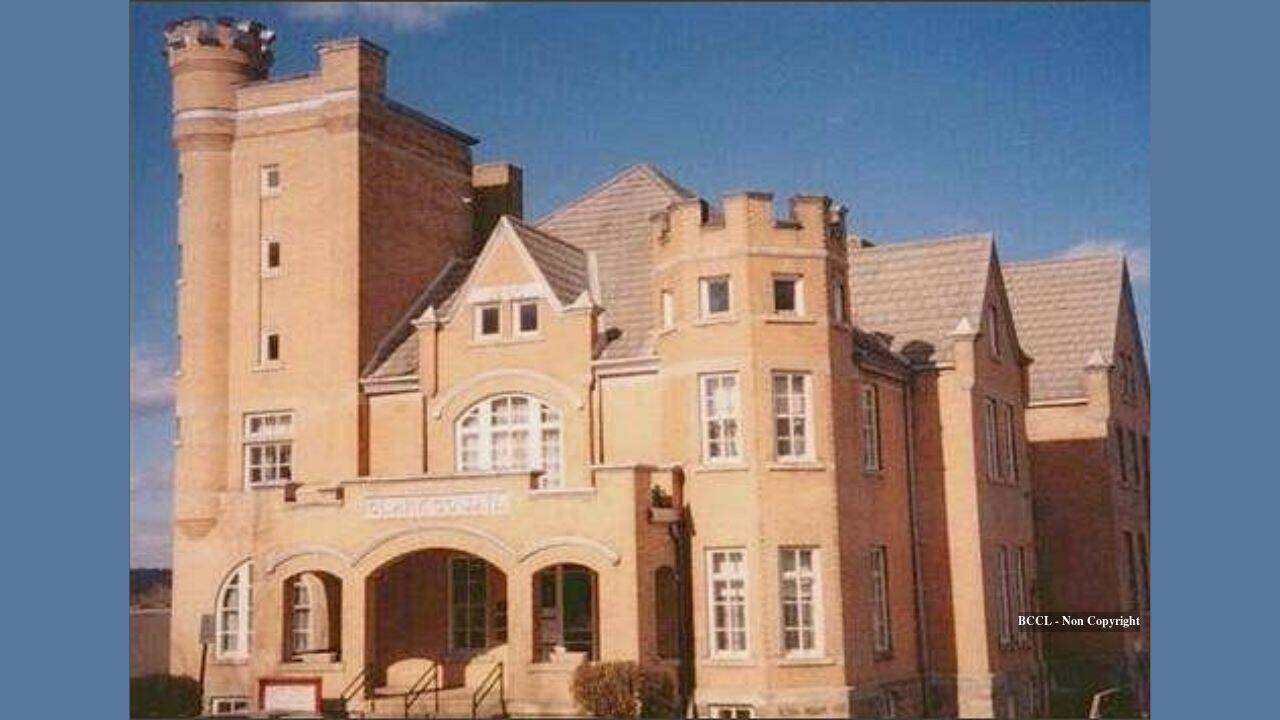
Old buildings cost money. Sometimes they cost a lot of money. When local governments look at crumbling masonry, peeling lead paint, asbestos, and mounting repair bills, the spreadsheet usually wins. That is exactly what nearly happened to the 1897 Wisconsin jail museum in Neillsville. Slated for a $259,000 demolition to make room for a courthouse parking lot, this piece of 19th-century architecture faced the wrecking ball.
Then the community pushed back.
Instead of watching a piece of Clark County history turn into asphalt, a last-minute mobilization led the county board to vote 26-1 to delay the demolition for three months. It is a temporary reprieve, but it highlights a much larger battle happening across small-town America. How do you balance municipal budgets with the preservation of local identity?
The Heavy Price of History
Let us look at why local leaders wanted it gone. Maintaining a structure built in the Victorian era is not cheap. Water damage eats away at timber. Hazardous materials like asbestos and lead demand expensive remediation. Heating an old, drafty stone building drains county resources. For officials staring down maintenance deficits, tearing it down for roughly $259,000 looks like a practical fix to a liability problem.
Historic preservation designations on state and national registers do not write checks. They do not pay for new roofs or fix crumbling foundations. When budgets tighten, heritage often loses out to pragmatic risk management.
Why People Fight for Old Walls
History isn't just found in textbooks. It lives in physical spaces. The 1897 Clark County Jail is tied directly to regional milestones, including its presence during the turbulent Milk Strike of 1933. For locals, the building is a tangible connection to the people who shaped the community a century ago.
This isn't even the first time the structure has stared down destruction. Back in the 1970s, local residents and the Clark County Historical Society rallied to prevent its demolition. Seeing the community rise up decades later proves that these landmarks anchor a town's sense of self. Once you pave over them, you cannot get them back.
The Real Cost of Losing Local Landmarks
When historic buildings vanish, towns lose their unique visual character. They get replaced by generic empty lots or modern utility builds that could exist anywhere in the country.
The three-month delay handed down by the board buys time, but it doesn't solve the core problem. Preservationists now have a tight window to gather data, build a viable financial model, and find alternative funding sources. If a sustainable plan doesn't materialize, the conversation will return to square one.
Local governments are stuck between a rock and a hard place. Citizens want fiscal responsibility, but they also care about their heritage. Resolving that tension takes more than a petition—it requires creative public-private partnerships that take the
Why Saving the 1897 Wisconsin Jail Museum Matters More Than Ever
news
category: news
Old buildings carry baggage. Most towns prefer to slap up a parking lot or throw a sleek glass storefront over local history. But sometimes a community draws a hard line. That is exactly what happened when the historic 1897 Wisconsin jail museum faced the wrecking ball before a furious eleventh-hour preservation effort pulled it back from the brink.
Historic preservation isn't just about saving old bricks. It is about keeping physical proof of how we used to live, punish, and build. When local authorities talk about demolition because maintenance costs get high, they usually miss the cultural footprint left behind. Let's look at why this specific rescue effort matters, what historical local landmarks actually teach us, and how grassroots action beat bureaucratic convenience.
The Real Cost of Neglecting Local History
Old municipal buildings like the 1897 jail tell a raw story. They feature massive stone blocks, heavy iron cell doors, and architectural choices that modern builders would never touch. When these structures face demolition, towns lose their anchor points.
People love to talk about progress. They want shiny new developments. Yet, wiping out nineteenth-century architecture erases the tactile sense of time. You cannot replicate the echoing metallic slam of a late-nineteenth-century cell block in a suburban strip mall. You can read about it in a textbook, but standing inside the damp, heavy walls shifts your perspective instantly.
How the Last-Minute Save Happened
Preservation campaigns rarely start smoothly. They usually begin with a late-night public notice, a quiet city council agenda item, and a handful of local historians panicking.
In this case, the rescue required a mix of public outrage, emergency fundraising pledges, and structural engineering assessments proving the building was far sturdier than city officials claimed. Communities often write off old structures as unsalvageable. Developers use words like blighted or dangerous to grease the wheels for demolition permits.
Citizens stepped up by organizing tours, pressuring local leadership, and pointing out that once a century-old landmark goes down, it never comes back. That aggressive push bought the structure the time it desperately needed.
Turning an Old Prison Into a Community Asset
Preserving a nineteenth-century jail creates unique design challenges. You cannot easily turn a former cell block into a coffee shop or luxury loft space without destroying its core identity. That is why turning these spaces into museums works so well.
Museums allow visitors to experience the space safely while learning about regional law enforcement, local justice systems, and the evolution of architecture. It shifts a liability into an educational resource. School groups walk through, historians dig through municipal archives, and curious travelers stop off the highway to see something authentic.
What You Can Do When Local History Faces the Bulldozer
Municipal heritage disappears every single week. If you care about keeping your town's character intact, you cannot afford to wait until a crisis hits.
- Attend local zoning board meetings where historic properties are discussed.
- Support local historical societies with actual donations, not just social media likes.
- Challenge claims that historic buildings are too expensive to fix before seeing independent engineering reports.
Saving the 1897 jail proves that a dedicated group of locals can stop municipal bulldozers if they move fast enough. Stop treating old buildings like disposable junk. Protect the structures that tell our actual stories.


