The water does not care who you are. It does not look at a ten-year-old child floating twenty yards past the break zone and see a person with a name, a family, a future, or a collection of favorite things. It sees only a mass. It tests density, buoyancy, and resistance.
To the people standing on the sand, the ocean looks like a postcard. It sparkles under a high sun, offering a rhythmic, turquoise invitation to anyone looking to escape the dry heat of an afternoon. But anyone who has spent long enough watching the horizon knows the truth. The shore is a polite suggestion. The water is an environment entirely indifferent to human breath.
Consider the physics of the panic.
It starts quietly. There is no dramatic movie thrashing, no sudden cries for help that cut through the noise of squawking gulls and crashing foam. A child caught in a sudden shift of depth or an offshore current does not scream. The instinct to pull air into the lungs takes absolute precedence over the mechanics of vocalization. The mouth dips below the surface. It comes back up. A gasp of oxygen. Another dip.
Seconds bleed together.
On a crowded stretch of American coastline, a lifeguard sits perched above the noise. The chair is high. The vantage point is wide. But the field of vision is fractured by thousands of moving heads, flashing umbrellas, and the erratic geometry of recreational swimmers. Scanning that sector requires a precise, mechanical discipline. It is a slow, methodical sweep of the eyes that looks past the obvious joy of the shallows and searches for the micro-signals of distress.
A head sitting just a fraction too low in the water. Arms moving with a desperate, vertical clawing motion rather than a horizontal stroke.
Then, the realization snaps into place.
There is a moment of absolute stillness before a rescue begins. The split second where the professional mind calculates distance, current speed, and wind direction before the body commits.
Let us be clear about what happens next.
The lifeguard does not think about the heroics. That is a fiction invented by scriptwriters. In the actual reality of the event, the mind goes completely blank, stripped of everything except muscle memory and raw training. The whistle drops. Rubber soles hit the burning sand. The sprint starts before the brain has even finished processing the alarm.
Sand slows you down. It shifts beneath your weight, stealing precious inches with every stride. The air is thick, hot, and smells of salt and sunscreen. Every runner knows the heavy burn in the calves, the way the lungs start screaming for oxygen before the real work has even begun.
And then, the plunge.
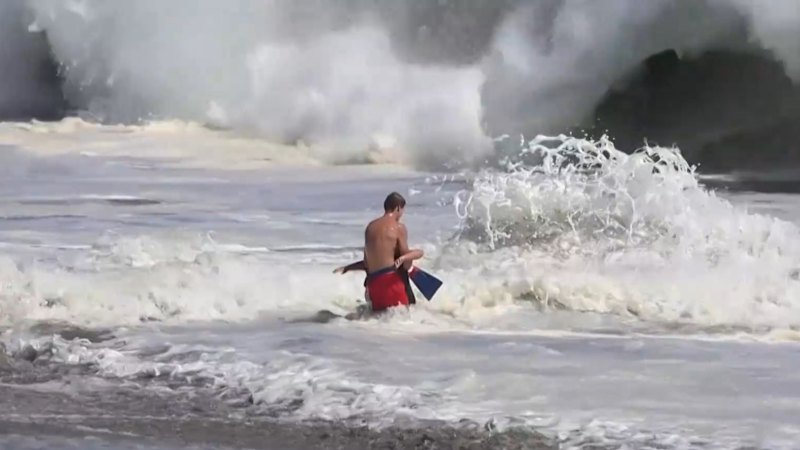
The transition from land to sea is violent. The cold water hits the chest, shocking the system. For a trained eye, swimming through surf is not about brute strength; it is about negotiation. You do not fight the wave. You punch through the base of it or duck beneath its curling lip, using the momentum of the ocean against itself.
Twenty yards.
Thirty yards.
The distance shrinks. In these moments, time stretches. To the spectators back on the blanket, the whole sequence takes perhaps thirty seconds. To the child under the water, thirty seconds is an eternity spent staring at a green, blurry ceiling, lungs burning with a fire that feels like physical weight.
This is the hidden cost of the water. We underestimate it because it is familiar. We take our children to the beach with the casual confidence of buying ice cream, forgetting that we are standing at the edge of a wilderness just as unforgiving as any mountain range or desert.
The rescue, when it finally reaches its contact point, is an act of calculated force.
A panicked drowning victim is a dangerous entity. Fear strips away reason. The child, desperate for air and safety, will instinctively climb the rescuer, pushing them down beneath the surface in a blind fight for survival. This is where training meets raw courage. The lifeguard must manage not only the ocean and the distance, but the very person they are trying to save.
An arm wraps securely across the child's chest. A cross-chest carry. The body position shifts from horizontal to a defensive tow, keeping the child’s face safely clear of the churning foam.
Turn around. Look back at the shore.
Now comes the hardest part of the equation. Swimming back in with dead weight, fighting the very current that dragged the victim out in the first place. Every kick must be deliberate. Every breath must be stolen between the swells. The shore looks impossibly far away. The beach umbrellas are tiny colored dots.
Back on the dry sand, a crowd has formed. They are watching silently now, the noise of vacation abruptly muted by the gravity of the scene. Cell phones are lowered. Hands are half-raised to mouths.
When the lifeguard's feet finally touch the bottom, the immediate danger recedes, but the human aftermath remains. The child is hauled onto the sloping sand, coughing up seawater, shaking with a violent mixture of cold and adrenaline. The mother or father is there instantly, breaking through the perimeter with a look of absolute terror replaced by overwhelming relief.
Words are rarely exchanged in that exact second. There are no speeches. There is only the sound of ragged breathing and the solid, reassuring feel of dry earth beneath bare feet.
We walk away from the ocean carrying our towels and coolers, returning to our cars and our air-conditioned lives, comforted by the illusion that we are safe within our modern world. But the water is still out there. It is waiting, patient and indifferent, moving in its endless rhythms against the edge of the land.
And somewhere up above the shoreline, a pair of eyes continues to scan the surface, watching the space where the blue meets the air, waiting for the exact moment the world changes.