Traffic on a highway never truly sleeps. It breathes in the heavy hum of semi-trucks, exhales the sharp scent of scorched brake pads, and pulses with the quiet anxieties of thousands of commuters trying to outrun the clock.
Then, everything stops.
Flashers erupt in a violent sync of amber and red. Metal shrieks against metal. In a fraction of a second, the predictable rhythm of an ordinary Tuesday shatters entirely.
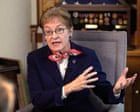
This was the reality for US Representative Marcy Kaptur.
We often forget that public figures are flesh and bone. We view them through the flat panes of television screens and the crisp ink of legislative summaries, imagining their lives as a series of staged podiums and solemn handshakes. We rarely picture them behind a steering wheel, caught in the unpredictable, fragile chaos of a normal road.
The Split Second
Consider what happens next.
One moment, hands rest at ten and two. Thoughts wander to constituent meetings, pending committee votes, the endless checklist of public service. The next, gravity shifts. Airbags deploy with the force of a localized storm. The world narrows to the sound of shattered glass and the acrid smell of ozone.
Emergency responders move with practiced, urgent precision. Sirens cut through the morning air. Paramedics arrive, assessing vitals, stabilizing necks, looking past the official titles to find the human being trapped beneath the sudden weight of trauma.
Representative Kaptur was taken to the hospital following a car crash. The dry bulletin of the news alert arrived with clinical detachment. Words like "transported," "evaluation," and "condition stable" sanitized an event that, at its core, was terrifyingly intimate.
The Weight of Vulnerability
We live in an era that demands invulnerability from our leaders. We expect them to absorb criticism, weather economic storms, and navigate political gridlock without a scratch. Yet, a sudden collision strips away every title, every policy debate, and every partisan line.
Hospital corridors do not care about seniority in Congress. Emergency room lights shine just as harshly on a veteran representative as they do on any local resident brought in by ambulance.
(Hypothetical Scenario: Imagine sitting in that sterile waiting room, miles away from the incident, watching the news ticker crawl across the screen. The sudden drop in your stomach. The realization that safety is an illusion we construct, piece by fragile piece, every time we turn a key in the ignition.)
Statistics tell us that millions of car crashes happen globally each year. They are mundane and catastrophic all at once. They remind us of our collective fragility. When a prominent figure is caught in that statistic, it forces a collective pause. It bridges the invisible gap between the watcher and the watched.
The Return to the Horizon
Recovery is rarely cinematic. It does not happen in the span of a commercial break. It takes place in quiet rooms, under the hum of fluorescent lights, measured in deep breaths, bruised ribs, and the slow, deliberate return of strength.
Public service demands a relentless pace. It asks individuals to pour themselves into the machinery of governance until there is nothing left. Sometimes, it takes a sudden, violent interruption to remind both the public and the lawmakers themselves that the human engine requires care, too.
The sirens fade into the distance. The highway is eventually cleared, swept clean of glass and debris, returning to its steady, indifferent hum. But the echo of the crash remains, a stark reminder of how quickly our carefully mapped trajectories can change.
As the legislative calendar rolls forward and the daily news cycle rushes to chase the next headline, the quiet work of healing continues behind closed doors. A reminder, carved in steel and survival, that before any of us are voters, representatives, or rivals, we are simply passengers on a very unpredictable road.