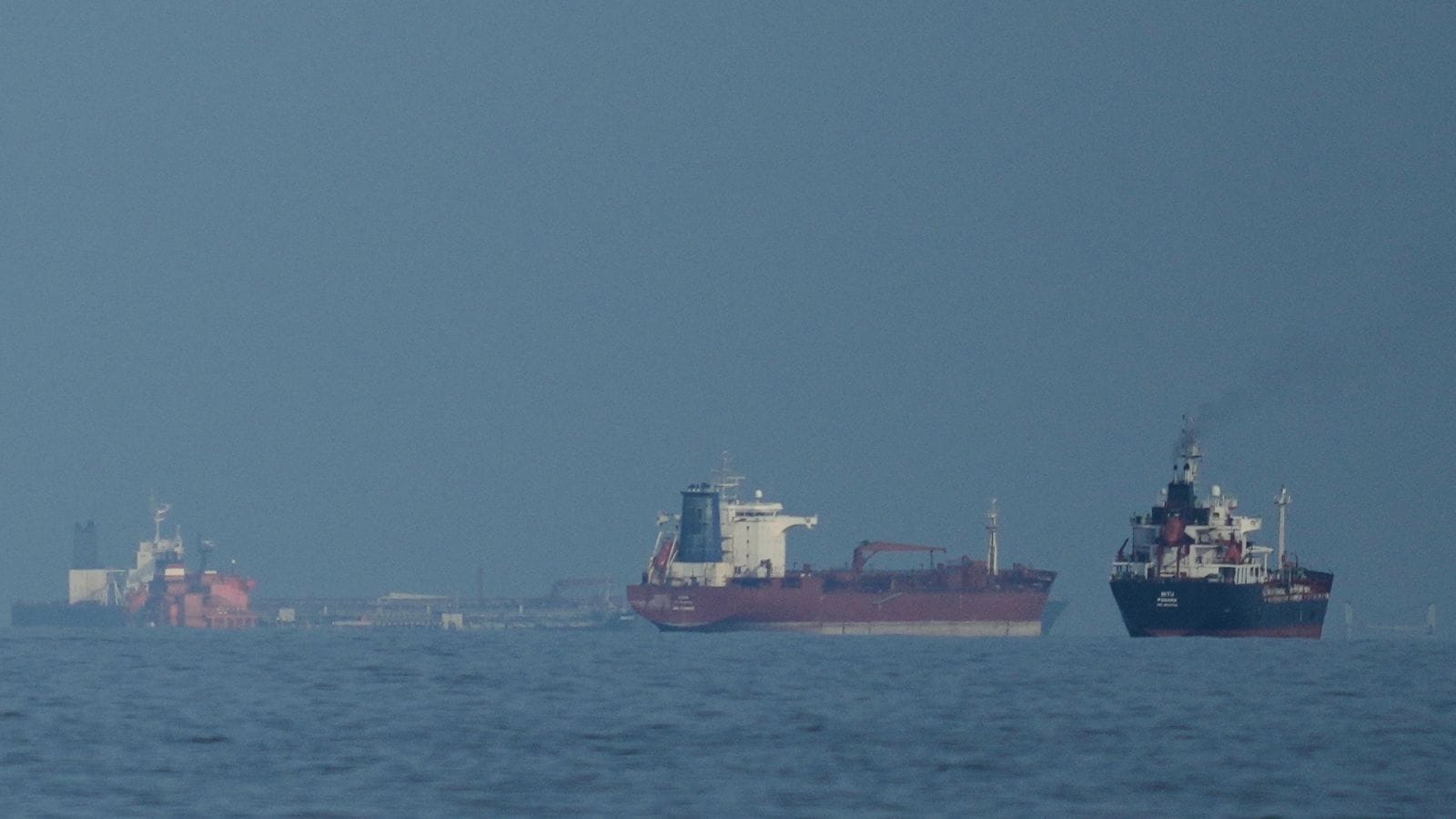
A single steel hull sits low in the salt-crusted waters of the Persian Gulf. From the bridge, a captain looks out at a horizon where the sky meets the sea in a hazy, oppressive blur of heat and humidity. He is carrying liquefied natural gas, or perhaps millions of barrels of crude, or maybe just the consumer electronics that will sit on a shelf in Chicago by next month. He knows that thirty miles away, the world is holding its breath.
This is the Strait of Hormuz. It is a geographical fluke, a narrow neck of water through which a fifth of the world’s oil supply must squeeze every single day. If you want to understand why a diplomatic spat in a far-off capital can make your morning commute more expensive or turn a local factory’s ledger from black to red, you have to look at this strip of blue.
The latest friction point isn’t just about missiles or naval maneuvers. It is about words—specifically, the word "blockade."
Iran has issued a sharp warning. They claim that any attempt by the United States to enforce a naval blockade would not just be an act of aggression, but a direct violation of the fragile ceasefire agreements that keep the region from sliding into total chaos. It sounds like a legal technicality. It isn’t. It is the sound of a tripwire being stretched to its breaking point.
The Invisible Artery
Think of the global economy as a living body. The Strait of Hormuz is the carotid artery. It is only about twenty-one miles wide at its narrowest point. When a nation threatens to pinch that artery, the entire body begins to tremble.
For the people living in the coastal towns of Bandar Abbas or the gleaming towers of Dubai, the presence of grey warships on the horizon is a permanent fixture of the scenery. But for the rest of us, the stakes are hidden in plain sight. We see the news alerts on our phones and scroll past, not realizing that the "updates" are actually the heartbeat of our own stability.
A blockade isn't just a row of ships. It is a wall made of intent. Iran’s warning to the U.S. suggests that the maritime boundary is becoming a courtroom where the laws are written in real-time by whoever has the most guns. By labeling a potential U.S. blockade as a ceasefire violation, Tehran is effectively saying that the peace is already over if the flow of goods is tampered with.
The Hypothetical Table
Let’s step away from the warships for a moment. Consider a family in a suburb outside of London. They are sitting at dinner, discussing the rising cost of heating their home. They have no idea that their financial anxiety is linked to a specific set of coordinates in the Middle East.
If the Strait closes—or even if the threat of closure becomes credible enough—insurance premiums for cargo ships skyrocket. A captain who used to pay a standard rate suddenly finds his costs doubling overnight because he is sailing into a "war zone." Those costs don't vanish. They are passed down. They travel from the shipping company to the refinery, from the refinery to the distributor, and finally, they land right on that dinner table in the form of a bill that doesn't make sense.
This is the human element of a naval standoff. It is the slow, grinding pressure on the global middle class. We are all tethered to the Strait by a thousand invisible threads of commerce. When the U.S. and Iran trade threats over maritime law, they are tugging on those threads.
The Language of the Abyss
Diplomacy is often a game of shadows. When Iran warns that a blockade violates a ceasefire, they are playing a very specific card. They are framing the U.S. as the aggressor. In the eyes of the international community, the "status quo" is everything. If the U.S. moves to stop Iranian tankers, Iran can claim the peace was shattered by Washington, not Tehran.
It is a masterful bit of rhetorical positioning. It forces the U.S. to choose between allowing Iran to move its resources freely or being labeled the party that restarted the war.
The U.S. perspective is equally entrenched. From the Pentagon's view, the freedom of navigation is a sacred tenet of global order. If one nation can threaten to shut down a global waterway, the entire system of international trade collapses. They see their presence not as a blockade, but as a patrol—a necessary guard against a power that has shown it is willing to use the Strait as a cudgel.
A History of Narrow Escapes
We have been here before. During the 1980s, the "Tanker War" saw hundreds of merchant vessels attacked. The sea was literally on fire. Sailors from dozens of neutral nations found themselves caught in a crossfire they didn't understand and didn't start.
The scars of that era remain. Many of the commanders currently staring at each other through binoculars grew up in the shadow of that conflict. They know how quickly a "misunderstanding" or a "warning shot" can escalate into a month-long funeral.
The tension today feels different because the world is more fragile. Our "just-in-time" delivery systems mean that we don't have stockpiles to lean on. We live on the edge of the supply chain. A three-day closure of the Strait wouldn't just be a news story; it would be a systemic shock that could trigger a global recession before the first week was out.
The Sailor’s View
Back on that steel hull in the Gulf, the heat is rising. The crew is on high alert. They watch the radar pings of Iranian patrol boats and the distant silhouettes of American destroyers. They are the ones who will be the first to know if the warnings turn into action.
There is a specific kind of silence that happens on a ship when the tension ramps up. It’s the sound of people doing their jobs with a little too much focus. They check the valves twice. They stare at the sonar a little longer than usual. They know that they are the pawns in a game being played by men in air-conditioned rooms thousands of miles away.
The risk isn't just a "blockade." The risk is the ego of nations.
When Iran says a blockade violates a ceasefire, they are drawing a line in the water. Lines in the water are notoriously hard to see, and even harder to respect. If a U.S. commander decides to challenge that line, or if an Iranian revolutionary guard officer decides to enforce it, the result isn't a legal debate. It is a flash of light followed by a long, dark silence in the global markets.
We often talk about these events as "geopolitics." That word is too clean. It hides the sweat, the fear, and the cold reality of what happens when the world’s most important door is slammed shut.
The Strait of Hormuz is more than a waterway. It is a mirror. Right now, it is reflecting a world that is losing its ability to talk, leaving only the sharp, jagged edges of "warning" and "violation."
The captain on the bridge watches the sun dip below the horizon, turning the water the color of bruised fruit. He waits for the morning. He waits for a signal. He waits for the world to decide if it still wants to trade, or if it would rather fight over the right to stop the flow.
Behind him, the lights of the world stay on, powered by the very substance he carries, oblivious to how close the hand is to the switch.