The ink on a state decree is cold, but the blood spilled in the desert stays hot for generations.
In Tehran, the air carries the faint scent of rosewater and diesel fuel. Behind the high, concrete blast walls of the regime's inner sanctum, a transition of power is quietly unfolding, wrapped in the language of blood feuds and divine retribution. For years, the world watched the bombastic public figures of Iran. We watched presidents, foreign ministers, and generals who courted the cameras. Recently making headlines lately: The Red Flags of Tehran and the Grim Reality of Iran Succession Crisis.
We looked at the wrong people.
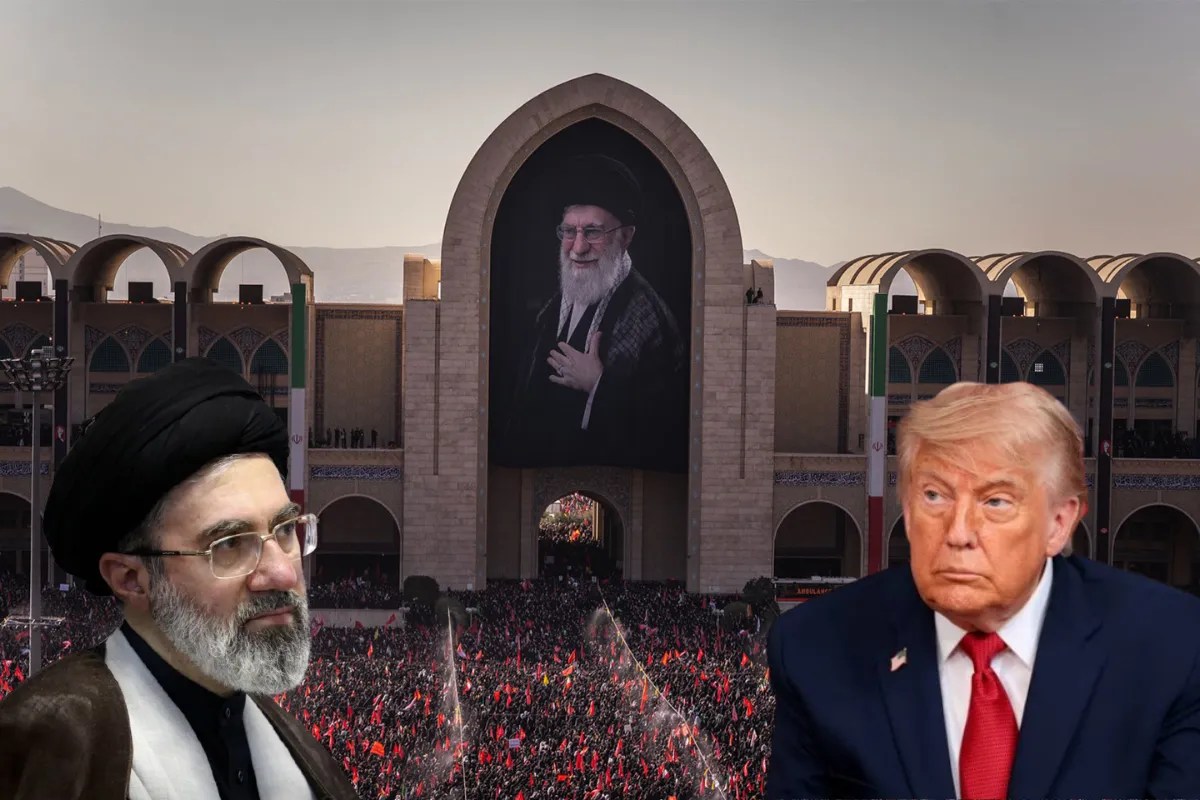
The true architecture of power in the Islamic Republic has always preferred the dark. Now, as the old guard fractures, a man who spent decades as a ghost is stepping into the light. Mojtaba Khamenei, the second son of the Supreme Leader, is no longer just a whisper in the corridors of Qom. He is positioning himself for the ultimate prize. But to understand his sudden prominence, one must understand the ghost that preceded him, and the singular, burning obsession that drives Iran's current geopolitical posture: the ghost of Qasem Soleimani. Further information on this are detailed by The New York Times.
The Long Memory of the Khonsard
To understand the Middle East, you have to understand the concept of Khonbaha—blood money, or more accurately, the price of a life. When a US drone strike vaporized General Qasem Soleimani outside Baghdad airport, it didn't just kill a military commander. It shattered an icon.
Consider the sheer weight of that loss. Soleimani was the architect of Iran’s regional ambition. To the West, he was a mastermind of shadow warfare. To Tehran, he was irreplaceable. When Donald Trump authorized that strike, he signed an invisible ledger. In the years since, Western analysts have often treated Iran’s vows of revenge as mere rhetoric, standard state-sponsored theater designed to placate a grieving domestic audience.
They are wrong.
The threat issued recently against Donald Trump—"You killed our father, and we will not rest"—is not political posturing. It is deeply personal. In the tribal, deeply religious framework of the regime’s hardliners, Soleimani was a paternal figure to the state. The vow to eliminate those responsible is a generational oath. It does not expire when an election ends or when a term of office concludes. It lingers, a permanent shadow over American security briefings, waiting for the right moment of vulnerability.
The Son Who Stayed in the Dark
While Soleimani’s name was chanted by millions in the streets, Mojtaba Khamenei remained entirely invisible.
Born into the peak of religious and political aristocracy, Mojtaba chose a different path than the typical public official. He did not seek elective office. He did not give grand speeches on television. Instead, he mastered the art of the whisper. For two decades, he operated within the Office of the Supreme Leader, a sprawling bureaucracy that wields absolute veto power over every aspect of Iranian life.
Think of him as the gatekeeper. If you wanted access to the Supreme Leader, Ayatollah Ali Khamenei, you went through Mojtaba. He quietly built alliances with the Islamic Revolutionary Guard Corps (IRGC), the very state-within-a-state that Soleimani once led. He secured the loyalty of the internal security apparatus. He watched as potential rivals rose, grew too ambitious, and were systematically sidelined.
But why emerge now?
The answer lies in the simple, brutal reality of biology. The Supreme Leader is aging. The regime faces a crisis of legitimacy, battered by economic stagnation, international sanctions, and waves of domestic protests led by a young generation that feels entirely disconnected from the revolution of 1979. The old guard is terrified of what happens when the center cannot hold. They need continuity. They need someone who represents the absolute purity of the ideological line, yet possesses the ruthless administrative capability to keep the security forces aligned.
The Currency of Retribution
This is where the path of the hidden son and the ghost of the dead general converge.
To claim the mantle of supreme leadership, Mojtaba cannot merely be a bureaucrat. He must prove his ideological steel to the IRGC. He must show the hardliners that he carries the same fire that drove Soleimani. Therefore, the rhetoric of revenge against the West is not a distraction from the succession struggle; it is the currency through which the succession is bought.
By doubling down on the threats against Trump and the architects of the 2020 drone strike, the regime signals to its core supporters that the revolutionary struggle remains absolute. It creates a state of perpetual wartime mobilization. When a nation believes it is locked in an existential blood feud, internal dissent can be reclassified as treason. The looming threat of external conflict becomes the perfect shield for a delicate, dangerous transfer of power at home.
The West often views international relations as a series of transactions—agreements, treaties, sanctions, trade routes. But in the grand calculus of Tehran's hardliners, history is driven by honor, martyrdom, and unresolved debts.
A quiet room in Qom. A photograph of a fallen general on the wall. A son preparing to take his father's throne, knowing that his survival depends on fulfilling an oath written in fire and dust. The world watches the headlines, waiting for a spark, while the real fire burns slowly, deeply, inside the house that secrecy built.