The air inside the United Nations General Assembly hall always smells faintly of old carpet and expensive perfume. It is a room built for polite falsehoods, for the gentle clinking of porcelain teacups and the measured cadence of diplomats who have spent their lives learning how to say nothing with maximum elegance.
Then the microphone turns hot.
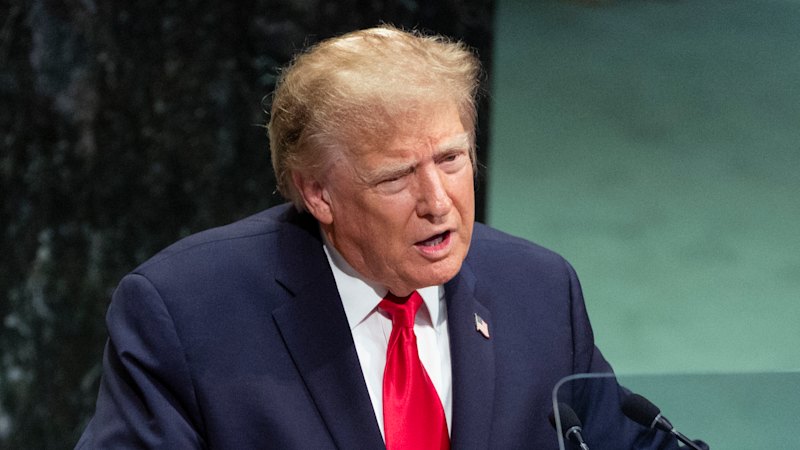
Imagine standing in the back of that room, watching the translator booths hum as a single voice cuts through the murmurs like broken glass. The words are heavy, loaded with a terrifying finality. Annihilation. The total destruction of a sovereign state. It is a word that belongs in ancient epics, echoing across scorched plains, yet here it is, spoken into a forest of microphones under the crystal chandeliers of Manhattan, transmitted instantly to millions of glowing rectangles across the globe.
Down in Tehran, the blue light of a television set illuminates a modest kitchen. A man named Reza sets down a glass of tea. He does not cheer, and he does not weep. He has seen this film before. For him and the millions like him, the grand theater of international politics is not an abstract debate about nuclear compliance or ballistic missiles. It is the price of cooking oil doubling overnight. It is the quiet, heavy sinking in the stomach when the currency chart on a smartphone turns a harsh, bleeding red.
We tend to view foreign policy as a chess game played by statues. We talk about strategic posture, deterrence, and axis points as if human beings were nothing more than carved pieces of wood moved across a felt board. But the truth is messier, louder, and far more fragile.
When a leader stands at a podium and threatens to wipe a nation off the map, the shockwave does not hit concrete and steel first. It hits human nerves. It hardens the hearts of hardliners who use the threat to justify their own grip on power. It crushes the quiet dissent of young students dreaming of open doors and global connections. It tells a mother standing in a pharmacy that her son's imported medicine is about to become an impossible luxury because the rhetorical temperature has just risen another ten degrees.
Yet, beneath the apocalyptic roar of the speech, a different frequency hums. A quieter note.
Watch the same leader step away from the podium. Listen to the pivot that follows the thunder. The prediction is slipped in like a quiet footnote to an angry sermon: a deal will come. But not today. Not before the midterms.
There lies the secret engine of modern diplomacy. Everything is timed. Everything is subservient to the domestic clock.
Elections are the invisible metronomes of human history. In democratic systems, political survival is a jealous god that demands constant appeasement. Before an election, nuance is poison. Weakness is fatal. A leader must project the unyielding jaw of an ironclad protector, barking warnings at foreign adversaries to rally domestic tribes. The rhetoric must be absolute because the ballot box is immediate.
Reza understands nothing of American congressional districts. He does not know the difference between a Senate seat in Ohio and a House race in California. But he lives in the shadow of their consequences. He knows that the threat of destruction and the promise of a negotiated handshake are two sides of the same political coin, minted in Washington and spent on the streets of the Middle East.
Consider the mechanics of maximum pressure. It is a strategy built on the premise of the squeeze. You turn the economic screw until the metal groans. You isolate a population from the global banking system, choke off their oil exports, and make every basic transaction a test of endurance. The theory goes that under enough duress, the population will rise, the regime will buckle, and a desperate government will crawl to the negotiating table on your terms.
It is a clean theory on paper. In practice, it looks like a grandfather rationing his heart medication because the rial has collapsed. It looks like university laboratories shutting down because they cannot import basic chemical reagents. It creates a siege mentality where every citizen becomes a combatant in an economic war they never voted to join.
And yet, the paradox of the strongman's playbook is that the loudest threats often mask the quietest contingencies. To threaten total annihilation while simultaneously predicting a deal is not a contradiction; it is a calculated negotiation tactic played out on a global stage. It establishes a ceiling of extreme violence so that whatever compromise is eventually struck later looks like mercy by comparison.
The domestic calendar dictates the rhythm of this dance. While the votes are still uncounted, compromise is treason. Every concession is weaponized by political opponents waiting in the wings. So the war drums must beat loud enough to drown out any whisper of moderation. The threats must be absolute because the domestic audience demands a spectacle.
Then, the ballots are cast. The returns roll in. The political weather shifts overnight.
Suddenly, the tone softens. The microphones pick up a different register. The very leader who promised fire and fury now speaks of phone calls, letters, and the art of the deal. The transition is jarring to anyone who took the rhetoric literally, but entirely predictable to anyone who understands the cadence of power.
For the people caught in the crossfire, this whiplash is exhausting.
In a small cafe in downtown Tehran, young men and women debate the future over lukewarm cups of coffee. They are fluent in the language of sanctions, exchange rates, and geopolitical bluffing. They have grown up watching their lives rise and fall with the shifting moods of foreign capitals. They are cynical, resilient, and deeply tired. They know that whether the news cycle brings a threat of war or a rumor of peace, their daily struggle remains largely untouched by the grand pronouncements of men in suits thousands of miles away.
This is the true cost of rhetorical brinkmanship. It treats human lives as pressure points, as temporary chips in a high-stakes poker game played by leaders who will never have to pay for a loaf of bread in a collapsing currency.
When we look past the headlines, past the dramatic video clips of speeches delivered under the golden seal of the United Nations, we find a sobering reality. The grand theater of international relations is rarely about the destruction of nations. It is about the management of perception. It is about timing the news cycle to maximize political advantage at home while keeping foreign adversaries off balance.
The threat of annihilation is broadcast in high definition for the cameras. The prediction of a deal is murmured in the back rooms where the real bargains are struck.
And somewhere in the middle of it all, a man turns off his television, looks out at the quiet streets of his city, and waits for the votes to be counted in a country he has never seen, praying that the men shouting across the ocean decide to stop playing with fire before it reaches his doorstep.