The desert dust of northern Syria tastes like copper and burnt plastic. I remember the grit grinding between my teeth during the long nights holding a frontline trench outside Raqqa, staring into a darkness where black flags fluttered. We were told we were fighting for the future. We were told that survival meant building something new from the ash.
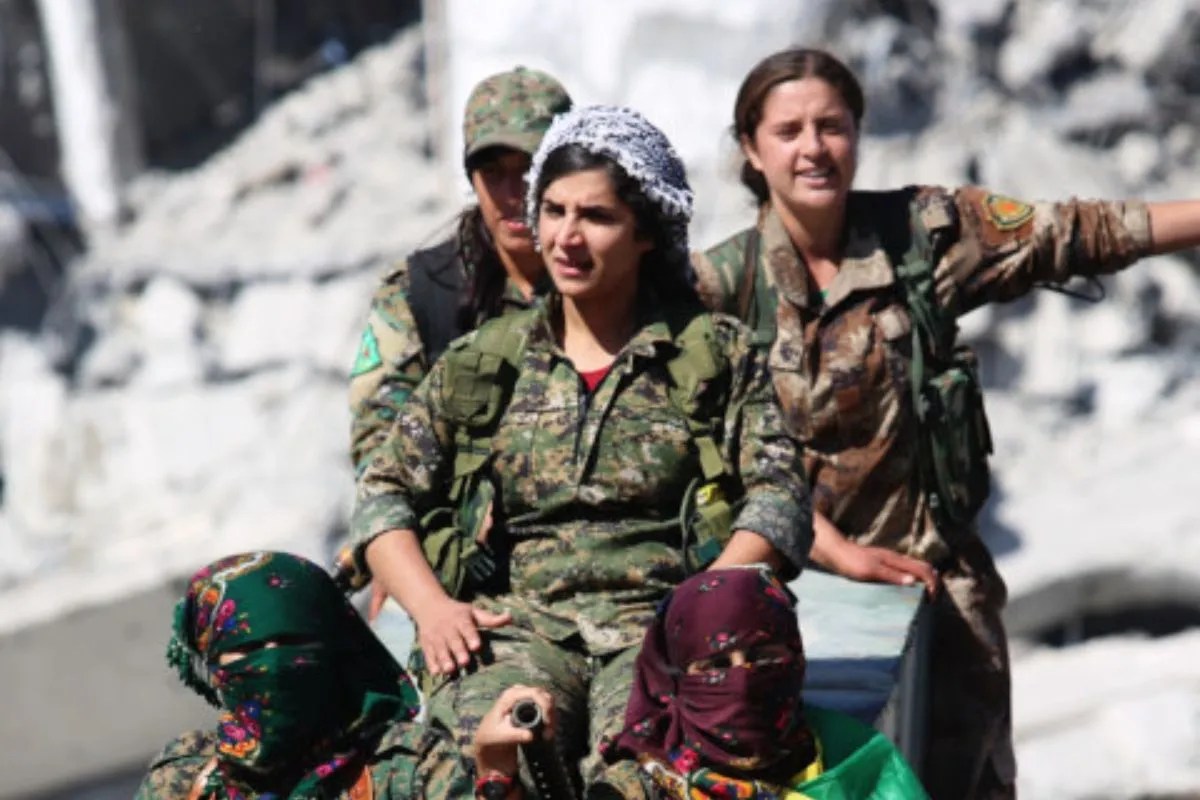
At the center of that desperate defense stood the YPJ. The Women's Protection Units.
Young women who braided each other's hair before strapping magazines to their chests. Girls who traded university textbooks for Kalashnikovs because the alternative was extermination at the hands of the Islamic State. They did not just fight. They endured. They bled on the scorched earth of Kobani, turning the tide of a global terror when the rest of the world looked away in hesitation.
Yet history has a cruel habit of discarding its saviors the moment the smoke clears.
Today, those same women find themselves erased. As a new military apparatus takes shape in Syria, the YPJ fighters who broke the spine of ISIS have been systematically excluded from the official defense forces. The government offers bureaucratic excuses. Whispers of reorganization. Cold tactical logic.
Silence.
To understand why this betrayal stings so deeply, you have to look beyond the cold statistics of the war. More than a decade ago, ISIS swept across the region like a plague, executing men, enslaving women, and declaring a brutal caliphate. While traditional armies fractured or fled, the YPJ emerged not merely as a fighting force, but as an ideological shield. They carried a vision of gender equality and communal autonomy into the most patriarchal crucible on earth. Every bullet they fired was a rejection of tyranny. Every trench they held was a declaration that women would write their own survival.
And they won.
They pushed the caliphate back village by village, city by city, until the territorial footprint of ISIS was reduced to dust. International coalitions praised them. Documentaries captured their fierce, unsmiling eyes beneath helmets draped in camouflage scarves. The world called them heroes.
Then the cameras left.
Now, the political architecture of Syria is shifting once again. Power brokers in Damascus and regional capitals are carving out the future of the nation behind closed doors. In this new order, the YPJ does not fit the template. To centralizing authorities, armed women who demand radical social change are not symbols of liberation. They are threats. They are complications. They are reminders of an autonomous past that the newly forming state machinery prefers to sweep under the rug.
Consider the human cost of this erasure. Imagine being twenty-six years old, bearing shrapnel scars from street-to-street combat in Deir ez-Zor, only to be told that your uniform has no place in the barracks of tomorrow. Your commanders are sidelined. Your comrades are expected to melt back into civilian life as if the war never fractured your soul. The government claims the new military must follow unified national structures. But a uniform is never just cloth. It is recognition. It is validation. It is the state acknowledging that when the sky was falling, you were the one who held it up.
Denying the YPJ a place in the new Syrian military is not an administrative oversight. It is a calculated political choice. It signals to the old guard and conservative factions that the wartime revolution in gender roles can be rolled back. It tells the daughters of Syria that their protection is conditional, temporary, and ultimately subordinate to male-dominated governance.
When power is consolidated, it often chews up the very people who made its existence possible.
We have watched this tragic script play out across history. Fighters win the war; politicians write the peace. But the YPJ was never just a temporary militia. They represented an entire social contract forged in blood and shared sacrifice. To push them aside is to invite instability, because you cannot build a lasting peace on a foundation of profound betrayal.
The wind still sweeps across the Euphrates valley, kicking up dust from the ruins of towns that these women saved from eternal night. Down in the alleys, former fighters sit quietly, hands calloused from rifle grips, watching a political theater that pretends they never existed. They do not regret the fight. They know what they kept away from the doors of their homes.
History will eventually judge who built the future, and who merely inherited it by pushing the rightful builders into the shadows. Until then, the silence from the command centers remains deafening, echoing louder than any artillery shell ever could.