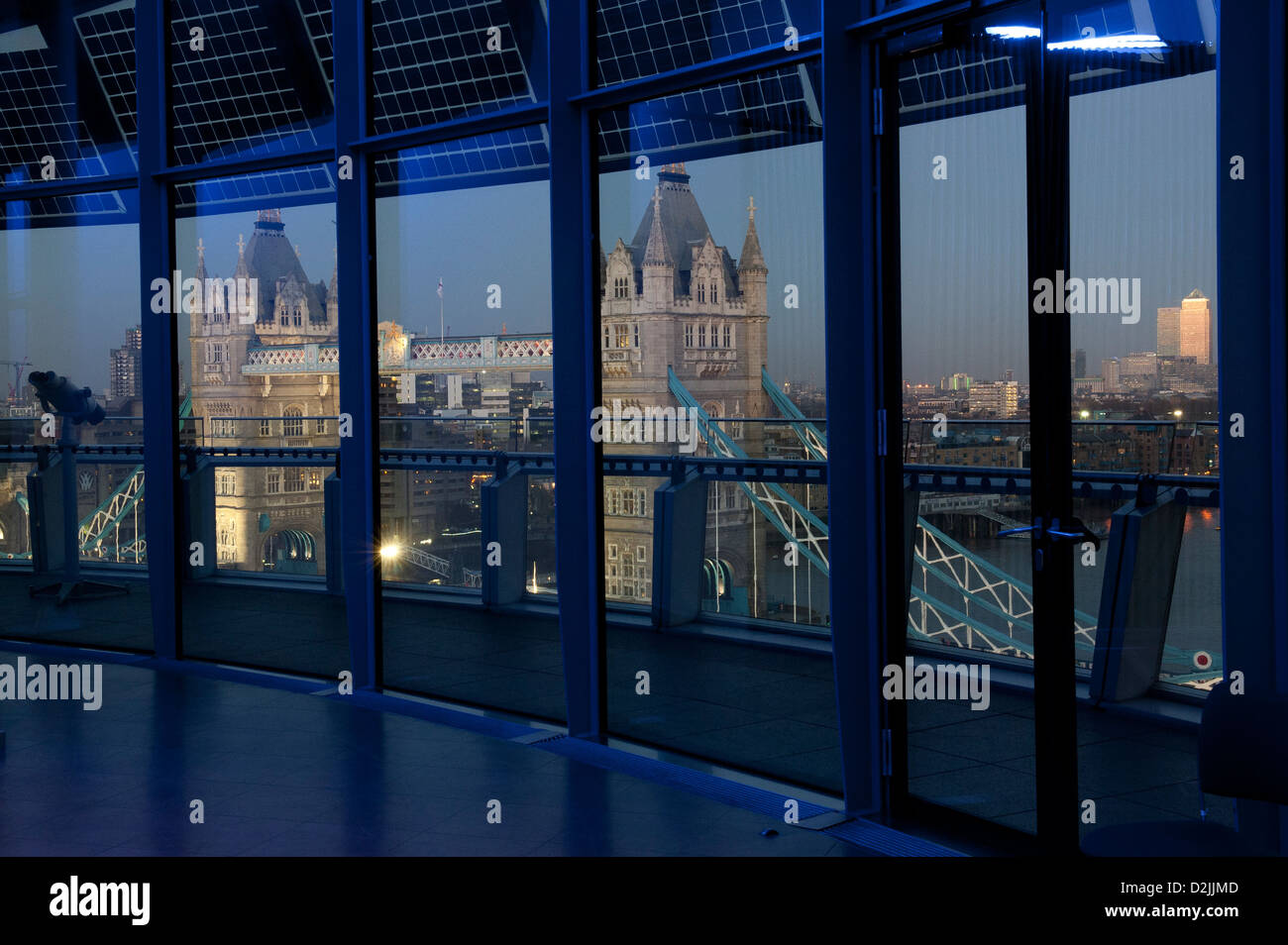
The smoke rising over the Thames used to smell of roasted malt and burnt sugar. Today, it smells of hot circuit boards and composite epoxy.
A defense startup has quietly spun up a manufacturing hub barely a mile from Tower Bridge, slipping high-stakes military hardware production directly into the historic heart of London. The proximity to the financial district and the seats of government is not an accident. It is a calculated convergence of capital, political urgency, and a shifting global threat matrix that has transformed urban centers into prospective arsenals.
When venture capital meets geopolitical panic, geography bends. For decades, the conventional wisdom of Western industrial policy dictated that heavy manufacturing belonged far away from high-rent urban cores. Factories moved to the Midlands, to Eastern Europe, or across oceans to low-cost manufacturing hubs in Asia. Supply chains stretched across thousands of maritime miles, vulnerable to chokepoints, trade disputes, and sudden diplomatic fractures.
That calculus cracked under the weight of recent conflicts. When supply lines stall and state adversaries modernize at breakneck speeds, distance is no longer a buffer. It is a liability.
Bringing munitions, drone components, and secure communications tech back to the metropolis represents a profound philosophical U-turn for defense procurement. It reflects the harsh reality of modern warfare, where software speed meets hardware manufacturing, and the distance between a software engineer writing guidance code and the technician assembling the housing matters immensely.
Yet, establishing an advanced defense manufacturing facility within sight of some of the most expensive real estate on earth raises immediate, hard-headed questions about viability, community friction, and economic logic. Rent in central London is punishing. Labor markets are fiercely competitive, pulled toward finance, tech startups, and corporate law. Logistics in the congested core of the capital are a daily nightmare of Low Emission Zones, weight limits, and snarled traffic.
So why set up shop where the overhead eats margins alive?
The answer lies in the ecosystem of talent and venture capital. Modern defense technology is not forged primarily in massive, soot-stained industrial sheds. It is built by software developers, roboticists, and materials scientists who want to live where culture, nightlife, and venture funding concentrate. By planting a flag a mile from the Thames, this startup is not chasing cheap square footage. It is paying a premium for proximity to brains.
The traditional defense primes—the massive legacy contractors headquartered in sprawling suburban business parks—have long operated on multi-year procurement cycles that move at the speed of government bureaucracy. They build massive, bespoke platforms meant to last for decades. But the wars being fought today, and the conflicts anticipated tomorrow, rely on rapid iteration. Commercial-off-the-shelf electronics, disposable autonomy, and software updates deployed overnight require a different breed of industrial partner.
These new entrants operate more like consumer electronics firms than traditional defense contractors. They pull components from global commercial supply chains, modify them for rugged military use, and push them out the door before legacy providers have finished drafting their initial proposals.
Placing these operations inside major cities blurs the line between civilian tech hubs and military-industrial output. It normalizes the presence of defense manufacturing in metropolitan areas that have long viewed themselves as post-industrial service economies.
Walk through the neighborhood surrounding this new facility, and the contrast is stark. Glass-fronted fintech offices sit across the street from historic brick warehouses now repurposed for secure engineering and rapid prototyping. Local residents sipping flat whites in artisanal cafes share sidewalks with engineers carrying encrypted laptops and logistics managers coordinating secure freight.
This juxtaposition draws friction. While national security commentators praise the agility of urban defense manufacturing, local concerns center on safety, discretion, and community identity. A facility producing defense-related electronics may not vent toxic smoke or roar with heavy stamping presses, but its presence alters the character of a neighborhood. Questions of municipal zoning, hazardous material handling, and potential target profiling in an era of asymmetric threats linger in the background of every local council meeting.
The defense surge funding these ventures is real, driven by massive increases in national security budgets across Europe and North America. Billions of dollars in venture capital and government grants are flowing into dual-use technologies—systems that serve both commercial and military applications. Autonomous navigation, secure mesh networks, AI-driven threat detection, and advanced power management are as valuable to logistics firms and urban mobility projects as they are to infantry units.
This dual-use reality provides a financial cushion for urban manufacturing. If defense budgets fluctuate, these companies can pivot portions of their production or intellectual property toward commercial markets. It is a hedge against the boom-and-bust cycle that has historically plagued pure-play military contractors.
However, scaling production inside a constrained urban footprint has strict physical limits. You cannot easily expand a factory floor when surrounded by luxury flats, historic preservation zones, and multi-million-pound commercial leases. At some point, successful startups face a brutal choice: stay close to the urban core and cap their production volume, or migrate outward to sprawling suburban industrial parks where they can build the massive assembly lines required for high-volume output.
The gamble this particular startup is taking is that the early stages of product development, prototyping, and initial low-rate production benefit so overwhelmingly from urban proximity that the economic inefficiency is worth absorbing. Once a design is locked down and proven, the heavy lifting of mass production can be farmed out to established regional partners or secondary facilities outside the city center.
This model treats the urban factory not as a permanent mass-production engine, but as an advanced laboratory where hardware and software merge under the watchful eyes of the core engineering team.
Looking across the broader landscape of modern defense economics, this Tower Bridge facility is a symptom of a much larger realignment. Globalization is not ending, but it is fracturing into trusted regional networks. Supply chains are shortening, not out of altruism or environmentalism, but out of stark survival instinct.
When the next geopolitical shock hits, the nations and companies that control their own production cycles—from the initial lines of code to the final hardened chassis—will dictate the terms of engagement.
The smoke over the Thames today carries the scent of a new industrial revolution, one driven not by steam and iron, but by microchips, venture capital, and the unyielding pressures of a dangerous century. Whether a factory tucked behind the financial monuments of London can scale past its own contradictions remains to be seen. But the machine is already running, and the old rules of where things get built no longer apply.