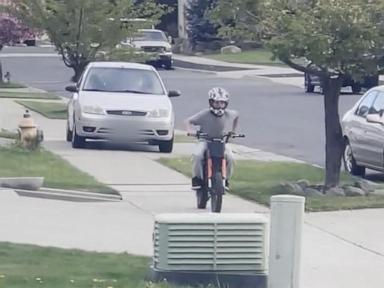
A vehicle is a two-ton kinetic weapon. When that weapon is steered intentionally onto a pedestrian walkway toward a child, the incident transcends a simple traffic violation. It becomes a diagnostic look at a failing social contract. The recent arrest of a woman caught on camera driving her SUV down a crowded sidewalk to target a young boy on a bicycle isn't just a shocking viral clip; it is the logical endpoint of a decade of degrading road enforcement and the emboldening of "vehicular entitlement."
Police reports confirm the suspect bypassed a line of stationary traffic by jumping the curb, maintaining speed as she bore down on the minor. The footage is harrowing. It shows a total disregard for the physical boundaries that protect the most vulnerable members of society. While the immediate focus remains on the criminal charges—including heavy counts of felonious assault and child endangerment—the deeper investigation reveals a systemic rot in how we manage public spaces and the people who feel entitled to weaponize them.
The Architecture of Impunity
We built our cities to favor the engine over the heart. For decades, urban planning has prioritized "level of service," a metric that essentially measures how many cars can move through an intersection without hitting the brakes. This design philosophy has a psychological side effect. It reinforces the idea that the road belongs to the driver, and anything obstructing that flow—be it a red light, a traffic jam, or a child on a bike—is an illegitimate grievance that justifies a radical response.
When a driver decides the sidewalk is their personal express lane, they aren't just breaking the law. They are asserting a form of dominance. This specific incident in northern Ohio highlights a terrifying trend where motorists use their vehicles to settle petty disputes or bypass minor inconveniences. The data backs this up. Pedestrian fatalities have hit a forty-year high, and the aggression levels recorded by dashcams across the country suggest that the barrier between the asphalt and the concrete has never been thinner.
Why the Curb No Longer Protects
Physical infrastructure is supposed to be a deterrent. A six-inch height difference between the street and the sidewalk used to represent a psychological and mechanical boundary. Modern SUVs and crossovers have rendered that boundary obsolete. High ground clearance and all-wheel-drive systems, marketed for "off-road adventures" that most owners never take, provide the mechanical means to hop a curb with zero consequence to the vehicle’s undercarriage.
In this arrest, the suspect didn't hesitate. The ease with which the vehicle transitioned from the street to the pedestrian zone suggests that the driver didn't view the sidewalk as a protected sanctuary for humans, but as an underutilized piece of pavement. We have sold the public vehicles capable of bypassing urban geometry, and we are now seeing the bill for that design choice.
The Psychological Break Behind the Wheel
Road rage is an outdated term for what we are seeing. The "rage" implies a momentary loss of control. What investigative looks into these files often show is a calculated decision. The driver in this case didn't swerve by accident. She steered. She tracked the target. This is "vehicular malice," a distinct behavioral shift where the car becomes an extension of the driver’s anger.
Psychologists who study transit behavior point to the "anonymity of the metal box." Inside a climate-controlled cabin, a driver loses the human connection to the people outside. The child on the bike isn't a neighbor’s son; he is an obstacle. This dehumanization is the fuel for the sidewalk-driving epidemic. When you combine that isolation with a growing sense of lawlessness—fed by a visible lack of traffic enforcement in many jurisdictions—you get a environment where driving toward a child feels like a viable option to a frustrated mind.
The Enforcement Gap
If you drive ten miles over the speed limit today, the odds of being pulled over are lower than they have been in thirty years. Post-2020, many police departments have shifted resources away from "low-level" traffic stops. The unintended consequence is a vacuum. Drivers have noticed. They see people running red lights, driving without plates, and using bike lanes as turn lanes with no repercussions.
In the case of the sidewalk driver, the arrest only happened because of civilian video and public outcry. The police were reactive, not proactive. This raises a hard question for city officials: How many people are driving on sidewalks every day who don't happen to be filmed? The lack of consistent, visible enforcement creates a "broken windows" effect on our roads. When small rules are ignored, the big rules—like "don't run over children"—eventually follow.
Reclaiming the Public Square
Fixing this isn't about more signs or "share the road" bumper stickers. It requires a hard pivot in how we engineer our streets. If a driver can physically fit their car onto a sidewalk, the sidewalk is poorly designed.
Bollards are the only honest answer.
Steel-reinforced concrete pillars are the only language that a distracted or malicious driver understands. Cities that have successfully reduced pedestrian injuries didn't do it through better driver education; they did it through "hardened" infrastructure. They narrowed the lanes. They raised the crosswalks. They installed physical barriers that would total a car before it could reach a child.
The Cost of Inaction
Critics often complain about the cost of these installations. They argue that it slows down emergency vehicles or ruins the aesthetic of the neighborhood. These arguments fall silent the moment a video surfaces of an SUV chasing a bicycle down a residential block. The economic cost of a single life lost to vehicular violence—factoring in medical care, legal fees, and the loss of productivity—far outweighs the cost of a row of cast-iron bollards.
We also have to look at the legal consequences. For too long, "I didn't see him" or "I lost my temper" has served as a de facto mitigation in court. Prosecutors need to stop treating these incidents as accidents. They are assaults with a deadly weapon. The woman in this case is facing serious time because the evidence was undeniable, but hundreds of similar "near-misses" are downgraded to simple reckless driving every week.
The Era of the Dashcam Witness
We are entering a period of radical transparency. The only reason this driver is behind bars is the ubiquity of high-definition cameras in the hands of bystanders. This shift has changed the power dynamic on the road. For the first time, the "he-said, she-said" of traffic disputes is being replaced by objective, terrifying reality.
This surveillance serves a dual purpose. It provides the evidence needed for a conviction, but it also acts as a digital deterrent. Drivers need to realize that they are always being watched—not just by the state, but by everyone they share the space with. However, we cannot rely on "viral justice" to keep our children safe. A society that requires a video to go viral before a sidewalk becomes safe is a society that has already failed its most basic duty.
The arrest in this case is a victory for the specific victim, but it is a warning for the rest of us. The curb is not a wall. The law is not a shield. Until we change the physical and legal reality of our streets, the sidewalk is just another lane for those bold enough to take it. We need to stop designing our world for the convenience of the impatient and start fortifying it for the safety of the innocent.
The next time a driver looks at a curb and sees a shortcut, there should be a steel post waiting to tell them otherwise.