The turf does not care about your draft pedigree. It does not remember the glowing scouting reports, the late-night film sessions in East Rutherford, or the heavy expectations of a franchise desperate for an identity. Beneath three hundred pounds of cascading humanity, a knee joint reaches its absolute mechanical limit. There is a sound—subtle, muffled by the roar of eighty thousand people—that only the player hears. A dull snap. A sudden, terrifying emptiness where stability used to live.
For Jaxson Dart, that sound marks the violent punctuation of a season that had barely begun to write its true story.
The reports dropped in quiet notifications across millions of glowing screens. Season-ending knee surgery. A phrase so clinical, so antiseptic, it fails to capture the visceral reality of what actually happens to a young quarterback whose entire life has been calibrated toward a single autumn horizon. We consume football as a weekly spectacle of motion, color, and controlled violence, rarely pausing to consider the fragile biological architecture holding it all together.
Consider what happens inside the human knee when a pocket collapses. A quarterback drops back, eyes downfield, scanning coverages through a claustrophobic corridor of shifting helmets and flying shoulder pads. In milliseconds, the protection fails. A defensive lineman breaks free, lunging low. The plant foot digs into the artificial grass, anchored by cleats designed for maximum traction, and the upper body twists in the opposite direction to escape. Physics takes over. The anterior cruciate ligament, no thicker than a thumb, absorbs a force it was never evolved to withstand.
It tears.
And just like that, the noise stops.
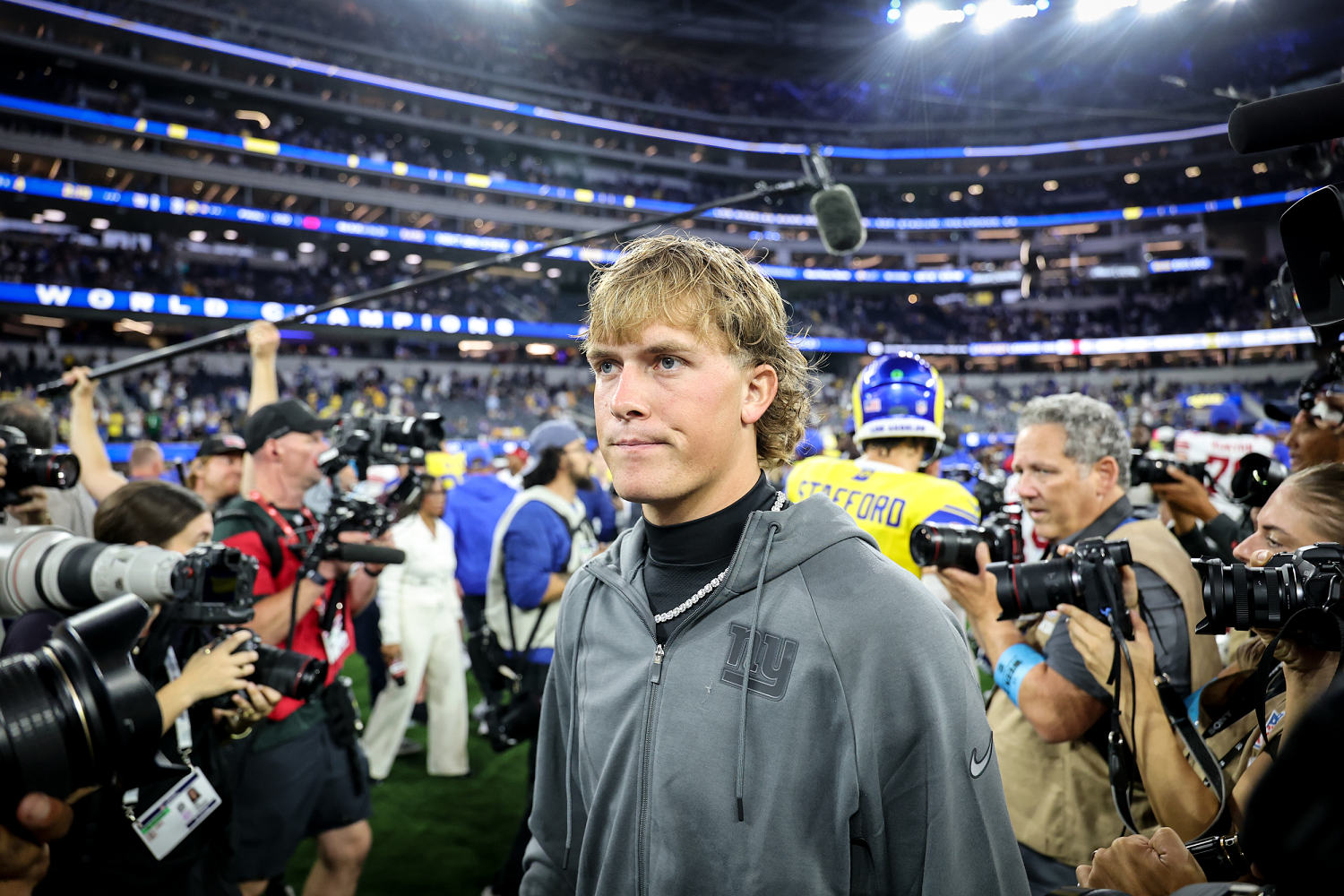
The immediate aftermath in the training room looks nothing like the television broadcasts. There are no flashing lights, no booming stadium anthems. There is only the sterile hum of fluorescent overheads, the smell of adhesive tape and linoleum cleaner, and the heavy, suffocating silence of an athlete who realizes his body has betrayed him. Dart sits on the examination table, an oversized hoodie pulled tight over his shoulders, staring down at a limb wrapped in ice and compression sleeves. The MRI machine has already spoken its unvarnished truth. The diagnosis is locked in stone.
In professional football, a lost season is a ghost limb. You can still feel it, you can still see your teammates out there on the field every Sunday, but the connection is permanently severed. The locker room moves on with terrifying speed because it has to. The National Football League is a perpetual motion machine fueled by replacement. If you stop moving, you get run over. Coaches adjust playbooks, backup quarterbacks take the first-team reps, and the weekly news cycle devours yesterday's tragedy to feed tomorrow's pre-game show.
Yet, for the individual player, time fractures.
The mental toll of major orthopedic surgery is rarely discussed by the pundits analyzing third-down conversion rates. We talk about recovery timelines in months—six, eight, maybe nine—as if healing is a linear equation solved by physical therapists and advanced surgical techniques. It is not. Healing is a brutal, grinding psychological war fought in solitude.
Imagine waking up the morning after surgery. The nerve block has worn off. A dull, throbbing ache radiates from bone anchors and stitched tissue. The leg feels foreign, heavy, encased in a bulky brace that feels less like medical equipment and logger's iron. The first attempt to bend the knee even ten degrees feels like tearing open a freshly healed wound. Tears prick the corners of eyes belonging to young men who have spent their entire lives being told they are unbreakable.
This is the hidden tax of ambition.
Dart now faces the long, unglamorous winter of rehabilitation. While the Giants fight through the brutal middle stretch of the schedule—battling fatigue, injuries, and the relentless pressure of the media market—their young signal-caller will be locked away in the bowels of the practice facility. Hours spent on stationary bikes with no resistance. Endless sets of straight-leg raises until the quadriceps muscle, shocked by trauma, finally remembers how to fire. The dull, repetitive torture of electrical muscle stimulation pads hissing against bruised skin.
It is lonely work. There are no highlights recorded here. No roaring crowds chanting a name. There is only the metronome click of a stopwatch and the stubborn refusal to let a single injury define an entire career.
History is littered with quarterbacks who faced this exact crossroads. Some return with a cautious hesitation, second-guessing every scramble, hearing phantom footsteps in clean pockets. Others use the enforced stillness to study the game from a vantage point few active players ever achieve—the coach's eye. Stripped of the physical compulsion to run, throw, and absorb contact, they spend months dissecting defensive coverages, learning how to manipulate safeties with a glance, and understanding the subtle cadence of an offense that functions entirely above the neck.
The Giants organization finds itself at a familiar, uncomfortable precipice. Building a franchise around a young quarterback is like constructing a house on a cliffside during storm season; you invest immense capital, time, and emotional energy, knowing that a single gust of wind can alter the foundation overnight. When that foundation cracks, the panic is palpable. Front office executives calculate career trajectories and salary cap implications with cold arithmetic, while fans on internet forums trade despair like currency.
But football teams are resilient organisms, cobbled together from fifty-three distinct human beings, each carrying their own private motivations. When a leader goes down, a vacuum opens. Someone else has to step into the huddle, raise their voice, and command the respect of veterans who have seen dozens of teammates come and go. The burden shifts. The collective heartbeat of the team adapts or flatlines.
We often look at athletes as modern gladiators, larger-than-life figures impervious to ordinary vulnerability. We analyze their mechanics, critique their decision-making under duress, and debate their trade value as if they were trading cards. We forget that underneath the carbon-fiber shoulder pads and the million-dollar contracts are twenty-something-year-old human beings whose entire identity has been stripped away in a fraction of a second on a misplanted foot.
The MRI scans will be filed away. The surgical incisions will fade into thin white lines across skin. The media will move on to the next rookie sensation, the next coaching hot seat, the next urgent storyline designed to fill the twenty-four-hour sports vacuum.
Back in the rehabilitation clinic, the lights are fluorescent and steady.
A heavy rubber band stretches across the floor. A sneaker grips the rubber. Slowly, painfully, against the burning protest of scarred tissue and atrophied muscle, the leg extends forward.
One inch.
Then two.
The quiet work begins.