The courtroom is too quiet. You can hear the heavy drag of an HVAC unit overhead, the dry scratch of a pen against legal paper, and beneath it all, the terrifying weight of memory.
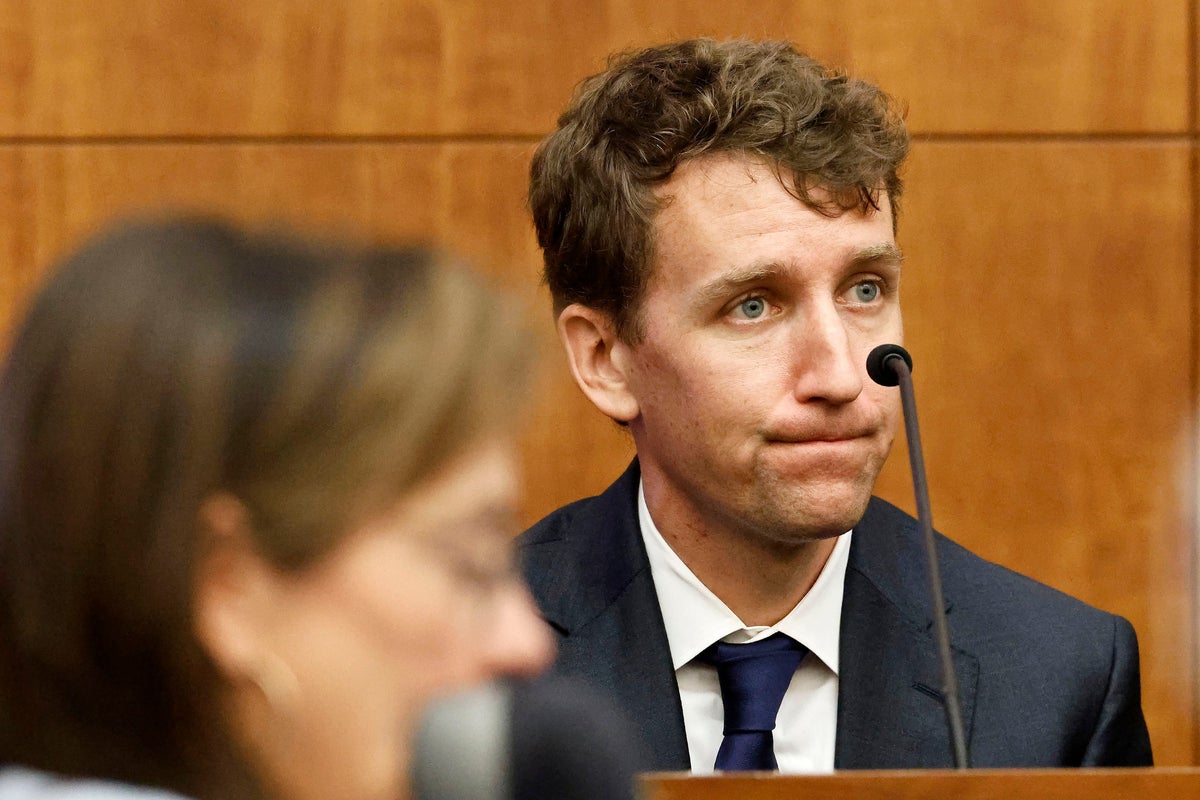
Patrick Clancy sits in the witness box. His hands are still. Too still. They are the hands of a man who has already lived through the worst thing imaginable, yet finds himself forced to excavate it beneath the fluorescent glare of public scrutiny. He is not just a witness anymore. He is an archivist of a tragedy that defied every law of nature, every instinct of protection, every ordinary rhythm of a Tuesday afternoon.
Look closely at the timeline. January 24, 2023. Duxbury, Massachusetts.
To the outside world, life looks ordinary. Snow clings to the edges of the driveway. Inside, three small children—Cora, 5, Dawson, 3, and baby Callan, 8 months—exist in that chaotic, beautiful whirlwind of youth. Laughter echoes off hardwood floors. Tiny shoes are scattered by the front door. Small fingerprints smudge the living room windows.
Then, the sudden drop.
Patrick leaves the house to pick up dinner. Just a quick errand. A routine chore. Nineteen minutes. In nineteen minutes, the universe fractures completely.
When he returns, the house is wrong. The silence is heavy, suffocating. What follows is a frantic, earth-shattering search that ends in the basement—a place meant for storage, for old toys, for forgotten boxes, not for nightmares.
We try to process these events through the safe distance of headlines. We categorize them, debate them, and seek villains or heroes. Human nature demands a tidy narrative. We want a clear villain with a cold heart, someone easily marked by shadows. But reality refuses to cooperate with our comfort. Reality is messy, terrifyingly complex, and laced with a profound medical agony that leaves everyone bleeding.
Consider what happens when the mind breaks. Not a fracture you can wrap in plaster or capture on an X-ray, but a silent, internal collapse.
In the courtroom months later, the focus shifts to postpartum psychosis. It is a medical condition so misunderstood, so violently detached from the glowing, idealized portraits of motherhood plastered across media, that society treats it like a ghost story. We whisper about it. We look away. We pretend it only happens to someone else, somewhere else, in a textbook far away.
Patrick’s testimony lays it bare. He speaks of a wife who was loving, attentive, utterly devoted, yet drowning in a biochemical storm she could not control. Medications changed. Symptoms multiplied. Insomnia gnawed at her sanity. The brain, our most vital and fragile organ, began to betray its own keeper.
When people ask how a mother could reach such a dark precipice, they are looking at the wrong question. The real question is how invisible suffering is allowed to fester in modern society until it detonates.
We isolate new parents. We romanticize exhaustion, turning sleep deprivation into a badge of honor rather than a public health hazard. We build a healthcare system that treats mental health as an afterthought, discharging patients into quiet homes with a handful of pills and a pat on the back, hoping for the best.
And then, when the inevitable tragedy strikes, we act shocked. We clutch our pearls and wonder how the warning signs were missed.
They weren't missed. They were ignored.
Listen to the courtroom audio. The scratch of the microphone. Patrick’s steady, breaking voice recounting the last ordinary moments he shared with his children. He describes ordinary things. Bedtime routines. Favorite snacks. The simple warmth of holding a child before walking out the door. He did not know that door frame was the threshold of a different life. None of us ever do.
We walk through our days surrounded by fragile porcelain that looks like steel. We look at our neighbors, our partners, our friends, and we assume stability is a permanent state. It is not. Stability is a delicate equilibrium, maintained by a complex cocktail of sleep, chemistry, community, and support. Take away one pillar, and the roof starts to sag. Take away them all, and the structure caves in.
The trial continues. Verdicts will be reached, legal arguments parsed, precedents cited. Law books will open and close. Attorneys will adjust their ties and speak in measured tones about criminal responsibility versus medical incapacity.
None of that brings the children back.
None of that fills the tiny shoes by the front door.
As the afternoon sun cuts across the courtroom floor, illuminating floating dust motes in the sterile air, Patrick steps down from the stand. He walks back to his seat, shoulders slightly rounded, carrying an invisible backpack filled with lead. He looks straight ahead.
The heavy glass doors of the courthouse swing shut, but the echo remains. A lingering reminder of how quickly the light can go out, and how desperately we need to learn to see the darkness before it consumes us.