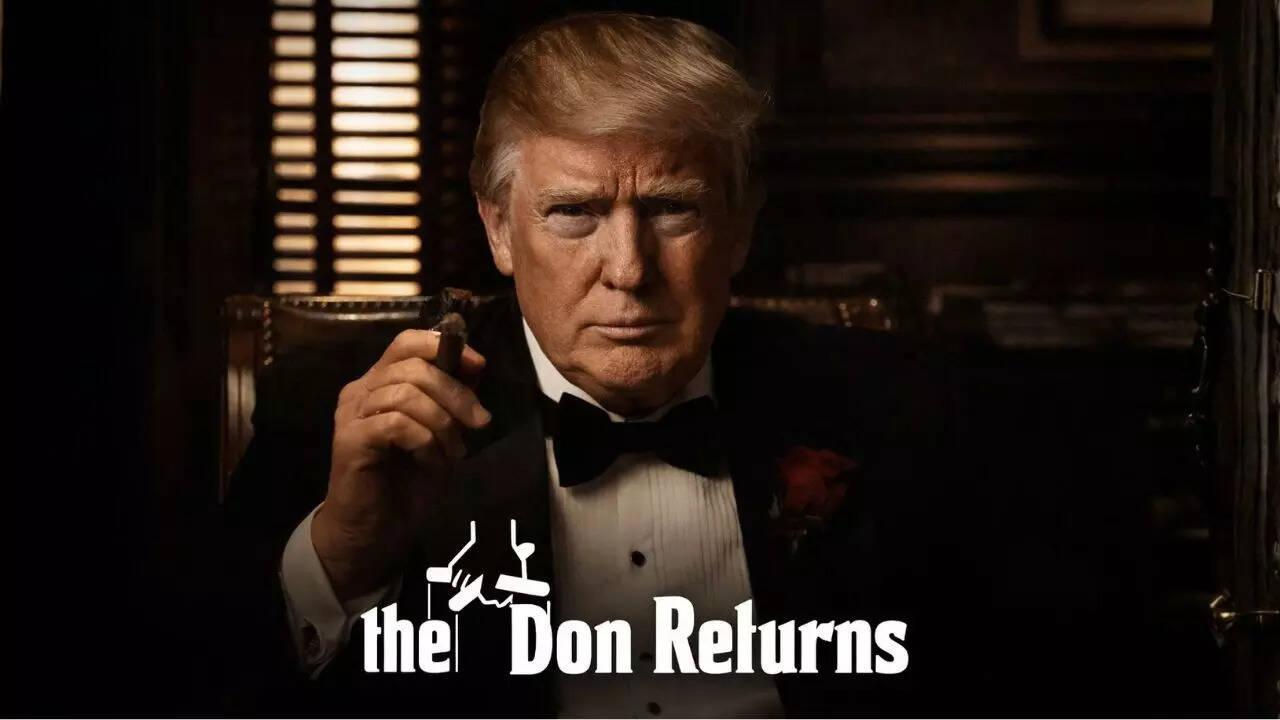
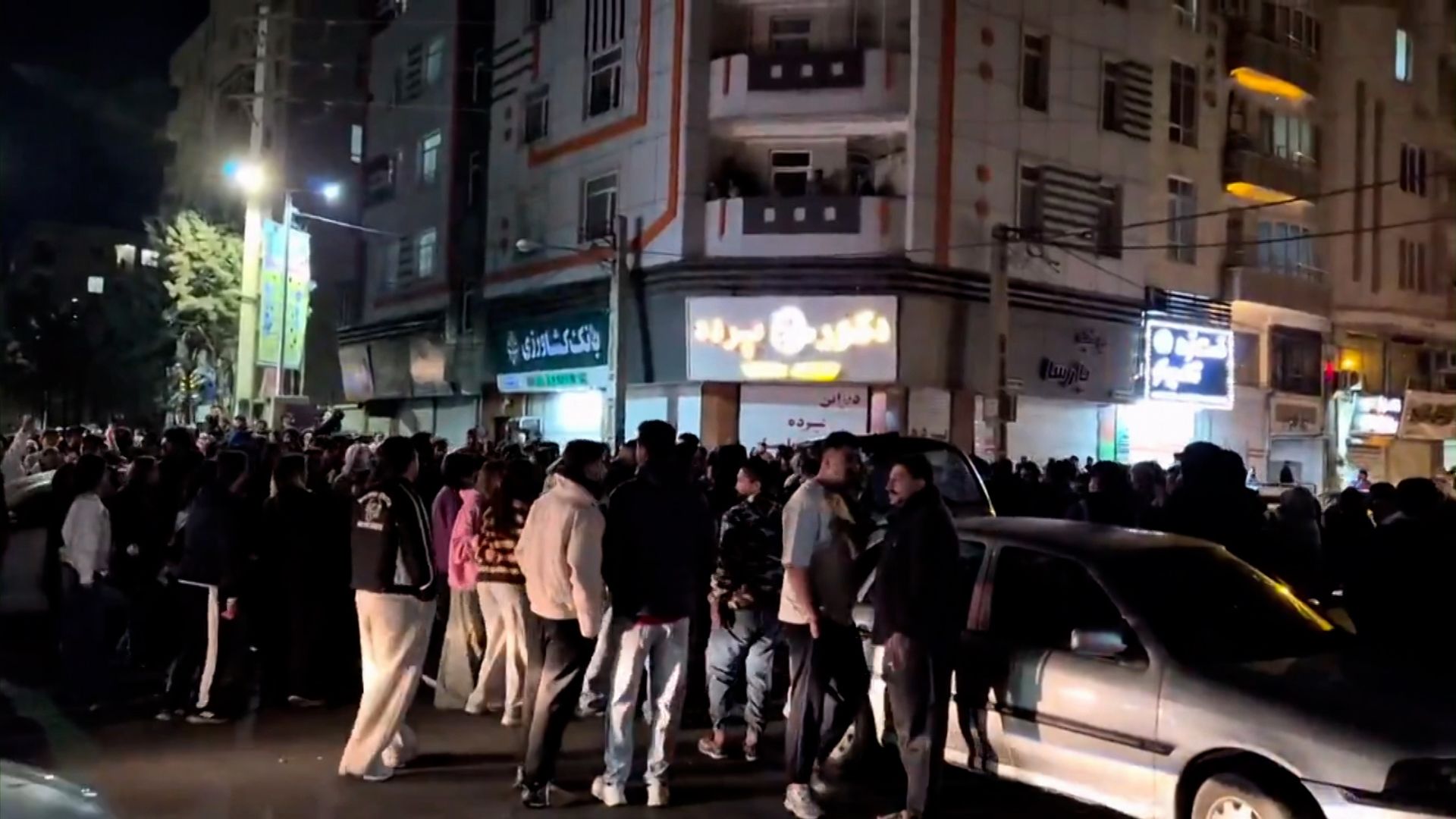
The flash of Tomahawk missiles over Iranian airspace usually triggers a predictable media choreography in Washington. Typically, a President stands behind a mahogany lectern in the early hours, framing the kinetic action as a moral necessity. This time, the silence from the West Wing was deafening. While the military reported successful strikes on integrated air defense systems and drone manufacturing hubs, the Commander-in-Chief remained behind closed doors. This absence is not a sign of indecision. It is the tactical application of a new doctrine where the physical optics of leadership are being replaced by the cold efficiency of automated escalation.
The strikes against Iranian assets represent a fundamental shift in how the United States projects power without seeking total regional collapse. By hitting "nodes" rather than "nations," the Pentagon is betting that it can degrade an adversary’s ability to wage proxy war while keeping the diplomatic door cracked just wide enough for back-channel negotiations. However, the decision to keep the President out of the camera's lens suggests a desire to decouple the American political brand from the immediate carnage of the strikes.
The Architecture of the Targeted Strike
The logistics of these operations reveal a level of technical precision that makes the Gulf War look like a game of lawn darts. We are no longer looking at carpet bombing or broad economic blockades. Instead, the focus has shifted to the Kill Web, a decentralized network of sensors and shooters that identifies high-value infrastructure in real-time.
When the U.S. military targets an Iranian facility, the process involves a multi-domain synchronization.
- Electronic Warfare (EW): Before the first kinetic impact, EW assets flood the target's radar with "ghost" signals, rendering their defense systems blind.
- Loitering Munitions: Smaller, autonomous drones circle the area to identify mobile launchers that might attempt to relocate after the initial salvo.
- Post-Strike Assessment: Satellite imagery and signals intelligence (SIGINT) analyze the electromagnetic signature of the site to confirm the destruction of internal components, not just the outer shell.
This surgical approach is designed to minimize civilian casualties, but it also lowers the "political cost" of starting a conflict. When a strike is clean, quiet, and conducted without a televised address, the public remains largely disengaged. This creates a dangerous precedent where war becomes a background process, like a software update running in the hidden partitioned space of a hard drive.
The Strategic Vacuum of Presidential Silence
Political analysts often mistake silence for weakness. In this instance, the lack of a public victory lap serves a dual purpose. First, it avoids providing the Iranian leadership with a "Great Satan" moment to broadcast to their domestic audience. If there is no footage of an American President claiming credit, the Iranian state media has less fuel to stoke nationalist fervor. Second, it allows the administration to maintain plausible deniability regarding the long-term intent of the mission.
If you don't declare the start of a war, you don't have to explain when it ends. This ambiguity is a tool. By staying out of view, the President avoids the "Mission Accomplished" trap that haunted previous administrations. The goal is no longer to win a definitive victory but to manage a permanent state of managed friction.
Economic Ripples in the Strait of Hormuz
The markets reacted with their usual nervous twitch. Oil prices spiked, then settled as it became clear that the strikes were directed at military infrastructure rather than petroleum production. However, the business community is looking at a different set of metrics. The real concern is the insurance premium for maritime trade.
Every time a missile is fired in the region, the cost of shipping a single barrel of crude increases through war-risk surcharges. For global logistics firms, the President's silence is more unsettling than a speech. Businesses crave predictability. When the White House goes dark during a military operation, it signals that the rules of engagement are being rewritten on the fly. We are seeing a shift where the military acts as a global "janitor," cleaning up perceived threats while the political leadership refuses to own the mess.
The Proxy Paradox
The core of the conflict isn't just about Tehran; it’s about the network of "Special Groups" and militias that act as Iran's forward-deployed shadow army. For decades, the U.S. has struggled to counter these groups without triggering a full-scale invasion. The current strategy seeks to break the link between the Command and Control (C2) in Tehran and the boots on the ground in Lebanon, Iraq, and Yemen.
This is accomplished through financial interdiction and the physical destruction of the hardware required to communicate. If a militia commander in Baghdad cannot receive encrypted orders from a handler in the Quds Force because the relay station was vaporized by a Reaper drone, the proxy network fractures. The President's absence from the public eye reinforces this: the U.S. is signaling that this is a technical correction, not a crusade.
The Risk of the Automated Escalation Ladder
There is a concept in game theory known as the Escalation Ladder. Normally, each rung represents a conscious choice by a human leader to increase the intensity of a conflict. In the current landscape, the ladder is becoming automated.
$$E = \frac{I \times T}{D}$$
In this simplified model, Escalation (E) is the product of Intelligence (I) and Targeting Capability (T), divided by the Diplomatic Buffer (D). As our ability to see and hit targets increases, the pressure to act immediately grows. If the Diplomatic Buffer is removed—or if the President stops communicating entirely—the equation trends toward infinite escalation.
The danger of staying out of view is that it removes the human element from the deterrent. If the adversary doesn't hear the voice of the leader, they may assume the machines are in charge. Miscalculation in this environment is not just likely; it is inevitable. An Iranian commander, feeling isolated and under fire without a clear diplomatic off-ramp, might decide to launch a "use it or lose it" strike against a U.S. carrier group or a regional ally.
Behind the Scenes at Mar-a-Lago and the Situation Room
While the public sees an empty podium, the reality is a flurry of secure video teleconferences. The modern "War Room" isn't a single basement in D.C. anymore. It is a distributed network of encrypted terminals. The President can oversee a strike from a golf resort or a campaign stop just as easily as the Oval Office. This detachment from the physical geography of power mirrors the detachment from the consequences of the strikes.
The veteran journalist looks for what isn't being said. The silence tells us that the administration is prioritized on the Internal Polling Data more than the International Law. With an election cycle always on the horizon, the optics of a new war are toxic. By conducting the "assault" as a series of disconnected events rather than a cohesive campaign, the executive branch bypasses the need for Congressional approval or public consensus.
The Evolution of the Non-War War
We have entered an era of "perpetual grey zone" operations. The strikes on Iran are not an ending, and they are barely a beginning. They are a continuation of a policy that views kinetic force as just another lever in a global management strategy. The President is out of view because his presence would validate the event as a "War," a word that carries heavy legal and social baggage.
If the U.S. continues to operate in this manner, the very definition of peace changes. Peace becomes the period between strikes where the sensors are still collecting data but the triggers haven't been pulled. This isn't a strategy for stability; it is a strategy for containment. It assumes that the adversary can be beaten into a state of permanent compliance through superior tech and strategic silence.
History suggests otherwise. Every action in the Middle East has an equal and often more chaotic reaction. By hiding the face of the command, the administration is betting that they can avoid the fallout of their own foreign policy. But when the smoke clears over the target sites, the responsibility remains. You cannot strike a sovereign nation and expect the world to ignore the hand that moved the chess piece, even if that hand is tucked firmly in a pocket.
The next time a missile hits a warehouse in the desert, don't look at the explosion. Look at the empty podium in Washington. That is where the real story is being written. The silence isn't a lack of news; it is a deliberate choice to govern from the shadows while the world burns in high definition.
Stop looking for the press release and start looking at the flight paths of the tankers over the Persian Gulf.