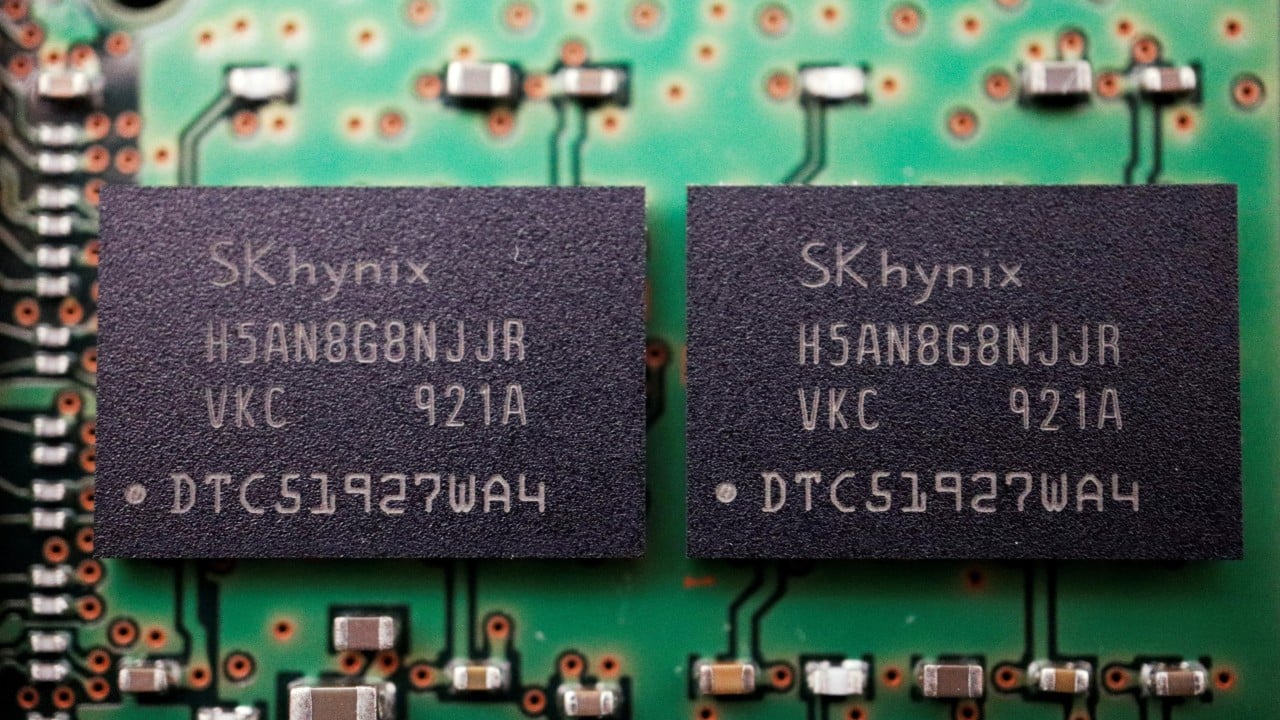
The air inside a semiconductor fabrication plant does not move like normal air. It is scrubbed, regulated, and pushed downward in strict, laminated sheets of wind to keep a single speck of dust from ruining a billion-dollar batch of silicon. It smells faintly of isopropyl alcohol and static electricity. For decades, engineers at legacy tech giants in Seoul and Tokyo have operated under a comforting assumption: this level of perfection cannot be replicated overnight. They believed the sheer complexity of making advanced computer memory acted as a natural moat.
They were wrong.
A quiet crisis is unfolding in the boardrooms of the world’s largest memory chipmakers. While public attention remains fixated on the glamorous, headline-grabbing graphics processors that power artificial intelligence, a far more cutthroat battle is happening in the shadow of those giant processors. It is a war over memory. Specifically, it involves High Bandwidth Memory, the ultra-fast tech that feeds data to AI brains. Samsung and SK Hynix have been riding a massive wave of profitability from this boom. But a warning from deep within the industry suggests that this gold rush is about to hit a wall, engineered by an competitor moving at an impossible speed.
China is building factories faster than anyone thought possible.
The Warning in the Room
Consider the perspective of an industry insider. Let's call him Min-woo. He has spent twenty-five years advising executives on semiconductor supply chains, watching the industry weather cycles of glut and scarcity. Months ago, he stood on a balcony overlooking a newly cleared plot of land outside Shanghai. Where there had been empty fields just a year prior, a sprawling complex of concrete and steel now hummed with electrical power.
Min-woo knew the standard narrative. The West had restricted China's access to the most advanced extreme ultraviolet lithography machines. Without those machines, the conventional wisdom said, China could not compete at the cutting edge.
But looking at the sheer scale of the construction, Min-woo realized the fatal flaw in that logic. China did not need to win the race for the absolute smallest, most advanced transistor to disrupt the global market. They just needed to dominate the supply of everything else.
Legacy memory chips—the older generations of Dynamic Random-Access Memory—are the workhorses of the digital world. They sit in your car's dashboard, your refrigerator, your office router, and the millions of standard servers that keep the internet running. By flooding the global market with these legacy chips, Chinese manufacturers are executing a classic pincer movement.
When a company like China's ChangXin Memory Technologies massively expands its production capacity, the global price for standard memory plummets. This is not a theoretical threat. Industry analysts have watched the pricing curves flatten over the last twelve months. The strategy is simple: squeeze the profit margins of the established giants on their bread-and-butter products, leaving them with far less capital to reinvest in the wildly expensive research and development required for the next generation of AI memory.
The Hidden Plumbing of Artificial Intelligence
To understand why this matters to anyone who doesn't run a hedge fund, we have to look at how computer memory actually works. Think of an AI processor as a brilliant, hyper-efficient chef working in a kitchen. This chef can chop vegetables and cook sauces at lightning speed. But the chef is only as fast as the kitchen staff bringing ingredients from the pantry.
If the pantry is down the hall and the staff can only carry one small basket at a time, the brilliant chef spends most of the day standing around, waiting.
Standard memory is that distant pantry. High Bandwidth Memory is a conveyor belt right next to the cutting board, delivering mountains of ingredients every second. Without it, the most advanced AI chips are essentially useless. They stall. They starve for data.
Samsung and its peers have poured billions into building these conveyor belts. They assumed the massive profits from their standard memory lines would fund this transition. But as Chinese factories churn out legacy silicon at prices no democratic market can match without subsidies, that funding engine is beginning to sputter.
The threat is not that China will suddenly invent a better AI chip tomorrow. The threat is that China will make the existing business model of traditional chipmakers unsustainable.
The Illusion of the Technology Moat
It is easy to fall into the trap of thinking that technological supremacy is permanent. We look at companies with decades of institutional knowledge and assume they are unassailable. But the history of technology is a graveyard of giants who mistook a temporary lead for a permanent fortress.
In the 1980s, American semiconductor firms mocked the early efforts of Japanese competitors, dismissing them as mere copyists. Within a decade, those Japanese firms dominated global memory production. Later, South Korean companies used aggressive capital investment during economic downturns to wrestle the crown away from Japan. Now, the wheel is turning again.
The modern fabrication plant is a marvel of human ingenuity, but it is also a black hole for cash. A single facility can cost upwards of fifteen billion dollars to construct and equip. If the market price for standard memory drops by even twenty percent due to oversupply, the math changes instantly. Projects get delayed. Upgrades to AI-specific production lines get put on hold.
This is the invisible leverage China is utilizing. By expanding capacity in legacy chips, they are effectively starving their rivals of the oxygen needed to climb the next technological mountain.
The Vulnerability of a Single Hub
The semiconductor supply chain is terrifyingly fragile. It relies on a delicate web of specialized companies scattered across a handful of democratic nations. A disruption at a single chemical plant in Japan or a software firm in the United States can halt production worldwide.
For an executive sitting in Seoul, the view of the future is growing increasingly cloudy. They are caught between two geopolitical forces. On one side, Washington demands strict compliance with export controls and restrictions on technology transfers. On the other side, Beijing is pouring hundreds of billions of dollars into domestic alternatives, systematically replacing foreign chips with homegrown silicon.
This creates a psychological shift inside the industry. The era of predictable, market-driven growth is over. It has been replaced by a state of constant anxiety, where a company’s survival depends less on the brilliance of its engineers and more on the subsidies of its government.
We often talk about the technology sector in terms of abstract numbers—terabytes, nanometers, and billions of dollars in revenue. But walk onto a factory floor during a shift change. Look at the faces of the technicians step out of their bunny suits, exhausted after twelve hours of monitoring machines that operate on a scale invisible to the human eye.
They know the stakes. They know that the factory being built across the sea doesn't need to be more advanced than theirs to alter their lives. It just needs to be bigger.
The Shift in Global Power
The consequences of this manufacturing shift extend far beyond the balance sheets of tech companies. They alter the geopolitical balance of power. If a single nation gains a dominant position in both legacy memory production and the raw materials required to build electronic components, it gains a veto power over the global economy.
Imagine a scenario five years from now. A global shipping crisis or a political flashpoint occurs. Suddenly, the supply of standard memory chips dries up. Not the chips for advanced AI, but the chips that allow medical devices to function, trains to run, and electrical grids to manage their load. The vulnerability becomes absolute.
This is the true context of the warning issued to Samsung and the wider industry. It was not a minor critique of quarterly earnings or a standard call for better cost management. It was an acknowledgment that the old rules of engagement have been rewritten.
The battle for the future of technology is often depicted as a race to the moon—a noble competition to see who can reach the highest peak of human capability. The reality looks much more like a war of attrition in the mud. It is a contest of who can endure the lowest margins, who can build the largest factories, and who can sustain the heaviest losses while continuing to pump out the silent, gray squares of silicon that power our world.
The lights inside the clean rooms of Seoul never go out. The machines run twenty-four hours a day, ticking through their precise choreography. But the rhythm feels different now. The confidence that once defined this space has been replaced by a sharp, focused urgency. The engineers know that somewhere across the water, another clean room is powering up, its filters spinning, its air moving in perfect, laminated sheets, ready to flood the world.