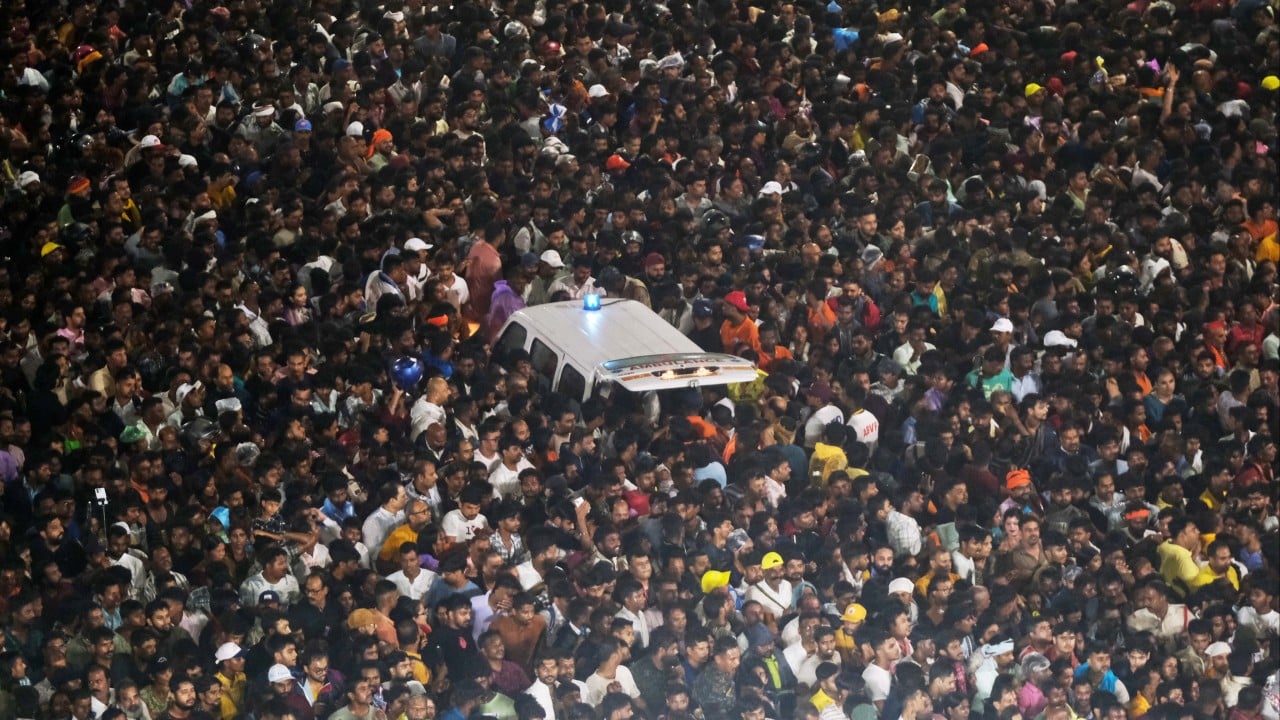
A family gathers under the humid Texas sky, holding candles that flicker against the heavy Houston air. They are mourning a man shot dead by an immigration officer. The headlines frame this as a tragic localized incident, a sudden flashpoint between law enforcement and an undocumented resident. But treating this shooting as an isolated tragedy misses the entire machinery that made it inevitable.
The reality of immigration enforcement in America is not defined by rogue actors. It is defined by a systemic lack of transparency, a lack of body-worn cameras, and a legal framework that shields federal agents from the kind of public scrutiny routinely faced by local police departments. When Immigration and Customs Enforcement (ICE) officers operate in local neighborhoods, they do so under a different set of rules. The public is left with two conflicting stories and zero independent footage to settle the truth.
The Shadow Rules of Federal Policing on Local Streets
When a local police officer pulls a trigger, a predictable sequence of events begins. Body-worn camera footage is usually cataloged, local district attorneys face immediate public pressure, and civilian oversight boards demand answers.
Federal immigration agents operate in a different reality.
For decades, ICE and its parent agency, the Department of Homeland Security (DHS), resisted the widespread adoption of body-worn cameras. While major metropolitan police departments spent the last ten years integrating cameras into their daily operations, federal enforcement agencies lagged behind, citing budget constraints, technical hurdles, and privacy concerns.
The consequences of this delay are felt in the aftermath of every critical incident.
Without objective video evidence, the narrative of a shooting is shaped entirely by the official press release. In almost every major encounter, the official report states that the suspect resisted, brandished a weapon, or used a vehicle as a battering ram. The family, relying on eyewitness accounts from neighbors or passengers, presents a radically different version of events.
This creates a permanent state of public skepticism.
- Local Police: Bound by local laws, public records acts, and increasingly, mandatory body-camera disclosure timelines.
- ICE Agents: Protected by federal jurisdiction, meaning public records requests can take years to process, often returning heavily redacted documents.
- The Oversight Gap: Local district attorneys have limited jurisdiction to prosecute federal officers acting within the scope of their employment, a protection known as "Supremacy Clause immunity."
This legal shield means that even when a shooting occurs on a residential street in Houston, the path to accountability is blocked by a wall of federal bureaucracy.
Why Houston is the Epicenter of This Friction
Houston is a logical place for these tensions to boil over. It is one of the most diverse cities in the country, home to an estimated half-million undocumented immigrants. It is also a city where local law enforcement and federal agencies have a complicated, often fraught relationship.
+-----------------------------------------------------------------------+
|                       THE TWO TRACKS OF LIABILITY                     |
+------------------------------------+----------------------------------+
| LOCAL POLICE OFFICER               | FEDERAL IMMIGRATION AGENT        |
+------------------------------------+----------------------------------+
| Subject to state criminal law      | Shielded by federal immunity     |
| Body-camera footage often public   | Footage rare or withheld         |
| Direct municipal accountability    | Accountable only to Washington   |
+------------------------------------+----------------------------------+
Local officials often try to build trust with immigrant communities. They want residents to report crimes, act as witnesses, and cooperate with local police without fearing deportation.
Federal operations disrupt this delicate ecosystem.
When ICE tactical units enter a neighborhood to execute an administrative warrant, they often wear tactical gear emblazoned with the word "POLICE." This deliberate branding blurs the line in the public mind. Residents cannot distinguish between a local officer investigating a burglary and a federal agent executing a civil deportation order.
This confusion breeds fear.
When people are afraid, they run. When they run, officers give chase. In the high-adrenaline environment of a foot pursuit or a vehicle stop, minor miscommunications escalate into fatal encounters. The federal agent views the flight as a sign of dangerous guilt; the resident views it as a desperate bid for survival.
The Deceptive Simplicity of the Administrative Warrant
Much of the public misunderstands how ICE operates in the field.
Unlike local police, who must obtain a warrant signed by a neutral judge to enter a home or seize a person, ICE frequently relies on administrative warrants. These are documents signed by ICE officers themselves, not by a judge. They do not carry the same legal authority as a criminal warrant.
They cannot be used to force entry into a private residence.
Yet, the tactics used by field offices often mimic criminal raids. Officers stake out homes, block driveways, and use aggressive verbal commands to induce consent. To an ordinary citizen, a group of armed individuals in tactical vests shouting commands is indistinguishable from a SWAT team executing a judicial warrant.
This is where the system breaks down.
If a citizen asserts their rights and refuses to open the door, the encounter can stall. But if the encounter happens in a yard, a driveway, or a public street, the rules change. Agents rely on "consensual encounters" that quickly transition into detentions.
If the individual attempts to walk away, the situation escalates.
The legal standard for using deadly force remains the same: an officer must reasonably believe their life or the life of another is in imminent danger. But "reasonable belief" is highly subjective. In the absence of video footage, the officer's subjective belief becomes the official, unchallengeable reality.
The True Cost of Permanent Secrecy
The vigil held by a grieving family is more than a ceremony of remembrance. It is a public protest against a system designed to keep them in the dark.
When a local officer is involved in a shooting, the community expects answers within days. When a federal agent is involved, the family can expect years of silence. Investigations are handled internally by the DHS Office of Inspector General or joint task forces that operate far from the public eye.
The civil rights lawsuits that follow these shootings are routinely dismissed before they ever reach a jury.
Under a legal doctrine established by the Supreme Court, federal officials are rarely held personally liable for damages in civil rights lawsuits. This makes civil litigation a dead end for most families seeking justice. They are left with no answers, no financial recourse, and no systemic changes to prevent the next tragedy.
The candlelight fades, the crowd disperses, and the federal machinery continues to operate exactly as it was designed to do, shielded by silence and protected by design.