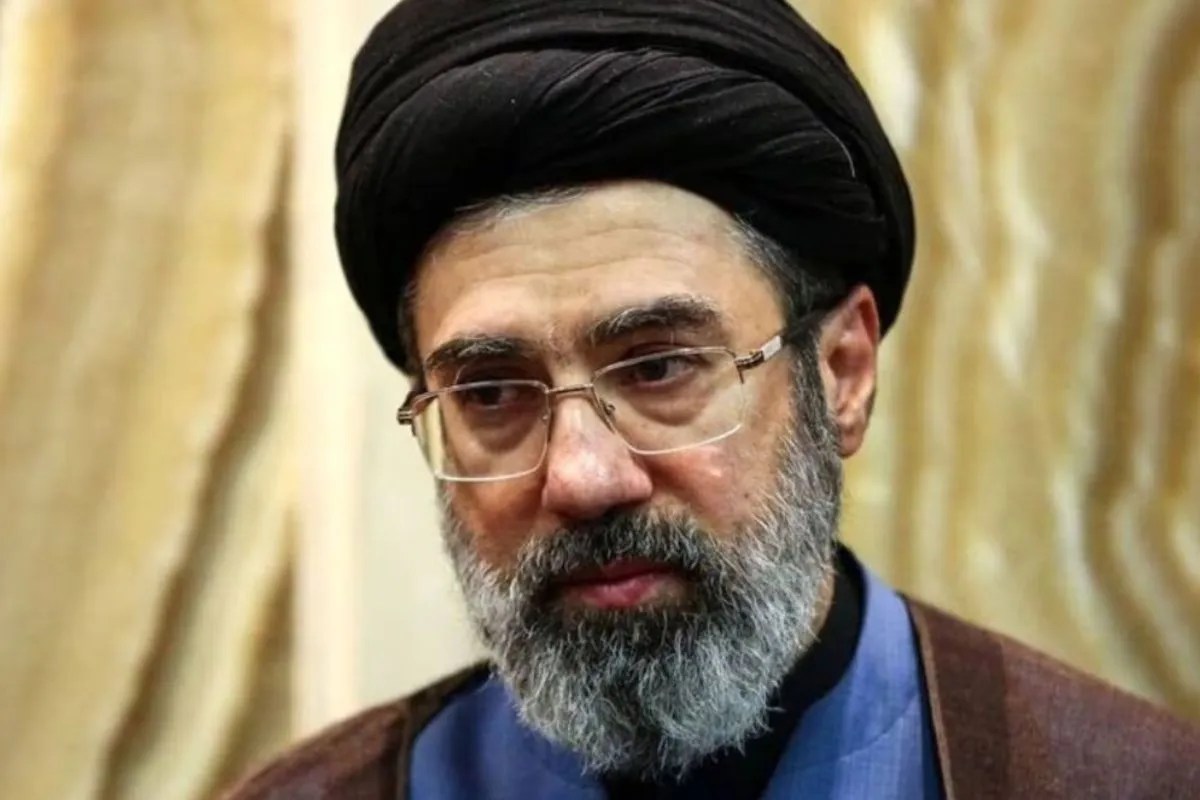
The supreme leadership of Iran is preparing for its most consequential transition in more than three decades, and Mojtaba Khamenei has finally broken his customary silence. For years, the second son of Supreme Leader Ayatollah Ali Khamenei operated exclusively in the shadows, pulling the strings of the Islamic Revolutionary Guard Corps (IRGC) and managing the clerical bureaucracy in Qom. His recent public commentary regarding a backdoor Washington-Tehran diplomatic understanding—where he acknowledged "certain objections" while confirming his ultimate endorsement—marks a profound shift in the Iranian political structure. This is not mere commentary on foreign policy. It is a calculated debut designed to signal his readiness to inherit the state.
Western analysts routinely misjudge Tehran as a monolithic entity driven purely by ideological zeal. It is not. It is a hyper-factionalized arena where survival depends on balancing the interests of the security apparatus, the merchant class, and the clerical establishment. Mojtaba’s rare public intervention serves a dual purpose. It insulates him from accusations of capitulation by acknowledging flaws in the diplomatic deal, while simultaneously positioning him as a pragmatic statesman capable of delivering economic relief to a population exhausted by sanctions.
The Illusion of Absolute Consensus
The supreme leader holds the ultimate veto, but he does not govern in a vacuum. The recent diplomatic maneuverings between Washington and Tehran revealed deep fissures within the Iranian conservative elite. Hardline factions within the parliament and the media viewed any compromise with the West as a betrayal of the 1979 revolutionary principles. They wanted no concessions.
Mojtaba Khamenei stepped into this vacuum to enforce discipline. By stating that he held reservations but ultimately approved the measures, he established himself as the arbiter between competing factions. This move effectively told the ultra-hardliners that their dissent had reached its structural limit.
The Security Council Dynamics
The Supreme National Security Council serves as the actual crucible for these decisions. Within these closed sessions, the debate over sanctions relief versus nuclear expansion is fierce.
- The Economic Realists: Emphasize that inflation and currency depreciation pose a greater threat to regime survival than foreign adversaries.
- The Ideological Purists: Argue that any pause in uranium enrichment signals weakness to Washington and Tel Aviv.
By publicly backing the compromise, Mojtaba aligned himself with the realists without alienating the purists. He validated the purists' skepticism while enforcing the realists' policy. It is a classic bureaucratic maneuver, executed with precision by a man who has spent two decades studying the mechanics of total power.
Money, Militias, and the Machinery of Succession
To understand why Mojtaba's voice matters now, one must look at the financial and military architecture of modern Iran. He does not hold an official, elected government portfolio. His power stems from his control over the Office of the Supreme Leader (Beit-e Rahbari), an institution that oversees vast economic conglomerates and coordinates directly with the intelligence services.
+--------------------------------------------------------+
|             The Office of the Supreme Leader           |
+--------------------------------------------------------+
                           |
       +-------------------+-------------------+
       |                                       |
+--------------+                       +---------------+
| Bonyads      |                       | IRGC Command  |
| (Economic    |                       | (Military &   |
| Foundations) |                       | Intelligence) |
+--------------+                       +---------------+
The economic foundations, or bonyads, control billions of dollars across industries ranging from real estate to oil distribution. These entities operate outside parliamentary scrutiny. Mojtaba’s influence over these funds provides him with a patronage network that ensures loyalty from regional governors and military commanders alike.
The Revolutionary Guard Alliance
The relationship between Mojtaba and the IRGC is symbiotic. The military commanders know that a chaotic transition of power could jeopardize their economic empires and domestic authority. They require a successor who guarantees continuity.
This relationship was solidified during the crackdowns on domestic protests over the past decade. Mojtaba consistently backed the security forces, proving to the internal security apparatus that he would not hesitate to deploy maximum force to maintain order. His endorsement of the recent diplomatic agreement reassures the IRGC that he can also navigate international diplomacy to protect their supply chains and financial interests.
Decoding the Backdoor Diplomacy
The specifics of the understanding between Washington and Tehran remain deliberately vague, masked by deniable arrangements and informal compliance. It is a policy of mutual retrenchment. The United States seeks to prevent a regional conflagration and cap Iranian nuclear enrichment levels, while Iran demands the release of frozen assets and a reduction in oil export enforcement.
This arrangement faces severe hurdles. Western critics argue that any sanctions relief merely funds Iran’s regional proxies, from Yemen to Lebanon. Conversely, Iranian hardliners assert that the frozen assets are released under terms so restrictive that they amount to a humiliation.
The Problem of Verification
The International Atomic Energy Agency (IAEA) remains caught in the middle of this political chess match.
$$\text{Nuclear Leverage} = \text{Enrichment Level} \times \text{Stockpile Mass}$$
Tehran utilizes this equation with high calculation. When domestic or international pressure mounts, they increase the enrichment variables. When a diplomatic opening emerges, they slow the accumulation of highly enriched material without dismantling the infrastructure. Mojtaba's public acknowledgment of the deal confirms that this balancing act is now under his direct supervision. He is telling the world that he understands how to use the nuclear program as a diplomatic thermostat, turning the heat up or down to suit his strategic needs.
The Ghost of Ebrahim Raisi
The sudden death of President Ebrahim Raisi in a helicopter crash reshaped the political landscape. Raisi was widely considered the primary contender to succeed the aging Ayatollah. His removal from the equation eliminated the chief rival to the supreme leader's son, accelerating a timeline that many hoped to defer.
Raisi's absence forced Mojtaba out of the shadows. A behind-the-scenes operator can remain anonymous only as long as there is a public frontrunner to absorb the scrutiny. With Raisi gone, the spotlight shifted directly onto the younger Khamenei.
The Hereditary Problem
The Islamic Republic was founded on the explicit rejection of hereditary monarchy. The overthrow of the Shah was a rejection of dynastic rule. Consequently, the prospect of a son succeeding his father as Supreme Leader creates a severe ideological contradiction for the regime.
| Regime Type | Power Source | Succession Mechanism |
|---|---|---|
| Imperial Iran | Dynastic Lineage | Hereditary Birthright |
| Theocratic Iran | Divine/Clerical Mandate | Assembly of Experts Selection |
| The Current Reality | Institutional Consensus | Controlled Elite Appointment |
To overcome this ideological hurdle, Mojtaba must demonstrate credentials that transcend his DNA. He cannot rely on his last name alone. His public statement on the diplomatic agreement was his first major attempt to establish independent authority, proving that he possesses the strategic foresight required to manage the state's most critical portfolios.
The Regional Proxy Strategy Under New Management
Iran's regional strategy relies on asymmetric warfare executed through its network of non-state actors. This network ensures that any conflict occurs far from Iran's borders.
Western intelligence officials have noted that Mojtaba has quietly assumed a larger role in coordinating with these regional groups. While the Quds Force manages the operational logistics, Mojtaba controls the strategic funding mechanisms that keep these groups viable. His approval of the diplomatic deal with Washington shows that he views regional militancy and international diplomacy not as contradictory paths, but as complementary tools. He uses the threat of regional instability to force the West to the negotiating table, then leverages the resulting diplomatic relief to sustain the very network that created the leverage in the first place.
This approach creates an extraordinary challenge for Western policymakers. Dealing with an elected president in Tehran is meaningless if the actual decisions are being made by a shadow figure preparing for supreme rule. The diplomatic engagement currently underway is not a negotiation with the present government of Iran; it is an opening gamble with its next ruler.
The transition has already begun, and the world cannot afford to misread the signals coming from Tehran.


