Ink smells like wet stone and pine smoke.
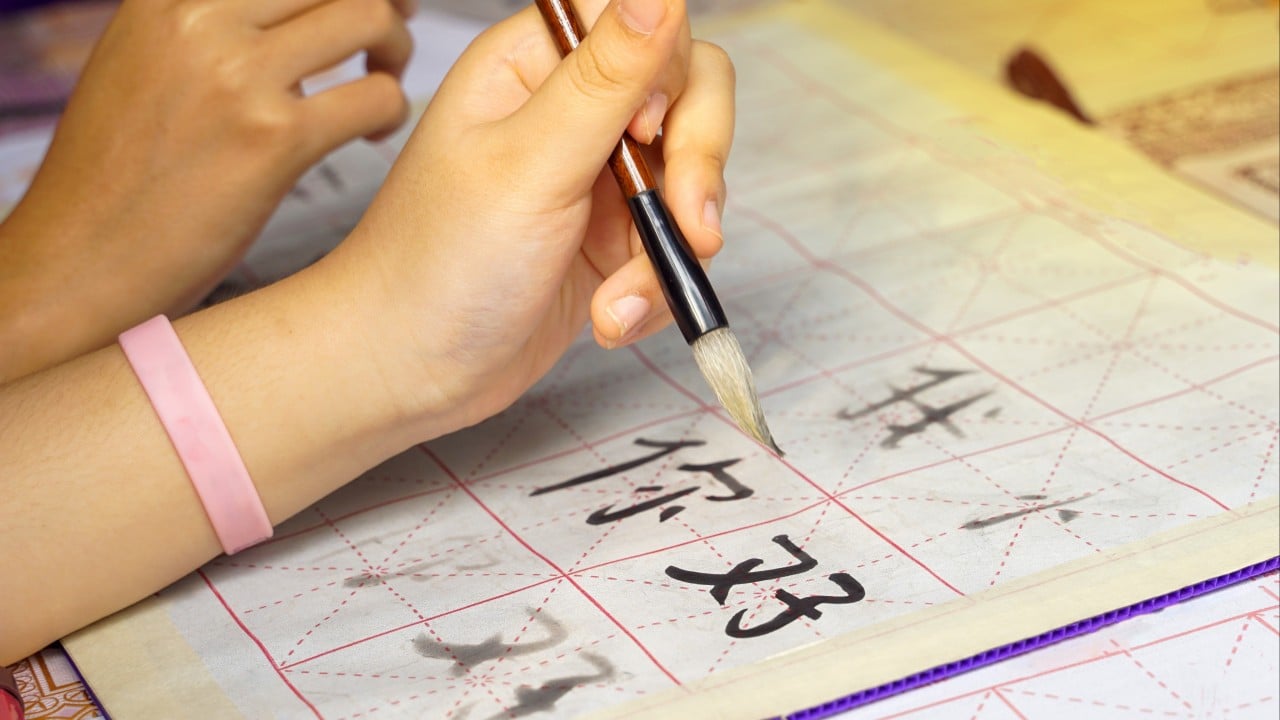
I remember sitting in a small, damp room in Kyoto decades ago, watching an old man grind an inkstick against a slate slab. His wrist moved in slow, hypnotic circles. Back and forth. Hour after hour. He was not merely preparing pigment for a brush; he was participating in an unbroken lineage of human communication that stretched back thousands of years. When he finally pressed the wet brush to rice paper, the stroke did not just record a sound. It captured a universe.
We often talk about writing as a human invention, as if someone sat down at a wooden desk with a blueprint and drafted an alphabet over a long weekend. But language does not emerge from committee meetings. It grows. It bleeds. It survives.
Recent studies into the evolutionary trajectory of the Chinese script reveal a startling truth. This ancient writing system evolved very much like a living organism, shaped by invisible pressures that mirror natural selection. Mutation. Adaptation. Extinction.
Picture an anonymous scribe carving turtle shells by the yellow light of an oil lamp during the Shang dynasty. His hand cramps. The bronze knife slips against the hard bone. He lacks the time to carve every intricate flourish of a drawing, so he straightens a curve. He drops a decorative line. He simplifies.
That is mutation.
If his shortcut makes the character easier to carve without losing its core meaning, others copy it. If the change makes the symbol ambiguous, so that a king reads "attack" instead of "retreat," the mutation dies in the dirt, discarded by a culture that cannot afford fatal miscommunications. Survival of the fittest stroke.
For centuries, Western thinkers looked at logographic writing systems through a lens of condescension. They viewed alphabets as the pinnacle of cognitive efficiency, imagining that an alphabet of twenty-odd letters was somehow more civilized than a system utilizing thousands of distinct characters. They called Chinese writing cumbersome. They predicted its eventual extinction in the modern age of typewriters and telegraphs.
They were catastrophically wrong.
To understand why, you have to look beneath the surface of the ink. An alphabet maps sound. A Chinese character maps meaning. When you look at an alphabetic word like cat, the letters tell you roughly how to pronounce it, but they tell you nothing about what a cat actually is. When you look at certain Chinese characters, you are peering into an archaeological dig of human thought.
Consider the character for peace. It depicts a woman under a roof. To the ancient mind that forged the symbol, safety was not an abstract political treaty. Safety was a dry hearth, a roof overhead, and a person resting inside. The logic is poetic, visceral, and immediate.
Yet, living organisms must adapt or perish, and writing systems are no exception. The evolutionary pressures shifted dramatically over millennia. Think of the monumental friction when merchants needed to record grain shipments quickly, or when telegraph operators faced the nightmare of transmitting thousands of unique characters across copper wires. The system experienced massive evolutionary bottlenecks.
During these periods of intense pressure, millions of hands unconsciously collaborated to streamline the organism. Unnecessary strokes withered away like vestigial organs. Complex forms were pruned. What emerged was not a synthetic creation of a government decree, but an organically refined tool that balanced communicative density with visual legibility.
When digital screens arrived, the pessimists returned. How could a language with tens of thousands of characters survive the keyboard?
It survived because human brains are pattern-matching engines of astonishing power. We did not abandon the script; we taught machines how to think in our shapes. Pinyin and predictive text became the new symbiotic species living alongside the ancient characters, proving that the script could mutate once again to inhabit silicon just as easily as it once inhabited bronze and bamboo.
When you trace the history of this script, you realize it is a mirror of humanity itself. We are creatures who constantly strive to leave a mark against the dark. We take the chaotic noise of our inner lives, force it through the narrow channel of our hands, and press it into permanence.
The ink dries on the page. The old man in Kyoto lifts his brush. The line remains.