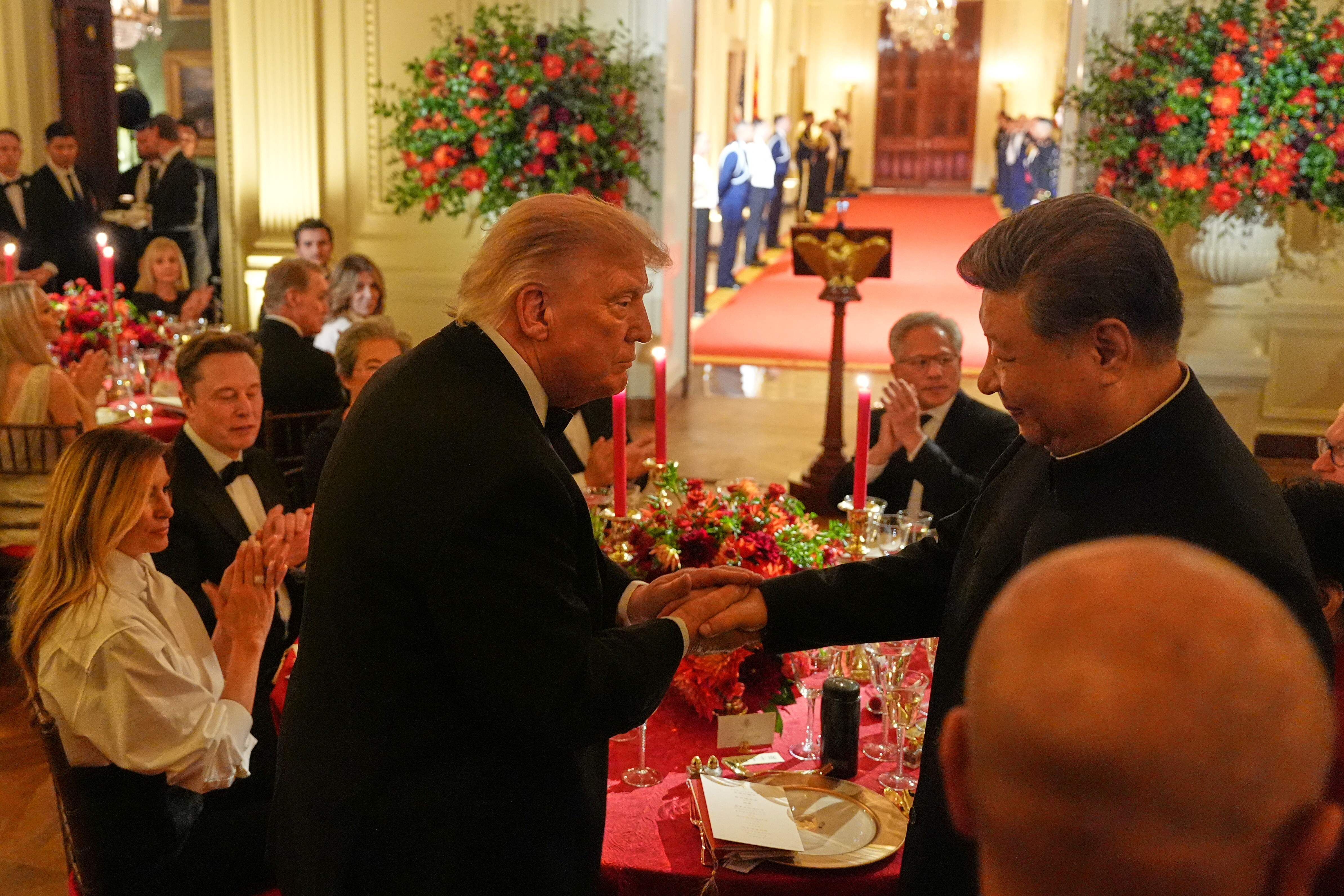
When the White House released the guest list for the state dinner honoring Chinese President Xi Jinping, it read less like a diplomatic roster and more like an exclusive Silicon Valley shareholder meeting.
Sam Altman signed autographs at the security gates. Jensen Huang skipped his signature leather jacket for a stiff black tuxedo. Elon Musk, Tim Cook, Sundar Pichai, and Jeff Bezos mingled in rooms draped in heavy red linens designed to honor their distinguished guest.
Diplomacy has always been about leverage. But in an era where artificial intelligence and semiconductor dominance dictate geopolitical power, the world's most influential tech titans have become the ultimate state accessories.
The Real Power Dynamic at the White House Table
Forget the ceremonial pleasantries for a second. State dinners are strategic messaging devices wrapped in expensive white linen. When President Donald Trump welcomed Xi Jinping to Washington, the composition of the room sent an unmistakable signal about modern American power.
You don't seat the architects of global computing next to foreign heads of state by accident. Washington and Beijing are locked in a fierce, high-stakes race for technological supremacy. By packing the East Room with the chief executive officers driving advanced microchips, cloud infrastructure, and frontier artificial intelligence models, the administration put private-sector muscle directly on display.
The menu featured sesame-crusted sea bass with braised baby bok choy and vanilla crémeux for dessert. Yet the actual substance being consumed across those tables was industrial strategy. Leaders from Nvidia, Apple, OpenAI, and Tesla sat elbow-to-elbow with cabinet secretaries, central bank influencers, and political heavyweights.
Why Tech Executives Can't Afford to Skip Geopolitics
Tech used to pretend it lived above the messy fray of international borders. Founders loved to talk about connecting a borderless world while ignoring the physical supply chains and regulatory realities anchoring them to the ground.
That illusion is dead.
Export controls on advanced silicon, tightening data sovereignty laws, and national security crackdowns mean that a single stroke of a pen in Washington or Beijing can wipe billions off a market cap overnight. Jensen Huang knows this better than anyone, navigating complex chip export restrictions while trying to maintain market access. Sam Altman deals with the reality of compute infrastructure limits and global regulatory frameworks that threaten to stall frontier AI development.
Showing up to a White House state dinner isn't about enjoying the White House honey ice cream. It's about access, visibility, and making sure corporate interests have a seat when the rules of the future are being drafted. If you aren't at the table, you're part of the menu.
The Intersection of Silicon and Statecraft
We're witnessing the permanent merger of tech oligarchy and geopolitical strategy. Corporations have grown larger and more influential than many sovereign nations, yet they still rely entirely on governments for trade agreements, physical infrastructure security, and legal frameworks.
When Trump gifted Xi a custom-designed bald eagle statue during the summit, it played well for the cameras. But the real negotiations happened in the quiet conversations between courses, where business leaders navigated the tightrope between American security demands and global market realities.
The tech titans didn't just watch history happen from the back of the room. They financed it, built it, and ultimately determine how much leverage America actually holds on the global stage.
Take a close look at who runs the infrastructure of the modern world. You'll quickly realize that national borders matter less than the server racks powering them.
The Tech Titans at Trump's State Dinner For Xi
This short video clip captures the arrival and presence of the prominent technology executives who attended the high-stakes White House summit.