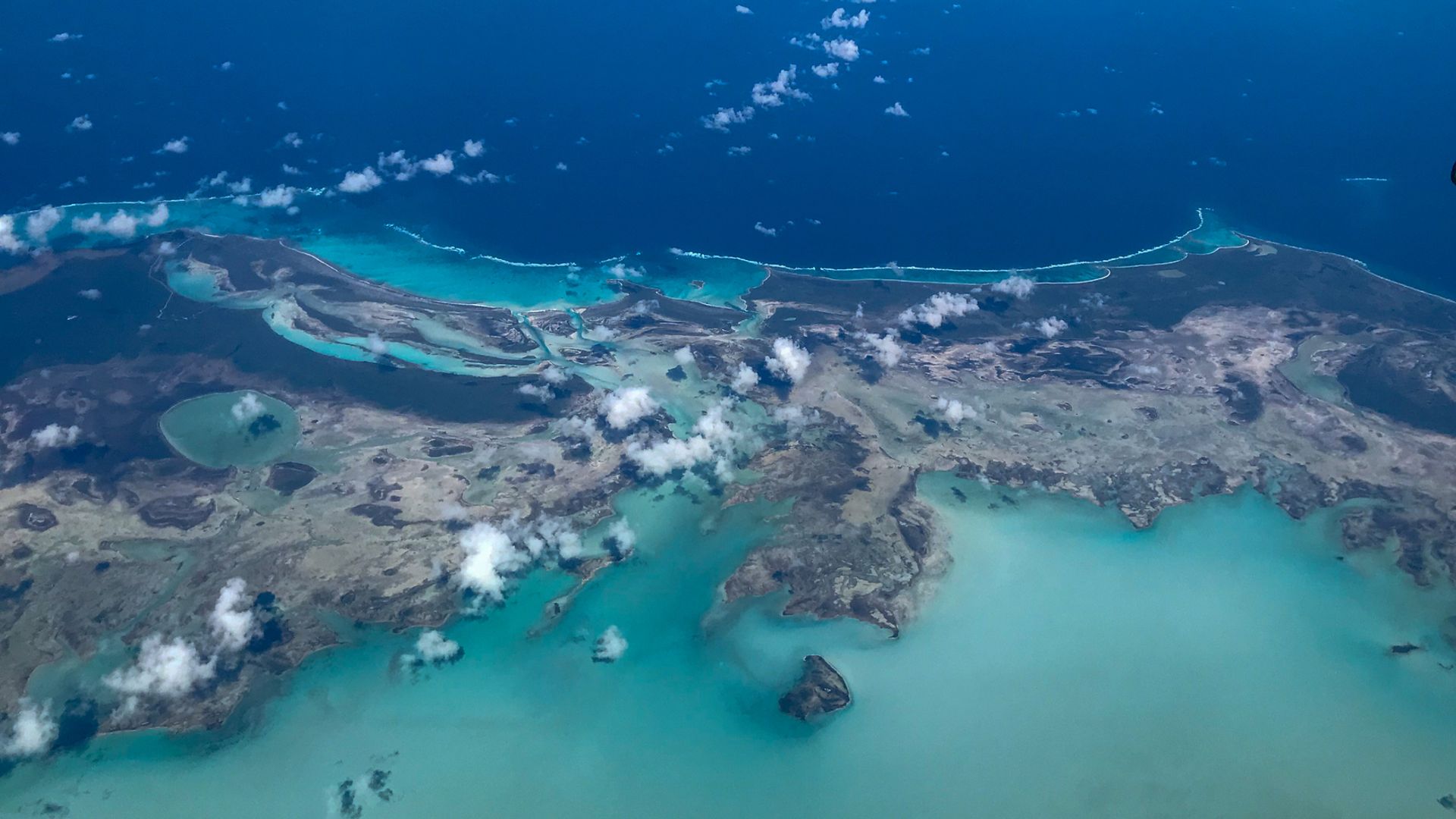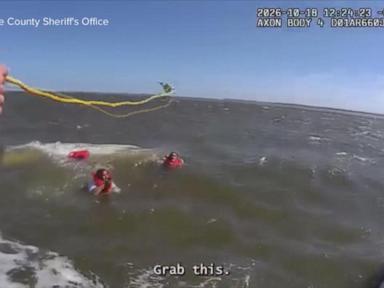
The water never announces its intentions. One moment, you are twenty miles off the Florida coast, the sun baking the salt onto your forearms, the rhythmic hum of an outboard engine vibrating through the soles of your boat shoes. The next, the stern feels heavy. Sluggish. You look down at the deck, and cold Atlantic water is swirling around your ankles.
Silence.
Then, panic.
Most local news reports reduce these moments to sterile, thirty-second clips. You have seen the headlines a hundred times. Two rescued from sinking boat off Florida coast. We watch the grainy helicopter footage of two tiny figures clinging to a white hull, nod at the bravery of the Coast Guard, and scroll onward to the weather forecast. We treat maritime rescues like isolated accidents—freak occurrences that happen to careless tourists or unlucky fishermen.
We get the story completely backward.
The real story isn’t the dramatic helicopter hoist or the heroic boat pull. The real story happens in the sixty seconds before the radio call goes out, in the quiet, terrifying gap between realizing a boat is taking on water and accepting that the ocean is about to win. Having spent years navigating the fickle waters of the Gulf Stream and surviving a hull breach miles from sight of land, I can tell you that a sinking boat doesn't just test your seamanship. It strips away every illusion of control you carry with you on dry land.
The Illusion of the Unsinkable Afternoon
To understand why so many boaters find themselves clinging to a bow rail off the coast of Florida, you have to understand the seduction of a calm morning.
Consider a hypothetical scenario, one that mirrors dozens of real Coast Guard incident reports every single season. Picture two lifelong friends—let’s call them Marcus and Elena—launching a twenty-four-foot center console out of a South Florida inlet at dawn. The forecast calls for two-foot seas and light east winds. They have ice in the cooler, fresh bait in the livewell, and years of weekend boating under their belts. They aren't reckless. They are simply comfortable.
Comfort is the most dangerous passenger on any vessel.
Twenty miles offshore, the Gulf Stream doesn't care about the morning forecast. Where the warm, northward-rushing current collides with a sudden shift in wind, waves stack up like stairs. A routine swell slams the transom. Maybe a bilge pump float switch has corroded quietly in the dark. Maybe a thru-hull fitting—a plastic or bronze valve hidden beneath the deck that lets water in for the livewell—cracks under the strain of the chop.
The ocean begins to enter the boat at a rate of forty gallons a minute.
Think of a standard household bathtub. It holds roughly forty gallons of water. Now imagine turning on a faucet that fills that tub completely every sixty seconds, except the tub is floating in three hundred feet of shark-patrolled current, and the drain plug is missing.
By the time Marcus notices the bow rising higher than usual, three hundred gallons of seawater are already sloshing beneath their feet. That is over a ton of dead weight dragging the stern down. When he hits the throttle to get the boat on plane and outrun the water, the extra weight forces the transom deeper, allowing a following wave to cascade directly over the back of the boat.
In less than three minutes, the engine sputters, swallows saltwater, and dies. Without power, the boat turns broadside to the waves. The next swell rolls it onto its side.
What Happens When the Radio Goes Quiet
When people watch rescue footage from off the Florida coast, the first question they usually ask is simple: Why didn't they just call for help sooner?
The answer lies in human psychology, not mechanical failure.
Admitting your boat is sinking requires shattering your own denial. On land, when a tire blows out, you pull onto the shoulder. Your world stops moving. On the water, there is no shoulder. There is no pause button. For the first critical minute, a captain’s brain refuses to accept that the vessel is lost. They waste precious seconds opening hatches, staring into a dark bilge filled with churning foam, searching for a leak they cannot reach.
Meanwhile, the boat is losing buoyancy, and the electrical system is drowning.
VHF marine radios are lifelines, broadcasting on Channel 16, which the United States Coast Guard monitors twenty-four hours a day. Yet the moment saltwater submerges the battery terminals under the console, that lifeline is severed. A cell phone, tucked into a dry box or a pocket, is often useless twenty miles out; cell towers are built for highways, not the open Atlantic.
According to U.S. Coast Guard recreational boating statistics, drowning remains the leading cause of death in fatal boating accidents, and more than eighty percent of those victims were not wearing a life jacket when they entered the water. Not because they didn't own them. Florida law requires a wearable personal flotation device for every person aboard.
They drowned because those life jackets were zipped neatly inside a canvas bag stuffed under the forward seating—now trapped upside down beneath four feet of churning saltwater.
I still remember the exact sound of my own boat going down years ago. It wasn't a dramatic crash. It was a low, sickening groan of fiberglass flexing against pressure it was never built to hold, followed by the hiss of trapped air escaping through the anchor locker. The water felt shockingly cold, even in July, because shock drops your core perception of temperature instantly. You realize, with a clarity that makes your chest ache, that you are no longer at the top of the food chain. You are just a mammal trying to keep your mouth above the surface.
The Invisible Math of a Search and Rescue
Once two boaters are in the water, clinging to an overturned hull or bobbing in open swells, the clock starts ticking against one of the hardest math problems in emergency response.
The Atlantic Ocean off Florida is vast, textured, and relentlessly bright. From the cockpit of a Coast Guard MH-65 Dolphin helicopter flying at five hundred feet, a human head in the water looks identical to a floating coconut, a patch of sargassum seaweed, or the whitecap of a breaking wave.
Consider what happens next when a distress call actually makes it through—or when a overdue boater is finally reported missing by family back on shore.
Search and rescue teams don't just fly in straight lines hoping to get lucky. They run complex drift models calculated by software called SAROPS. Rescuers input the last known position, the weight of the vessel, the wind speed, and the velocity of the Gulf Stream. That current moves north at up to four knots—nearly five miles an hour. Every sixty minutes that pass without a sighting, the search box expands exponentially. Two people clinging to a hull off Fort Lauderdale at noon can be drifting past Palm Beach by sunset.
This is why experienced offshore captains obsess over a small, unglamorous yellow box called an EPIRB—an Emergency Position Indicating Radio Beacon.
If a VHF radio is a shout across a crowded room, an EPIRB is a flare fired straight into space. When submerged in water or activated manually, it transmits a digital distress signal on the 406 MHz frequency directly to polar-orbiting satellites. Within minutes, Coast Guard command centers receive the vessel's registered identity and its exact GPS coordinates, accurate to within a hundred meters.
No shouting coordinates over static. No guessing where the current took you. Just a blinking dot on a screen that turns a needle-in-a-haystack search into a direct recovery mission.
Yet thousands of boats leave Florida inlets every weekend without one, relying instead on luck and clear skies.
The Anatomy of Survival
Let’s return to Marcus and Elena, floating twenty miles offshore, watching their boat settle until only eighteen inches of the white bow tip remains above the surface.
What separates the stories that end in a tearful reunion at the marina from the ones that end in a memorial service? It rarely comes down to physical strength. You cannot out-swim the Gulf Stream. Fighting the water burns calories, spikes your heart rate, and accelerates hypothermia—even in eighty-degree Florida waters, prolonged immersion slowly leaches heat from the body faster than your metabolism can replace it.
Survival in open water is an exercise in radical stillness.
First, you stay with the boat. Even a submerged hull provides a massive visual target from the air compared to two swimmers, and modern fiberglass boats built under twenty feet are required by federal law to have level flotation foam injected into their hulls. Even swamped, they are designed not to sink completely to the bottom. Leaving the hull to swim for shore—a shoreline that looks deceptively close on a clear day—is one of the deadliest mistakes a boater can make.
Second, you tether yourselves together. Waves separate people in seconds. One swell lifts you up while dropping your partner into a trough twenty feet away. Linking arms or tying off with a piece of floating dock line ensures that rescuers only have to find one target, and that neither person surrenders to the quiet despair of being alone in endless blue water.
Third, you manage the mind. The ocean plays tricks on you when you are floating at eye level with the waves. Every distant engine hum sounds like a rescue boat. Every shadow beneath your feet feels like a predator. The boaters who make it out alive are the ones who regulate their breathing, conserve their energy, and wait for the unmistakable thump of rotor blades chopping the humid air.
The Moment the Rotor Blades Arrive
When the Coast Guard arrives on scene, the transition from isolation to rescue is violent and loud.
A rescue swimmer doesn't gently lower down on a velvet rope. They drop from the hovering aircraft straight into the rotor wash—a localized hurricane of salt spray that stings your eyes and flattens the waves around you. The noise is deafening, a mechanical roar that vibrates in your teeth.
For two exhausted boaters who have spent hours fighting fatigue, salt-crusted lips, and the creeping numbness of shock, that swimmer is the most welcome sight on earth. The swimmer checks for injuries, secures the rescue strop under the arms, and signals the flight mechanic above.
One by one, they are hoisted out of the Atlantic, pulled through the open cabin door of the helicopter, and wrapped in thermal blankets while the shoreline finally comes back into view.
Later that evening, a local television station will edit the rescue down to forty-five seconds. They will show the hoist, quote a Coast Guard petty officer reminding boaters to check their safety gear, and move on to sports scores.
We watch the clip from the comfort of our couches, safe on dry land, convinced that preparation is something other people neglect. We forget how fast a sunny afternoon can tilt beneath our feet, how heavy forty gallons of water feels when it’s rising past your ankles, and how wide the ocean looks when you are staring up at it from the surface.
Out past the inlet, where the green coastal water turns a deep, bottomless cobalt, the sea is always waiting to see what you left behind on the dock.