The air tasted like copper and old ash.
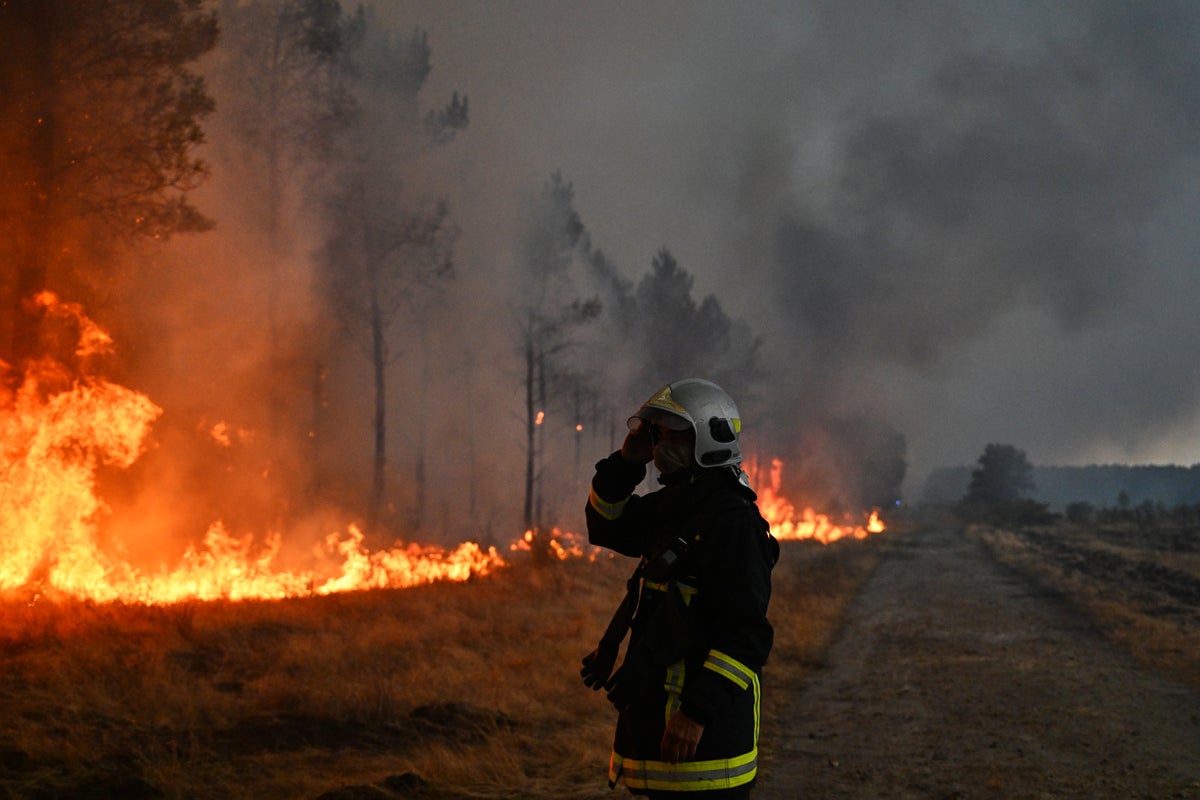
It was mid-afternoon in the south of France, but the sun hung in the sky as a dull, bruised orange coin, obscured by a dense, suffocating pall that drifted across the horizon. Cicadas had stopped their rhythmic buzzing hours ago. Silence, heavy and absolute, pressed against the windows. Then came the wind. It arrived not as a cooling breath, but as an oven door swung wide open, carrying the distinct, terrifying crackle of dry pine snapping under a merciless wall of flame.
Across Europe, the numbers were staggering. A third of a million people displaced. Evacuated. Torn from homes, hotels, and historic olive groves in a matter of frantic hours. Thermometers in various pockets of the continent were clawing their way toward an unimaginable 44 degrees Celsius. That is 111 degrees Fahrenheit for anyone still trying to process these figures through the comforting lens of a normal summer.
Heat is usually invisible. It is an abstract concept discussed by meteorologists pointing at color-coded television maps. We talk about it in terms of records broken and ice cream sales surging. But heat, at 44 degrees, stops being weather. It becomes an antagonist. It becomes an active physical force that warps tarmac, dehydrates municipal water reservoirs in real-time, and turns entire forests into tinderboxes primed by months of stubborn drought.
Consider what happens next when the sirens begin to wail.
In a small village nestled in the hills outside Bordeaux, a hypothetical wine grower named Henri stood on his terrace, watching the ridge line turn into a boiling curtain of red. He had lived through forty summers on this land. He knew the specific temperament of the mistral wind. But this was different. This wind possessed a feral hunger. Within twenty minutes, civil protection officers were banging on his iron gate, offering a choice that wasn't really a choice: leave now with what fits in the trunk of a battered Renault, or do not leave at all.
Henri left. Millions like him did, too. From the sun-baked coast of Spain to the ancient pine forests of Greece, a massive, quiet migration unfolded. Highways choked with tail-lights. Campgrounds cleared out in minutes, leaving behind overturned lawn chairs and half-eaten lunches on wooden picnic tables. Tourists who had flown in search of Mediterranean azure found themselves clutching passports and hastily packed backpacks in makeshift evacuation centers inside local gymnasiums, sweating under fluorescent lights while cots were unloaded from flatbed trucks.
This is the hidden cost of a warming continent. We romanticize the European summer. We picture postcards of lavender fields, sun-drenched cafe terraces, and leisurely strolls along cobblestone alleys. We do not picture the logistics of moving hundreds of thousands of terrified human beings out of the path of a rapidly advancing wall of fire. We do not picture the hospital wards filling up with elderly residents suffering from acute heat stroke, nor the strain on power grids struggling to supply the relentless demand of air conditioning units that were never meant to run this hard for this long.
The climate scientists have been warning us for decades. They spoke in cautious tones about parts-per-million, carbon budgets, and Celsius targets. But numbers on a slide deck do not make your eyes sting. Graphs do not make the throat tighten with the taste of soot. The reality has finally outrun the abstract debate. The future arrived early, and it smells like burning pine.
When the flames finally recede—and they will, bought by the sheer exhaustion of the firefighters and a desperate shift in the wind—the landscape left behind will be unrecognizable. Charred skeletons of trees will stand like silent sentinels over blackened earth. Vineyards that took generations to cultivate will be reduced to ash.
Yet, as the smoke clears and the displaced return to sweep the grey dust from their doorsteps, a deeper question remains. This was not a freak accident. This was a preview. The thermometer is no longer just measuring the day; it is measuring the cost of our collective hesitation.
The ash settles on the windshield of a car driving slowly down an empty coastal road, and somewhere in the distance, a lone crow rises into the hazy, copper sky.