Silence.
At 4:30 in the morning inside Terminal B at Chicago O’Hare, silence is not peaceful—it is an alarm bell ringing at a frequency only anxious travelers can hear, the sudden absence of that familiar, comforting symphony of rolling Samsonite wheels, hissing espresso machines, and gate agents barking boarding zones over crackling loudspeakers.
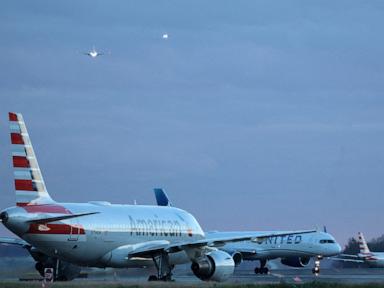
Picture a woman named Elena, a hypothetical pediatric nurse trying to make a 6:00 AM connection to Denver so she can relieve a colleague who has been pulling a double shift, staring up at a departure board that has just bled bright, unforgiving red across every single row. Around her, three hundred strangers check their phones in unison, their faces illuminated by the cold blue glow of airline apps all delivering the same cryptic, terrifying verdict: All domestic departures halted. No storm clouds gather outside the floor-to-ceiling windows, no snowdrifts choke the tarmac, and no smoke rises from the runways, yet the entire American aviation network has just slammed on its emergency brakes.
When the Federal Aviation Administration issues a nationwide ground stop, the headlines reduce a massive human earthquake into sterile, digestible numbers: a thousand flights canceled, ten thousand delayed, zero indication of a nefarious act. Those numbers are true, of course, but they miss the visceral reality of what happens when an invisible digital artery clots in the middle of the night, stranding hundreds of thousands of lives in fluorescent-lit purgatory.
The Ghost in the Dispatch Machine
To understand why a single computer glitch can bring a continent of steel birds to its knees, you have to look past the sleek fuselages and leather cabin seats to an unglamorous, aging nervous system called NOTAM—short for Notice to Air Missions.
Think of NOTAM as the collective eyesight of every pilot in the sky, a real-time digital ticker tape that warns cockpits of everything from a burned-out runway light in Boise to a flock of migrating geese near Atlanta or a rocket launch off the Florida coast. Under federal aviation rules, a commercial airliner cannot legally push back from the gate unless its crew has reviewed the latest NOTAM feed for their exact route, because flying without that data is the functional equivalent of driving eighty miles an hour down an unlit mountain highway with your headlights switched off.
When that system hiccups, corrupts a database file, or freezes during a routine overnight update—as happened during the historic January 2023 outage that grounded domestic air travel for the first time since September 11, and in subsequent regional ground stops that continue to expose our infrastructure's fragility—the FAA faces an impossible binary choice. Either let planes fly partially blind, or freeze the entire board until the screen clears.
They always choose the freeze.
I have sat on the carpeted floor beside Gate C14 during one of those system-wide paralysis events, listening to a father try to explain to his six-year-old daughter why Mickey Mouse would have to wait until tomorrow, while two rows away a man in a crumpled dark suit quietly wept into his hands because he was going to miss his mother's funeral in Omaha. You smell the stale coffee, you feel the recycled air growing thick with collective cortisol, and you realize with a sudden, cold clarity just how thin the veneer of modern convenience actually is. We treat cross-country flight like a municipal bus route, forgetting that every safe arrival depends on millions of lines of legacy code communicating without a single dropped syllable.
Why "No Nefarious Act" Is Only Half the Comfort
Within minutes of any major FAA ground stop, federal officials rush to the microphones with the exact same reassurance: there is no evidence of a cyberattack, no foreign adversary pulling the plug, no nefarious act behind the curtain.
Breathe.
That phrase is meant to lower the national blood pressure, and in the immediate moment, it works—nobody wants to hear that hackers have breached air traffic control. Yet if you sit with that reassurance long enough, a different, quieter dread begins to take shape in the pit of your stomach. If nobody attacked us, it means we did this to ourselves through decades of deferred maintenance, patchwork software upgrades, and an institutional habit of treating critical public infrastructure like an old pickup truck we keep nursing along with duct tape and baling wire.
Consider what happens next when a single corrupt file forces a system reboot at 3:00 AM Eastern Time:
- The Domino Effect on Crews: Pilots and flight attendants operate under strict federal rest mandates, meaning a two-hour software delay does not simply push your flight back two hours; it often causes the crew to "time out," turning a morning delay into an overnight cancellation because no fresh pilots are waiting in the wings.
- The Aircraft Positioning Trap: Airplanes are not parked in a central garage; they are links in a continuous chain flying from Miami to Dallas to Seattle to Boston, so halting one morning departure leaves three subsequent cities staring at an empty gate hours later.
- The Illusion of the "First Flight Out": Travelers routinely book the dawn departure believing it is immune to afternoon thunderstorms, only to discover that overnight maintenance windows are precisely when fragile computer systems are most likely to break during software patches.
When officials tell us the outage wasn't malicious, they are inadvertently confessing that our skies are held together by aging architecture built in an era when floppy disks were still cutting-edge hardware. We do not need a villain to bring down the grid when technical debt is already waiting patiently inside the server room.
The Invisible Stakes of a Grounded Nation
It is easy to mock stranded passengers complaining about missed vacations or soggy airport pretzels, until you remember what actually travels inside the belly of a commercial airliner.
Beneath the rows of knees pressed against seatbacks, cargo holds carry donor organs packed in medical coolers racing against a four-hour cellular clock, radiopharmaceuticals with half-lives measured in minutes that cancer patients need for morning treatments, and time-sensitive manufacturing components keeping assembly lines humming three states away. When the FAA pulls the plug on departures, those invisible lifelines stop moving too.
Let's return to our hypothetical nurse, Elena, still sitting on her suitcase in Chicago as the clock ticks past 7:30 AM. While she refreshes her airline app for the fiftieth time, a surgical team in Denver is recalculating schedules, a small business owner in Phoenix is watching a make-or-break client pitch dissolve into a blurry video call, and a soldier on leave in Frankfurt is realizing his connecting flight home to Texas just vanished into thin air. None of these losses show up in the neat columns of airline stock tickers or evening news graphics, yet they represent tens of millions of dollars in evaporated human potential and quiet personal heartbreak.
Historically, American aviation has been the gold standard of global safety precisely because it refuses to compromise when uncertainty creeps into the cockpit. After the mid-air collisions of the 1950s birthed the modern FAA, the agency adopted a culture of radical caution—a willingness to absorb massive economic pain rather than gamble a single human life on incomplete data. That instinct is noble, and every passenger who steps onto a jetway owes their life to it.
Still, caution without modernization eventually becomes a trap of its own making. We have spent billions building sleeker terminals, biometric boarding gates, and high-speed Wi-Fi at thirty-five thousand feet, while leaving the foundational dispatch pipes buried underground to rust in digital obscurity.
Navigating the Paralysis When Your Gate Goes Dark
So what do you actually do when you are the one standing under that red departure board, watching a thousand canceled flights ripple outward across the map?
Panic is useless, and yelling at the exhausted gate agent—who has even less information than you do—is worse than useless. If you ever find yourself caught inside the blast radius of a nationwide ground stop, your survival depends on moving faster than the crowd around you:
- Bypass the Gate Line Entirely: While two hundred people form a snake-like queue at the podium, immediately open the airline's mobile app, call their international customer service line (which often has shorter wait times than domestic numbers), and simultaneously walk toward an airline lounge if you have access, where dedicated agents can manually rewrite tickets before automated systems lock up.
- Claim the Backup Seat Before It Disappears: Under Department of Transportation rules, if your flight is canceled for any reason—even a system outage outside the airline's direct control—and you choose not to travel, you are legally entitled to a full cash refund rather than a restrictive travel voucher.
- Think in Hubs and Rental Cars: When regional air traffic locks up, one-way rental cars at airport counters sell out within twenty minutes, so reserving a vehicle on your phone the second a ground stop is announced gives you a four-hundred-mile escape hatch while everyone else waits for an uncertain afternoon departure.
None of these tactics will fix an aging federal database, of course, nor will they give back the missed birthdays, the delayed surgeries, or the lost hours spent sleeping under harsh terminal lights. They simply remind you that in a hyper-connected system, agency belongs to the person who recognizes the fracture first.
The Sound of Engines Returning
Eventually, the engineers inside the command center find the corrupted file, purge the bad code, and watch the green status lights flicker back to life one by one.
Inside Terminal B, the change is subtle at first—a chime from a smartphone, a murmur rippling down row four, a gate agent suddenly leaning forward toward her microphone with a weary, triumphant breath. Outside the glass, a ground crew member in neon yellow raises a pair of illuminated wands, and a hundred-ton aluminum tube begins to shudder as its twin turbofans spool up from a low groan into a deafening, glorious roar.
Elena grabs her bag, joins the shuffling river of relieved strangers funneling down the jetway, and steps across the threshold into the cabin, trusting once again that the invisible threads holding the sky together will hold just long enough to carry her home.



