Midnight in a high-rise hotel room smells like old carpet, faint bleach, and the flat, recycled chill of air conditioning. You flick off the bedside lamp, sliding beneath crisp white sheets. Thousands of feet above the pavement, miles from anyone who knows your middle name, you fall asleep.
You do not think about fire. Nobody does.
We check the locks. We verify our wake-up calls. We slide our passports into the hotel safe. But we rarely trace our fingers along the heavy metal frame of the heavy fire door down the hall, nor do we peer past the heavy glass of the emergency map pinned to the back of the door. Safety in a temporary room is an invisible contract. We pay for the bed; the building promises us the morning.
That contract almost changed.
Months ago, a quiet shockwave moved through the corridors of safety regulation. Officials in Hong Kong proposed an idea so striking, so radically cautious, that it forced travelers to blink hard. They considered a mandate requiring hotels to place fire escape hoods directly inside guest rooms.
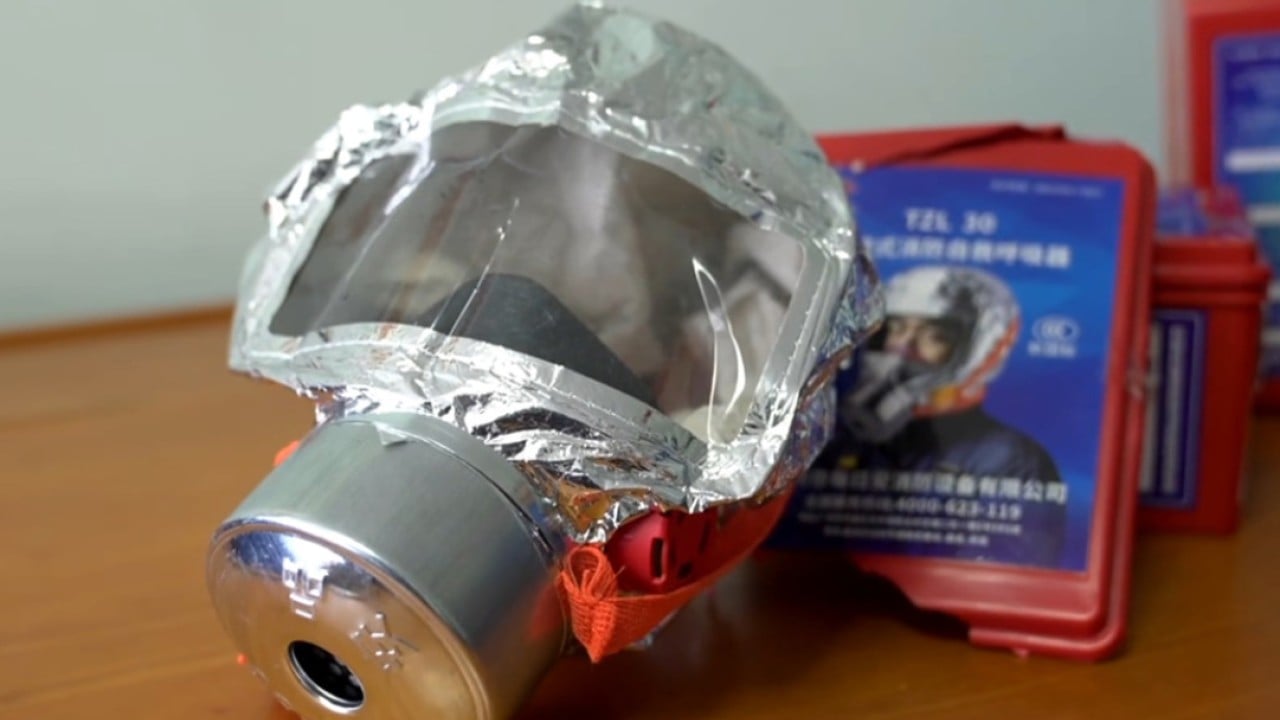
Picture it. A heavy, silvered pouch resting on the shelf beside the Gideon Bible or tucked into the wardrobe next to the spare hangers. Inside that pouch: a portable, full-face respirator designed to filter out lethal carbon monoxide and toxic smoke for fifteen or twenty minutes. A personal shield against the dark.
For a brief, intense window, it looked like the future. Travelers imagined unzipping the foil, pulling the hood over their ears, securing the rubber seal around their necks, and stepping bravely into a smoke-choked corridor where visibility drops to zero and every breath feels like swallowing broken glass.
Then, the momentum broke. The requirement was shelved. The backpedal was quiet, swift, and entirely bureaucratic.
To understand why, we have to look past the political hesitation and walk down a very different kind of hallway.
Imagine Maya, a seasoned business traveler who spends two hundred nights a year in hotels scattered from Singapore to Seattle. She has memorized the sound of ice machines humming down the hall. She knows that if the alarm sounds, she should crawl low under the smoke. She knows that wet towels do next to nothing against hydrogen cyanide.
When Maya first heard about the proposed hood mandate, her reaction was divided. A part of her felt a cold spike of relief. Finally, she thought. Something tangible. Smoke kills long before flames ever touch skin. In high-rise fires, thermal burns are rarely the primary executioner; it is the silent, invisible cocktail of combustion products. Carbon monoxide starves the blood of oxygen. Hydrogen cyanide shuts down cellular respiration. Plastics, synthetic carpets, and modern upholstery burn fast and thick, turning a hotel corridor into a toxic chemical soup within minutes.
If you have never experienced a hotel fire drill, let alone a real one, the sheer disorientation is hard to overstate. Panic is a physical weight. It sits on your chest, blinding your logic. In that state, instructions printed on a laminated card can read like ancient hieroglyphics.
So why back away from a device designed to give a panicked human twenty minutes of clean breath?
The answer is messy, and it reveals a lot about how we try to engineer safety in a complex world.
When you introduce a piece of life-saving equipment into a public space, you introduce a paradox. Equipment requires maintenance. Equipment requires training. A fire escape hood is not a hat; it is a specialized technical device with an expiration date, a vacuum-sealed integrity, and a specific sequence of deployment.
Consider what happens in a real emergency at two in the morning. Sirens wail. Strobe lights strobe. The electricity cuts out, plunging the hallway into amber backup lighting. Maya wakes up gasping. She grabs the silver pouch. Her heart hammers against her ribs at one hundred and sixty beats per minute. Her fine motor skills vanish—a well-documented physiological response to extreme adrenaline.
Can she tear the pouch open correctly? Can she pull the inner seal apart without ripping the fragile membrane? Can she fit it properly over her glasses? Can she explain it to her terrified eight-year-old child sharing the room?
If a safety device is difficult to deploy under stress, it stops being a safety device and starts being a hazard. In the chaotic seconds of an evacuation, a traveler fumbling with a complex strap or a jammed zipper loses precious time. Time is the only currency that matters when the corridor is filling with soot.
Critics and safety experts raised the alarm about false confidence. There is a deep, psychological trap known as risk compensation. When people feel protected by a gadget, they often take greater risks. If a guest believes a smoke hood in the wardrobe makes them invincible, they might hesitate to evacuate immediately. They might stop to grab their laptop. They might linger to look for their shoes. Every second spent searching for belongings in a smoke-filled room is a gamble with catastrophic odds.
Furthermore, the logistical burden on the hospitality industry was staggering. Think of the tens of thousands of hotel rooms across a bustling metropolis like Hong Kong. Thousands of hotels, motels, and guest houses. Each room equipped with multiple hoods. Who checks them daily? Who ensures guests haven't tampered with them, stolen them as souvenirs, or used them as makeshift trash bins?
A safety program that cannot be reliably audited across thousands of independent locations quickly devolves into an illusion of security. An unmaintained respirator is worse than no respirator at all, because it offers a promise it cannot keep.
Yet, dismissing the idea entirely feels like a missed heartbeat.
The retreat from the mandate leaves us in an awkward space. It acknowledges that throwing equipment at a problem doesn't solve it, but it doesn't fix the underlying vulnerability either. High-rise hotel fires remain a terrifying architectural reality. We build higher, we pack more synthetic materials into our interior designs, and we rely heavily on active suppression systems like sprinklers and smoke extraction fans.
Those systems are vital. Modern building codes are written in blood and ash from past tragedies. Sprinklers suppress flames before they grow. Fire-rated doors contain the spread. Smart ventilation systems push fresh air into stairwells, creating a sanctuary of oxygen amidst the chaos.
When you book a modern hotel room, you are trusting an invisible army of architects, engineers, and safety inspectors who spent months calculating how long steel beams can withstand extreme heat before losing their structural integrity.
But architecture cannot account for human panic entirely.
When the news broke that Hong Kong was stepping back from the mandatory hood policy, the conversation largely faded from the headlines. The public moved on to other outrage cycles. Travel writers returned to reviewing rooftop pools and artisanal breakfast buffets.
Maya read the final update on her phone while waiting for a flight at Kai Tak's spiritual successor, sitting in a terminal bathed in clean, bright fluorescent light. She looked out the window at the sleek fuselage of her upcoming plane. She thought about her hotel room for the night.
She didn't run to the front desk to demand a smoke hood. She knew they wouldn't have one. Instead, she did something simpler, something quieter.
When she checked into her room that evening, she dropped her bag, walked to the door, and actually read the evacuation map. She counted the doors between her bed and the emergency stairwell. Four doors to the left. She tracked the distance with her hand, feeling the textured wallpaper against her fingertips.
Then she turned off the lamp, slid beneath the sheets, and let the night take over.
The smoke we carry home is rarely literal. It is the persistent, quiet awareness of our own fragility in spaces we do not control. We trade our safety to strangers every time we travel, placing our lives in the hands of building designs we will never fully inspect and emergency plans we hope we will never read.
The hoods are not coming to the bedside tables. The policy was rethought, rewritten, and set aside. But the silence left in their wake asks us a harder question.
When the lights go out and the alarm begins to scream, what will you reach for in the dark?